

What to Eat on the Kumano Kodo (Meals, Bento + Trail Food)

The easiest way to eat well on the Kumano Kodo is to book accommodation with dinner, breakfast and a packed lunch. Do that, buy a few emergency snacks in Kii-Tanabe, and food becomes one of the best parts of the walk rather than a daily scavenger hunt.
The family-run minshuku and ryokan were my favourite part of the Kumano Kodo. You arrive sweaty, have a bath, then sit down to a tray of fish, rice, pickles, vegetables and several small things you may or may not identify. In the morning, another proper meal appears. Then your host hands you lunch.
Japan has already solved hiking.
The mistake is assuming the route works like a normal tourist town, with a cafe whenever hunger strikes. It does not. There are useful shops and diners, but opening days move, villages are tiny and the longest sections have no reliable lunch stop at all.
Short answer: choose half-board accommodation, add the next-day bento when offered, and carry one backup meal from Tanabe. If you book a room-only stay, research dinner before you arrive – not while standing outside at 7pm.
Table of Contents
How Food Works on the Kumano Kodo

On-trail accommodation is doing three jobs at once: giving you a bed, feeding you properly and removing tomorrow’s lunch problem. That is why I would not choose a cheaper room-only rate without checking the village first.
Dinner and breakfast are normally served at fixed times. These are small operations, often run by one family, so arriving late is not the same as wandering into a hotel buffet at 9pm. Tell your host when you expect to arrive, and take the stated dinner time seriously.
The bento is the quietly brilliant bit. Ours were simple, filling Japanese lunches built around rice balls, fish or meat, vegetables and pickles. They survived a morning in the pack, tasted good cold and meant we could stop beside a river instead of marching toward a theoretical cafe.
Stock Up in Kii-Tanabe
Kii-Tanabe is where you should buy the boring insurance food. There are convenience stores, supermarkets, bakeries and proper restaurants around the station. Once you take the bus inland, choice drops away quickly.
I would buy nuts, chocolate, an onigiri or two, something salty and one emergency meal that can survive several days in a pack. You probably will not need all of it. That is the point. A spare snack is far less annoying than discovering your planned shop has taken an unscheduled Tuesday off.
Tanabe is also the night to eat something you choose yourself. The Ajikoji district is packed with little izakaya and bars, while the station area has easier early-night options. Pick up the current Tanabe Gourmet Guide from the tourist information centre rather than pinning your hopes on one restaurant recommendation from the internet.
Tip: If your first-night accommodation has arranged a bento delivery to Kii-Tanabe Station, excellent. Still buy a couple of snacks. Bento is lunch, not a magical shield against every closed shop.
Where You Can Buy Food Along the Route
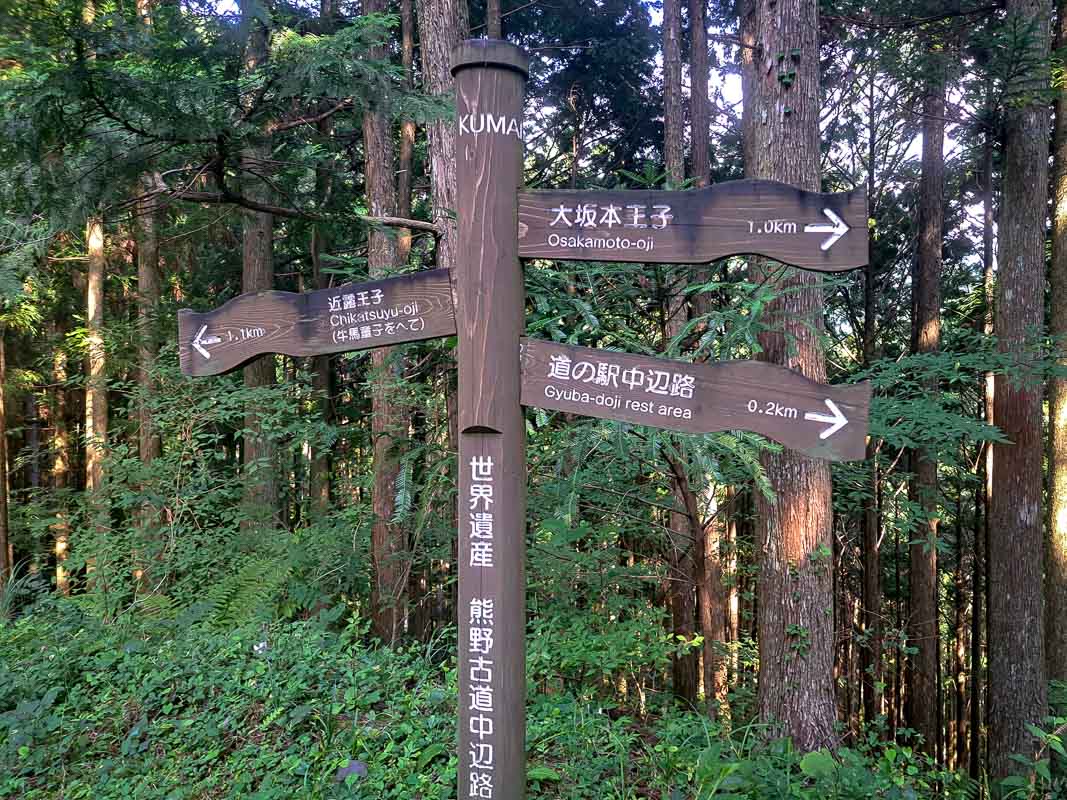

This is the food rhythm for the classic Nakahechi route. It follows the same west-to-east sequence as my Nakahechi day-by-day guide, but focuses on the places where food is actually useful.
Takijiri-oji to Chikatsuyu
Takijiri is a trailhead, not a breakfast town. The pilgrimage centre sells drinks and some simple food, and Takijiri Chaya Musuhi may have rice balls on its limited opening days, but I would treat any purchase there as a bonus.
Around two kilometres before Chikatsuyu, Michi-no-eki Kumano Kodo Nakahechi is the most dependable proper stop: small diner, shop, snacks, vending machines, toilets and outdoor seating. The official listing currently has it open 9am to 5pm, with seasonal Thursday closures in winter. Check rather than building the entire day around it.
Chikatsuyu itself has an A-Coop and a few small food options. This is the last easy restock before the long day toward Hongu, so buy anything you are short of here.
Chikatsuyu to Hongu and the Onsen Villages
Carry lunch for this day. The long forest section toward Hongu is not the place to improvise. Historical stops and shelters do not automatically mean coffee, noodles and a cheerful person waiting to swipe your card.
Hongu has the most useful concentration of food in the middle of the route, including a convenience store near the Heritage Centre and several daytime restaurants. Yunomine, Kawayu and Wataze are different. They are tiny onsen settlements, and room-only guests can run out of dinner options quickly.
Heads up: Buy food in Hongu before continuing to Yunomine or Kawayu if your accommodation does not include dinner. Yunomine has only a very small number of casual options, with changing opening days.
Ukegawa to Koguchi
Ukegawa has a Yamazaki Y-Shop near the trailhead and BOND makes bentos, including advance orders delivered around the Hongu area. This is useful, but the shops are small and opening days matter. Buy before you step onto Kogumotori-goe.
We stopped near Kowaze and ate our bento on a rock in the middle of the river. Cold water around our feet, lunch out of a box, Koguchi close enough that the hard part felt done.
Absolute heaven, honestly.
Koguchi is not somewhere I would arrive hoping to browse dinner menus. Book accommodation with meals, add the packed lunch for the next morning, and enjoy how little decision-making is required.
Nachi Falls and Kii-Katsuura
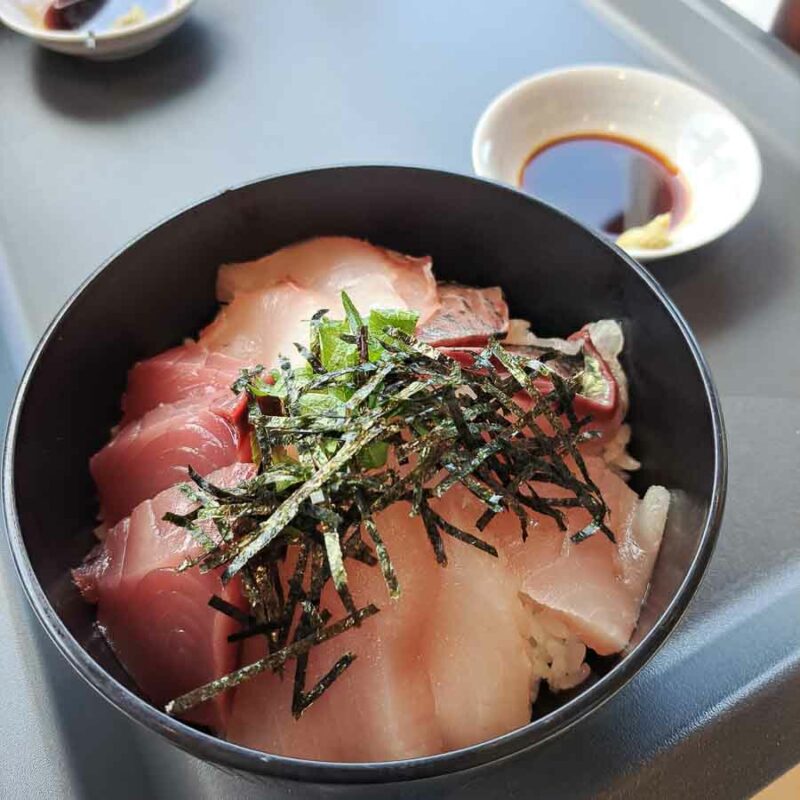

Kii-Katsuura is the reward meal. Finish the walk, take the bus down from Nachi, check in, then eat tuna. The port town has far more choice than the trail villages and it would be criminally efficient to jump straight onto a train.
Katsuura Port Nigiwai Market is the easy lunch option for tuna bowls and seafood. The morning tuna auction is free to watch, started around 7am when I went, and had almost nobody there. A ridiculous contrast to Tokyo’s fish-market circus.
My Kii-Katsuura guide has the full tuna-market, onsen and post-hike plan. Give the town at least one night.
Vegetarian, Vegan and Allergy Advice
Tell every accommodation when you book, not when you sit down for dinner. Small family kitchens can often adapt with notice, but Japanese stock, sauces and side dishes may contain fish even when the plate looks vegetarian.
The official vegetarian and vegan guidance names current accommodation and bento options, including vegan-friendly delivery in Tanabe and BOND bento around Hongu. Use that as a starting point, then confirm directly because menus and owners change.
If an allergy is serious, carry a translated allergy card and enough safe food to cover a missed meal. This is not pessimism. It is a rural route with small kitchens and limited replacement ingredients.
What Food I Would Carry
Carry less than a normal unsupported hike, but more than blind optimism suggests. Your accommodation meals do the heavy lifting. Your pack only needs to cover the gaps.
Water, pack weight and the rest of the walking setup are covered in my packing list. The short version is that luggage transfer makes the whole food problem easier because you are not already carrying half your Japan holiday.
My Honest Food Verdict
The Kumano Kodo is not a food crawl, but the food is one of the reasons the hike stays with you. The route works because the meals belong to the rhythm: walk, bath, dinner, sleep, breakfast, bento, repeat.
Book the meals. Carry backup snacks. Do not assume a village dot on Google Maps contains an open restaurant. Then stop somewhere beside the river and eat the lunch your host packed.
Simple. Very good.
The most practical commercial fallback is Booking.com for the gateway and onsen towns. For the small on-trail minshuku, Kumano Travel is still the better first look because meal plans and bentos are part of the booking logic.
For changing opening days and food availability, check the Tanabe City Kumano Tourism Bureau food guide shortly before you walk.
Kumano Kodo Travel Planning Cheatsheet
🚑 Should I buy travel insurance for Japan?
100% YES! — Japan has “free” healthcare but it’s only for citizens! Tourists need travel insurance in case anything happens on your visit. Also be aware many policies won’t cover hiking as it’s a high risk activity! (that’s right, check the t&c’s on your complimentary credit card insurance)
I highly recommend World Nomads as you can get specific add-ons for the crazy activities you’re doing – and starts at just $7 a day!
🏩 What’s the best way to book my Kumano Kodo accommodation?
Your only realy two options here are Kumano Travel and Booking.com. Its a complicated process so I wrote this guide here on the best kumano kodo accomodation options
If you don’t want to figure it all out (it’s meant to be a holiday after all) you can book a package tour. Here are my recommendations for both guided and self-guided.
💸How do you pay for things in Japan?
Japan may have flying robots.. but they also still use cash! So you’ll want to get some folding tender out from an ATM when you land. EFTPOS / Debit / Credit Card and Paywave (contactless payments) is common at bigger businesses but small bars, and street vendors want cash.
I personally use a Wise debit card for all my international money needs as they only convert the funds when you make payment, plus they offer a much better spread (margin on the true exchange rate) than the banks do. They work in all Japanese ATMs I tried.
→ Get the Wise card I use — set it up before you fly so it’s ready to tap the moment you land.
🚙 Do you need to rent a car in Japan?
I wouldn’t reccommend it — Transport in Japan is expensive whatever mode you chose, but fortunalty the publc transport system is out of this world in terms of both freqency and coverage. If you are heading to a lot of off the beaten track places, then you may want a rental. I use Discover Cars to find the cheapest rates on rentals cars and remember you can save money if you avoid picking up at the airport.
🚆 What about the JR Rail Pass?
We didn’t – but it depends on the length and itenirary of your trip. The JR Pass is expensive (and just went up in price again!) and if you’re walking the Kumano Kodo you wont need it for probably 6 days straight anyway.
Do the math, but in most cases buying the train fares you need, when you need it will work out more afforably overall – and give you more flexibility (as the JR Pass doesn’t cover all lines)
📲 How do I get internet/data/wifi in Japan and on the trail?
This one needs a whole nother article, but the short version is;
- local SIM cards are cheaper but generally require a fixed term contract (not practical for people visiting)
- Tourist ‘short stay’ SIMs are a bit more expensive but will give you plenty of data while your visiting and are best for solo travelllers.
- If you’re travelling as 2 or more people, renting a pocket WIFI unit from the airport is the most economical option – Works out cheaper than getting two tourists sims
- Use a travel eSIM like Airalo or Airalo. This works from the moment you land is is SOOOOO much easier than trying to pick a data pack in japanese. It also gives you connectivity across neighbouring asian countries if you buy a regional sim! TIP: Grab your Airalo eSIM before you fly and you’ll have data the moment you land, with no hunting for a SIM kiosk.
✈️ What’s the best site to buy flights to Japan?
For finding cheap flights, I recommend Skyscanner. Once you find the flight you’re looking for, I’d then suggest booking directly with the carrier (even if it costs a few $$ more than with one of the agreggators/agencies).
💧Can you drink the water on the Kumano Kodo?
Yes — Japan is very clean. In all townships you’ll pass through and stay along the Kumano Kodo the tap water is drinkable. If you want to drink water from the rivers and streams you generally can but should do so at your own risk. ALWAYS follow best practice and drink from fast flowing water as far up stream as possible. I drank the water and was fine.. but i’d generally recommend a Brita Water Bottle for rehydrating on the trail safely.
🎫 Do I need a visa for Japan?
Likely Not — Japan now recognises 70 countries as ‘visa exempt’ for short term stay. So if you’re a US, UK, NZ, AU and EU passport holder you don’t need a Japansese visas. However, some other countries do (check here!). And if you plan to stay for more than 90 days (an average tourist visa length), you will need to look into the Japanese working holiday visa scheme, or the new Digital Nomad visa scheme.


