

Best Onsen on the Kumano Kodo (Yunomine vs Kawayu vs Wataze)

Stay in Yunomine Onsen if you want the most atmospheric Kumano Kodo night. Choose Kawayu if the idea of hot water bubbling through a riverbed sounds more fun, Wataze for a large open-air bath, and Kii-Katsuura for the post-hike finale.
My actual advice is to use more than one. Have a simple bath at your ryokan during the walk, make the Hongu-area onsen night part of the route, then finish with another soak in Kii-Katsuura when your feet have become a public concern.
I have used the onsen at my Kumano accommodation and the foot baths in Kii-Katsuura, but I have not personally sat in every public bath below. Where I have not soaked, I am comparing the current official setup and how each place fits the walking route.
No borrowed enlightenment. Just useful planning.
Table of Contents
The Short Version
If you only choose one: stay in Yunomine. It feels connected to the pilgrimage rather than added beside it. If you are walking in winter, Kawayu’s huge seasonal river bath may change that answer.
1. Yunomine Onsen: My First Choice
Yunomine is the onsen village I would build the itinerary around. It is tiny, old, slightly steamy and connected to the route by the Akagi-goe and Dainichi-goe trails.
The headline bath is Tsuboyu, a little wooden cabin beside the creek. It is one of the only hot-spring baths included within a UNESCO World Heritage pilgrimage site, and the whole arrangement is refreshingly unpolished.
Current official information lists it at 800 yen for adults, first come first served, with a private 30-minute slot for one or two people. You buy a ticket, exchange it for a numbered card and wait your turn. No swimsuit, soap or shampoo.
The water can be properly hot. There is a cold tap and a stirring tool inside, which is less spa ceremony and more soup management. Excellent.
Tip: Try Tsuboyu early in the morning or later in the evening. You cannot reserve it, so a popular daytime slot can mean waiting around with a number card.
For current bath rules and day-use options, check the official Yunomine Onsen information. For the overnight, Adumaya Ryokan is my stronger traditional pick.
2. Kawayu Onsen: Best for the River

Kawayu is the most fun idea: dig into the gravel beside the Oto River and hot spring water rises into the hole. Mix in cold river water until you have made yourself a bath rather than a cooking accident.
The river baths are free, and nearby accommodation often has shovels. In summer you can move between cold river and hot pools. From December to February, river conditions permitting, the area is reshaped into Sennin-buro, a giant communal bath roughly 40 metres long.
Unlike a normal Japanese onsen, swimsuits are fine in the river baths. Sandals are sensible because the stones can be sharp. This makes Kawayu easier for travellers who are still negotiating the whole communal-nudity concept.
There is also a conventional public bath, currently listed at 300 yen, plus day-use bathing at some accommodation. So if the river is high, cold or simply not cooperating, the trip is not ruined.
Heads up: The river controls the river bath. Heavy rain, flooding and changing water levels can close or alter the setup. Check locally rather than treating a December-to-February date as a guarantee.
The official Kawayu Onsen information carries current public-bath and river information. For an overnight beside the water, Kawayu Midoriya is the easiest strong recommendation.
3. Wataze Onsen: Best for a Big Outdoor Bath
Wataze is less intimate than Yunomine and less unusual than Kawayu, but it gives you space. The main Watarase Onsen complex is known for an enormous rotenburo, with several pools and private outdoor baths.
Current official pricing lists the public bath at 1,000 yen for adults, open from 6am to 10pm, and the private outdoor baths at 1,800 yen per adult. That makes Wataze the easiest option for couples or families who want privacy without trying to win the Tsuboyu queue.
It sits in the same Hongu onsen pocket and is served by the regional buses. I would choose it when the bath facilities matter more than village atmosphere, or when Yunomine accommodation is gone.
Heads up: Check the current bath lineup before travelling. The official Wataze page still carries an older renovation notice for part of the men’s public-bath complex.
Use the official Wataze Onsen information for the current facilities and hours. I would keep the recommendation honest and unlinked unless a clean exact-property affiliate becomes available.
4. Kii-Katsuura: Best After the Hike


Kii-Katsuura is where the onsen stops being part of the route and becomes your reward for finishing it. The town is a fishing port, station stop and seaside hot-spring resort all at once.
After five days hiking, I put my stinky mangled feet into the little public foot onsen and felt like a new man. Or at least a man whose feet were temporarily someone else’s problem.
For the full spectacle, Hotel Urashima has seven baths spread across its large waterfront complex, including Bokido cave onsen facing the Pacific. It is not a quiet family-run minshuku experience. It is closer to onsen infrastructure as a minor nation state.
The official Katsuura Onsen information notes that many hotel and ryokan baths offer day use, but availability changes. Ask at the tourist information office beside the station for the current list.
If the cave bath is the point, stay at Hotel Urashima rather than assuming day access will line up. My Kii-Katsuura guide covers the tuna, market and rest of the finish.
What About the Onsen at Your Accommodation?
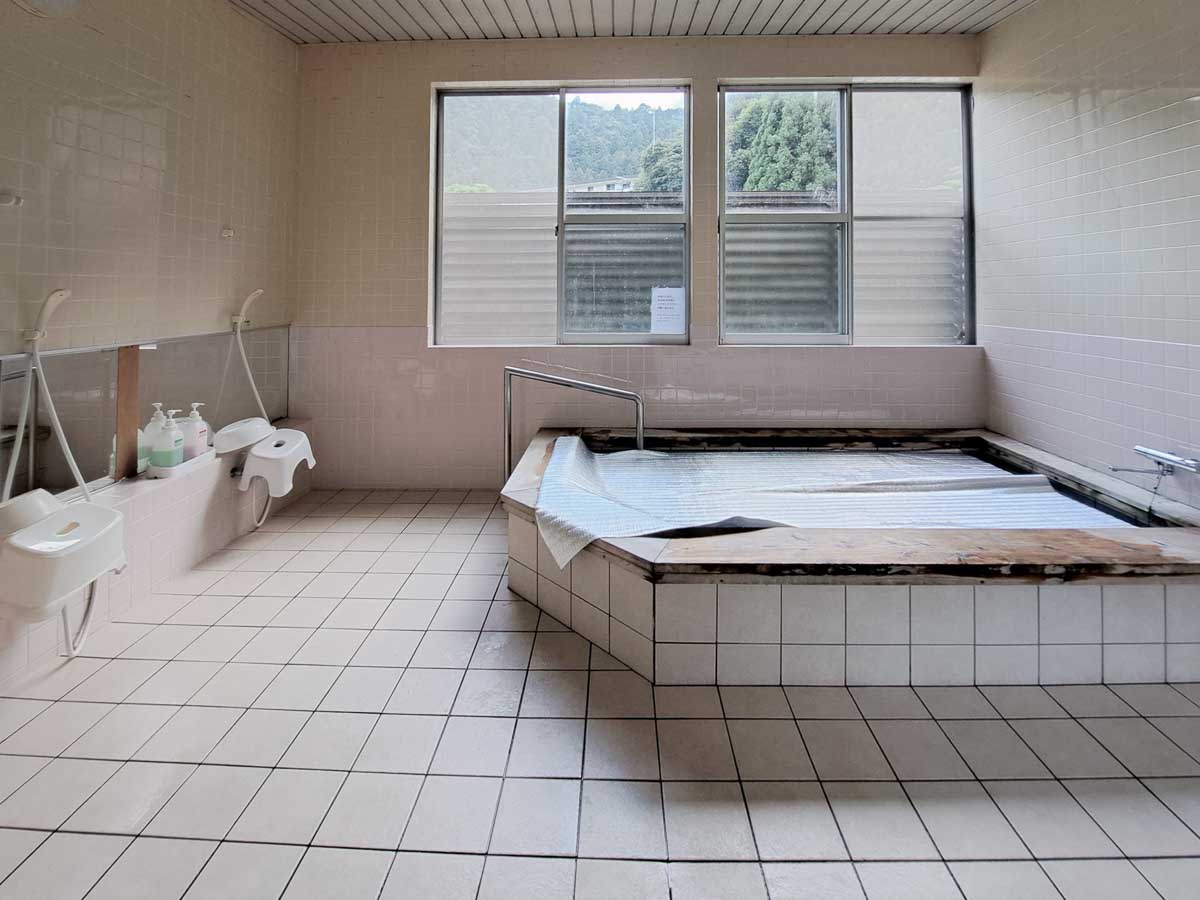
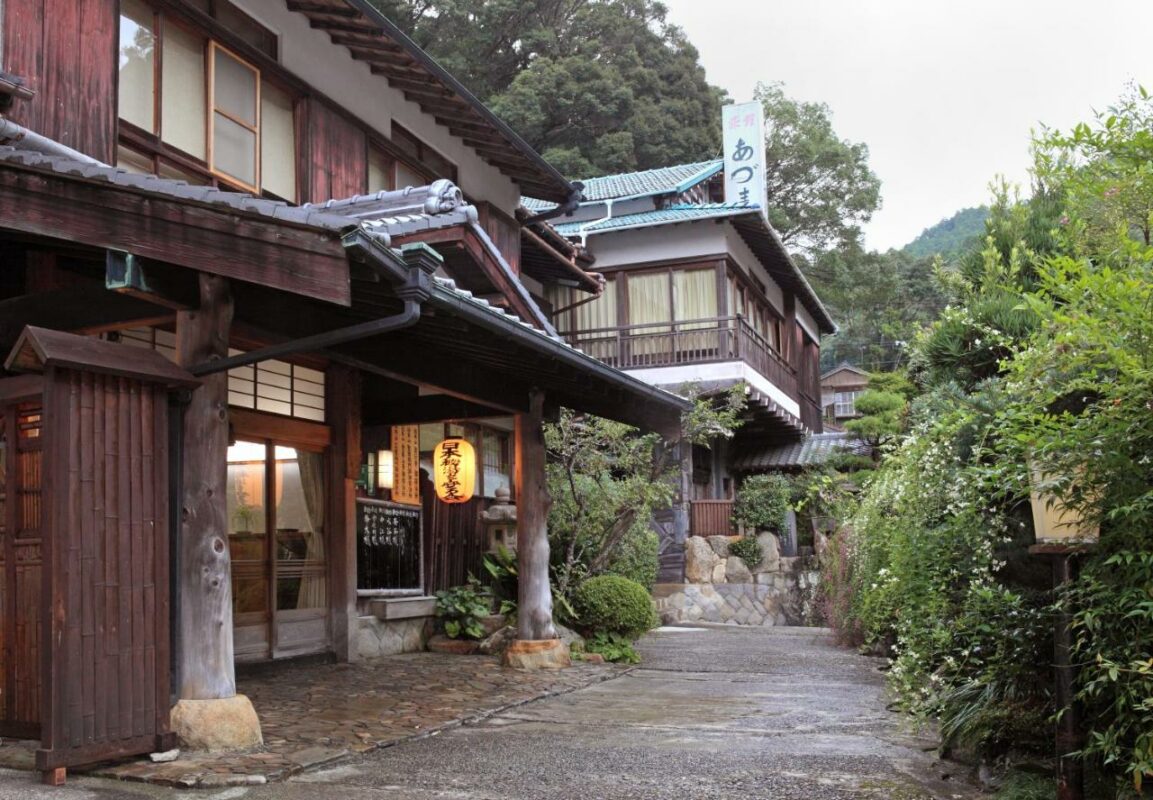
Do not overlook the ordinary bath at your ryokan or minshuku. It may not have a river or cave, but the basic routine is perfect after walking: shoes off, shower, hot soak, clean clothes, dinner.
That daily bath was part of what made the Kumano Kodo accommodation so good. You do not need to turn every evening into an onsen collection exercise. Sometimes the quiet bath downstairs is exactly right.
My Kumano Kodo accommodation guide compares the actual places to stay and explains when to book through Kumano Travel versus Booking.com.
Basic Onsen Etiquette
Wash before entering the bath, keep your towel out of the water and expect to bathe naked. The river at Kawayu is the main exception, where swimsuits are allowed.
Do not take your phone into the bathing area. Do not jump in sweaty from the trail. Do not treat the small towel as an ambitious swimsuit. Everyone else knows what they are doing, but nobody cares that you are new if you follow the obvious rhythm.
Tattoo rules vary by bath and accommodation. Ask before arrival if it matters. A private bath or private Tsuboyu slot removes most of the uncertainty.
How I Would Fit the Onsen Into the Route
For a full walk, use my Nakahechi route guide. If you only have a few days, the two-day and three-day itineraries protect a Hongu-area onsen night rather than treating every evening as transport.
My Verdict
Yunomine is the best single choice, Kawayu is the one I would add for fun, and Kii-Katsuura is where I would finish. Wataze is the useful facilities-first alternative.
The larger point is not to separate the walking and bathing. The Kumano Kodo works because each day ends in a village, a family-run stay, dinner and hot water. The onsen is not recovery content bolted onto a hike.
It is the rhythm of the thing.
Kumano Kodo Travel Planning Cheatsheet
🚑 Should I buy travel insurance for Japan?
100% YES! — Japan has “free” healthcare but it’s only for citizens! Tourists need travel insurance in case anything happens on your visit. Also be aware many policies won’t cover hiking as it’s a high risk activity! (that’s right, check the t&c’s on your complimentary credit card insurance)
I highly recommend World Nomads as you can get specific add-ons for the crazy activities you’re doing – and starts at just $7 a day!
🏩 What’s the best way to book my Kumano Kodo accommodation?
Your only realy two options here are Kumano Travel and Booking.com. Its a complicated process so I wrote this guide here on the best kumano kodo accomodation options
If you don’t want to figure it all out (it’s meant to be a holiday after all) you can book a package tour. Here are my recommendations for both guided and self-guided.
💸How do you pay for things in Japan?
Japan may have flying robots.. but they also still use cash! So you’ll want to get some folding tender out from an ATM when you land. EFTPOS / Debit / Credit Card and Paywave (contactless payments) is common at bigger businesses but small bars, and street vendors want cash.
I personally use a Wise debit card for all my international money needs as they only convert the funds when you make payment, plus they offer a much better spread (margin on the true exchange rate) than the banks do. They work in all Japanese ATMs I tried.
→ Get the Wise card I use — set it up before you fly so it’s ready to tap the moment you land.
🚙 Do you need to rent a car in Japan?
I wouldn’t reccommend it — Transport in Japan is expensive whatever mode you chose, but fortunalty the publc transport system is out of this world in terms of both freqency and coverage. If you are heading to a lot of off the beaten track places, then you may want a rental. I use Discover Cars to find the cheapest rates on rentals cars and remember you can save money if you avoid picking up at the airport.
🚆 What about the JR Rail Pass?
We didn’t – but it depends on the length and itenirary of your trip. The JR Pass is expensive (and just went up in price again!) and if you’re walking the Kumano Kodo you wont need it for probably 6 days straight anyway.
Do the math, but in most cases buying the train fares you need, when you need it will work out more afforably overall – and give you more flexibility (as the JR Pass doesn’t cover all lines)
📲 How do I get internet/data/wifi in Japan and on the trail?
This one needs a whole nother article, but the short version is;
- local SIM cards are cheaper but generally require a fixed term contract (not practical for people visiting)
- Tourist ‘short stay’ SIMs are a bit more expensive but will give you plenty of data while your visiting and are best for solo travelllers.
- If you’re travelling as 2 or more people, renting a pocket WIFI unit from the airport is the most economical option – Works out cheaper than getting two tourists sims
- Use a travel eSIM like Airalo or Airalo. This works from the moment you land is is SOOOOO much easier than trying to pick a data pack in japanese. It also gives you connectivity across neighbouring asian countries if you buy a regional sim! TIP: Grab your Airalo eSIM before you fly and you’ll have data the moment you land, with no hunting for a SIM kiosk.
✈️ What’s the best site to buy flights to Japan?
For finding cheap flights, I recommend Skyscanner. Once you find the flight you’re looking for, I’d then suggest booking directly with the carrier (even if it costs a few $$ more than with one of the agreggators/agencies).
💧Can you drink the water on the Kumano Kodo?
Yes — Japan is very clean. In all townships you’ll pass through and stay along the Kumano Kodo the tap water is drinkable. If you want to drink water from the rivers and streams you generally can but should do so at your own risk. ALWAYS follow best practice and drink from fast flowing water as far up stream as possible. I drank the water and was fine.. but i’d generally recommend a Brita Water Bottle for rehydrating on the trail safely.
🎫 Do I need a visa for Japan?
Likely Not — Japan now recognises 70 countries as ‘visa exempt’ for short term stay. So if you’re a US, UK, NZ, AU and EU passport holder you don’t need a Japansese visas. However, some other countries do (check here!). And if you plan to stay for more than 90 days (an average tourist visa length), you will need to look into the Japanese working holiday visa scheme, or the new Digital Nomad visa scheme.


