

Kumano Kodo Packing List: What I’d Actually Bring

I hiked the Kumano Kodo Nakahechi route in July, which is a pretty efficient way to learn what you should and should not carry. Hot, humid, steep, slippery in places, and then somehow still civilised enough that you end the day eating an enormous dinner in a ryokan.
So the packing list is not really about bringing more gear. It is about bringing the right small things, sending the bulky stuff ahead, and not turning a beautiful pilgrimage into a sweaty punishment exercise.
This is what I would actually pack if I walked it again. For the walking route itself, start with my Nakahechi route guide. For the bigger planning rabbit hole, use the complete Kumano Kodo guide.

Table of Contents
The Short Version
Use luggage transfer, walk with a small daypack, and pack for rain, sweat, slippery stone steps and ryokan stays – not wilderness camping.
That is the whole trick. The Kumano Kodo is a mountain route, but it is not Kilimanjaro and it is not a New Zealand hut tramp. You are walking between villages and guesthouses, often with meals organised, baths waiting, and your main bag able to appear at the next stop like magic.
Magic with paperwork, obviously.
My Kumano Kodo Packing System
The official advice from Tanabe City Kumano Tourism Bureau is to pack light, carry rain gear, use quick-dry layers, bring blister treatment, and use luggage shuttle where it makes sense. That matches my experience exactly.
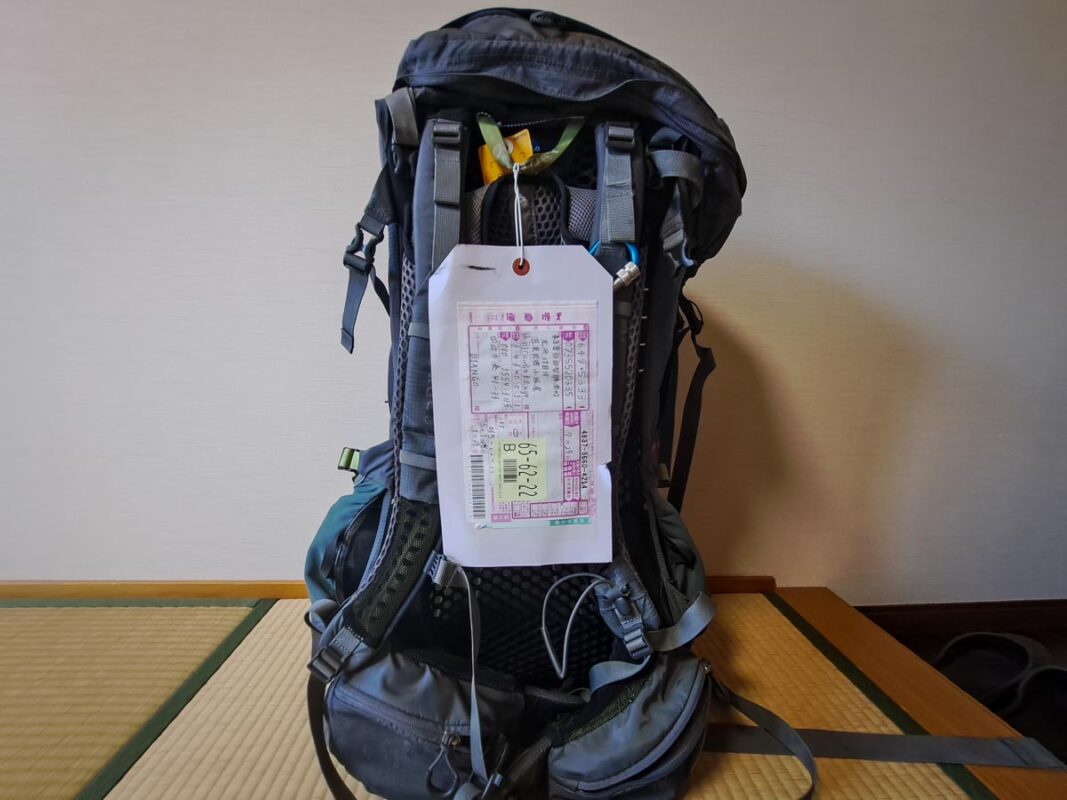
I would build the whole packing list around luggage transfer. We sent our larger bag from Tanabe to Kii-Katsuura and walked with lighter packs. In July heat, this was not a luxury. It was the difference between enjoying the walk and slowly becoming a wet sock with opinions.
In my original notes I had a 40L pack plus a tiny lightweight daypack, and that worked. But the better version is simpler: send the main bag ahead when the route allows, then walk with one small daypack. Less admin in the morning. Less sweating. Fewer quiet personal crises halfway up a hill.

What To Carry in Your Daypack
Your daypack is the important bag because it is the one actually on your back while climbing over the Kii Peninsula. Keep it small enough that you do not hate it by 11am.
I would use something around 20L, like the Osprey Daylite Plus. Big enough for rain gear, lunch and water; small enough that you cannot accidentally pack half of Osaka.
If you are walking in summer, the small towel is not optional in spirit. You will sweat through everything, then see a perfect river and suddenly become a very enthusiastic person about towels.
Togs and towel. That is probably the most Kiwi packing advice in this whole post, but it applies here. The Kumano Kodo has some lovely river spots, and after five humid hours on trail, a quick swim feels like cheating in the best possible way.
Footwear: Trail Shoes or Boots?
My biggest gear mistake was underestimating the stone steps. I wore a newer pair of running shoes and quickly wished I had brought proper trail runners. Large parts of the route are mossy stone, uneven trail, road, stairs, roots and steep descents.
If you have strong ankles and like moving light, trail runners are great. If you want more support, go for light hiking boots. Either way, the important bit is grip. The Kumano Kodo is not technical, but wet stone steps are rude.
For shoes, I would look at something like Hoka Speedgoats or Altra Lone Peaks if you like trail runners, or Salomon X Ultra Pioneer Mid GTX if you want more ankle support.
And spend money on socks. A few pairs of Darn Tough Hiker Midweight socks will do more for your mood than a fancy travel shirt ever will.
Tip: Do not start the Kumano Kodo in brand-new shoes. I know everyone says this. Annoyingly, everyone is right.
Also, this is not the trail for minimalist road runners unless you really know what you are doing. There are road sections, yes, but the annoying bits are the slick old steps and steep descents. That is where grip and confidence matter.
Should You Bring Hiking Poles?
Yes, I would bring hiking poles for the Kumano Kodo, or at least one pole. Not because the trail is brutally technical, but because the old stone steps can be slick, uneven and surprisingly awkward when your legs are getting tired.
I did not use poles, because I basically never do. This is not a principled gear decision. I am just so uncoordinated that asking two more appendages to join the project feels ambitious.
But this is one of those trails where I can see the point. Even one pole gives you a third contact point on wet descents, mossy stones and those long staircase sections that seem fine until your knees start making comments.
Good hiking poles also fold down tiny now. Something like the Black Diamond Alpine Carbon Cork poles can disappear into your main bag or strap to the outside of a daypack, so you can carry them for the rougher sections without committing to full Nordic-walking cosplay all day.
Tip: If you are only taking one pole, use it on the downhill side and swap hands as the trail changes. Slightly annoying for the first ten minutes, then very useful once the stone steps get slick.
Clothes: Quick-Dry Everything

Pack less clothing than your anxious pre-trip brain wants. You are not dressing for Tokyo restaurants. You are walking, sweating, bathing, eating dinner, sleeping, then doing it again.
I would take two hiking shirts, one light long-sleeve, two pairs of hiking socks, underwear, one spare walking bottom, sleep clothes, and a lightweight warm layer if you are outside peak summer. In July, warmth was not the issue. Existing as a dry human was the issue.
A merino or quick-dry base layer like Icebreaker merino is useful outside summer. For underwear, quick-dry pairs like ExOfficio Give-N-Go are boring but excellent. And boring-but-excellent is basically the dream for multi-day hiking clothes.
I would not pack a fresh outfit for every day. That sounds nice from home and silly once you are carrying it. Bring enough to stay vaguely hygienic, then let the ryokan bath do the emotional heavy lifting each evening.

The Kumano Travel booking walkthrough, a printable packing checklist and budget planner, the trail map and the full Google Maps pin set — one instant download.
Get the Planning Kit — $27Rain Gear and Sun Gear
The Kii Peninsula gets a lot of rain, and the official guidance says rainwear is useful all year. I would bring a proper lightweight rain jacket, not just optimism.
A basic waterproof shell like The North Face Venture 2 is enough for most walkers. You are not mountaineering. You just need something that keeps you dry when the forest decides to have a moment.
Also pack a hat, sunglasses and sunscreen. Summer on the Kumano Kodo is humid and shaded in places, but you still get exposed road and village sections. You will feel silly carrying sunscreen until you very much do not.
A small folding umbrella is also common in Japan and can be surprisingly useful around towns or gentle road sections. I would still prioritise a proper rain jacket for walking, because umbrellas and forest tracks are not always best friends.
Food, Water and Cash

This is where the Kumano Kodo is different from a normal hike. The food is not just fuel. The minshuku and ryokan dinners were one of the best parts of the whole experience.
If your accommodation offers breakfast, dinner and packed lunch, pay for it. This is not the place to be clever and save a few yen by hoping a tiny village shop is open exactly when you arrive.
Carry enough water for the day, especially in summer. Japan has vending machines in places that feel slightly miraculous, but you should still start each day properly supplied. I would carry 1.5-2L as standard and more on hot, long sections.
And bring cash. Small shops, buses, vending machines, coin lockers and little settlements are not always card-friendly. Japan may have flying robots.. but it also still loves cash.
For water, I did not feel like I needed a serious backcountry filter system, but having a lightweight backup is never a bad idea. Japan tap water is drinkable, accommodation can refill you, and vending machines appear with suspiciously good timing. Still, hot days are hot days. Start full.
Maps, Documents and Pilgrim Bits
I would carry the official route maps, either printed or saved offline. The official Kumano Kodo maps are excellent, and paper copies are available at information centres around the route. The trail is well marked, but paper still wins when your phone is hot, wet, dead, or having a small technological sulk.
You should also keep your passport, accommodation details, any luggage-transfer forms, emergency numbers, and a bit of cash somewhere boringly secure. Not dramatic. Just one of those things you will be glad you did if the day gets messy.
If you are collecting stamps, bring the stamp booklet and maybe your own tiny ink pad. This is not essential, but it is fun in that gentle, pilgrimage-nerd sort of way. I got into it more than expected.

Small Things I Would Not Skip
These are the bits that do not feel exciting when you pack them, then become extremely useful on trail. Very annoying genre of item.
I would also bring a small ink pad if you care about the pilgrimage stamps. Many stamp boxes have ink, but not all of them are in perfect condition. If you are the sort of person who enjoys collecting stamps along the route – and I absolutely was – this is a tiny win.
What Goes in the Main Bag
Your main bag is where the comfort items live. Not hiking comfort – evening comfort. Clean clothes, spare layers, chargers, toiletries, maybe a second pair of shoes or sandals, and whatever you want after a shower when your legs have stopped making legal threats.
I would pack the daypack first, because that is the mission-critical bag. Then pack the main bag with one simple question for every extra item: will I actually use this after walking all day?
Most of the time, the answer is no. You need less than you think. A clean shirt for dinner feels amazing; four backup shirts just become fabric you paid to move around Japan.
What I Would Leave Behind
This is just as important as the gear list. The Kumano Kodo punishes overpacking in the most boring way possible: your shoulders hurt, your clothes stay damp, and you start resenting items you were excited about three days earlier.
If you are tempted to carry everything yourself, read my Kumano Kodo luggage transfer guide first. I am all for being stubborn, but carrying your rest-of-Japan bag over the Nakahechi in July is not character building. It is just hot.
The only exception is if you are deliberately doing it old-school, carrying everything because you enjoy the purity of it. Fine. I respect that. I will also be in the onsen slightly earlier.
Spring and Autumn Packing Notes
Spring and autumn are probably the sweet spot for most people walking the Kumano Kodo. You avoid the worst of the July soup, the trail feels a bit more civilised, and the ryokan bath at the end of the day still has that beautiful little recovery-miracle thing going on.
But shoulder season is also the easiest time to underpack, because the daytime forecast can look friendly while the mornings, evenings and wet forest sections still feel properly cool. I would add a light fleece or merino layer, a long-sleeve hiking shirt, slightly warmer sleep clothes and a dry pair of socks kept sacred in the main bag.
Rain gear matters even more here. Not because spring and autumn are guaranteed to be grim, but because a cool wet day is a very different beast from a hot wet day. In summer you are wet and annoyed. In spring or autumn you can get cold and annoyed, which is worse.
Summer Packing Notes
I walked in July, so my packing bias is very much shaped by heat and humidity. Summer Kumano is sweaty. No elegant way around that.
In summer, I would prioritise quick-dry clothes, sun protection, insect repellent, extra water capacity and a towel for swims. Chikatsuyu, the river around Kowaze, and Koguchi were all excellent places to cool off. I wrote those up properly in my Kumano Kodo swimming spots.
Summer is where I would be most tempted to strip the pack right back. Do not take that as permission to skip rain gear. The Kii Peninsula is still the Kii Peninsula, and the weather does not care that you packed for vibes.
Summer also changes how much you care about laundry. Quick-dry clothes are great, but nothing dries quickly when the air itself feels damp. Pack assuming things may still be a little sweaty in the morning. Grim, but useful.
Winter Packing Notes
Winter is the one season where I would stop treating this as a light summer pilgrimage with a few tweaks. The Kumano Kodo is not a high alpine expedition, but winter means shorter days, colder starts, colder guesthouse transitions, more consequence if you get wet, and the possibility of snow or ice on higher, shaded sections.
If I walked it in winter, I would still use luggage transfer where possible, but the daypack would get more serious: warm hat, gloves, fleece or light puffer, waterproof shell, emergency snack, headlamp, power bank and a dry layer sealed in a bag. You do not need to cosplay as a Himalayan mountaineer, but you do need margin.
Footwear also changes slightly. Trail runners can still work if conditions are dry and you are confident, but light boots make more sense for a lot of winter walkers, especially if the forecast is wet or cold. The old stone steps are slippery enough without adding numb toes and misplaced confidence.
The article above explains the thinking. The printable checklist itself lives inside my Kumano Kodo Planning Kit, because that is part of the paid route-planning bundle rather than a random download floating around the site.
My Final Packing Advice
If you remember one thing, make it this: the Kumano Kodo is better with a light pack. You are there for the forest, the shrines, the villages, the baths, the dinners, the tiny moments on the trail – not to prove you can carry spare jeans over a mountain.
Use luggage transfer where it makes sense. Wear grippy shoes. Bring rain gear. Carry cash. Pack a towel. Pay for the packed lunch.
And leave room for snacks. Obviously.
The Kumano Travel booking walkthrough, a printable packing checklist and budget planner, the trail map and the full Google Maps pin set — one instant download.
Get the Planning Kit — $27Kumano Kodo Travel Planning Cheatsheet
🚑 Should I buy travel insurance for Japan?
100% YES! — Japan has “free” healthcare but it’s only for citizens! Tourists need travel insurance in case anything happens on your visit. Also be aware many policies won’t cover hiking as it’s a high risk activity! (that’s right, check the t&c’s on your complimentary credit card insurance)
I highly recommend World Nomads as you can get specific add-ons for the crazy activities you’re doing – and starts at just $7 a day!
🏩 What’s the best way to book my Kumano Kodo accommodation?
Your only realy two options here are Kumano Travel and Booking.com. Its a complicated process so I wrote this guide here on the best kumano kodo accomodation options
If you don’t want to figure it all out (it’s meant to be a holiday after all) you can book a package tour. Here are my recommendations for both guided and self-guided.
💸How do you pay for things in Japan?
Japan may have flying robots.. but they also still use cash! So you’ll want to get some folding tender out from an ATM when you land. EFTPOS / Debit / Credit Card and Paywave (contactless payments) is common at bigger businesses but small bars, and street vendors want cash.
I personally use a Wise debit card for all my international money needs as they only convert the funds when you make payment, plus they offer a much better spread (margin on the true exchange rate) than the banks do. They work in all Japanese ATMs I tried.
→ Get the Wise card I use — set it up before you fly so it’s ready to tap the moment you land.
🚙 Do you need to rent a car in Japan?
I wouldn’t reccommend it — Transport in Japan is expensive whatever mode you chose, but fortunalty the publc transport system is out of this world in terms of both freqency and coverage. If you are heading to a lot of off the beaten track places, then you may want a rental. I use Discover Cars to find the cheapest rates on rentals cars and remember you can save money if you avoid picking up at the airport.
🚆 What about the JR Rail Pass?
We didn’t – but it depends on the length and itenirary of your trip. The JR Pass is expensive (and just went up in price again!) and if you’re walking the Kumano Kodo you wont need it for probably 6 days straight anyway.
Do the math, but in most cases buying the train fares you need, when you need it will work out more afforably overall – and give you more flexibility (as the JR Pass doesn’t cover all lines)
📲 How do I get internet/data/wifi in Japan and on the trail?
This one needs a whole nother article, but the short version is;
- local SIM cards are cheaper but generally require a fixed term contract (not practical for people visiting)
- Tourist ‘short stay’ SIMs are a bit more expensive but will give you plenty of data while your visiting and are best for solo travelllers.
- If you’re travelling as 2 or more people, renting a pocket WIFI unit from the airport is the most economical option – Works out cheaper than getting two tourists sims
- Use a travel eSIM like Airalo or Airalo. This works from the moment you land is is SOOOOO much easier than trying to pick a data pack in japanese. It also gives you connectivity across neighbouring asian countries if you buy a regional sim! TIP: Grab your Airalo eSIM before you fly and you’ll have data the moment you land, with no hunting for a SIM kiosk.
✈️ What’s the best site to buy flights to Japan?
For finding cheap flights, I recommend Skyscanner. Once you find the flight you’re looking for, I’d then suggest booking directly with the carrier (even if it costs a few $$ more than with one of the agreggators/agencies).
💧Can you drink the water on the Kumano Kodo?
Yes — Japan is very clean. In all townships you’ll pass through and stay along the Kumano Kodo the tap water is drinkable. If you want to drink water from the rivers and streams you generally can but should do so at your own risk. ALWAYS follow best practice and drink from fast flowing water as far up stream as possible. I drank the water and was fine.. but i’d generally recommend a Brita Water Bottle for rehydrating on the trail safely.
🎫 Do I need a visa for Japan?
Likely Not — Japan now recognises 70 countries as ‘visa exempt’ for short term stay. So if you’re a US, UK, NZ, AU and EU passport holder you don’t need a Japansese visas. However, some other countries do (check here!). And if you plan to stay for more than 90 days (an average tourist visa length), you will need to look into the Japanese working holiday visa scheme, or the new Digital Nomad visa scheme.


