

Kumano Kodo 2-Day and 3-Day Itineraries (The Best Short Routes)

If you only have two days, walk from Takijiri-oji to Kumano Hongu Taisha. It is roughly 38 kilometres, follows the classic Nakahechi in the right direction and ends at the Kumano Kodo completion stamp in Hongu.
More importantly, this is not just two attractive bits stitched together with a bus. You leave the road at Takijiri, sleep around Chikatsuyu, then keep walking until you reach one of the three grand shrines. It feels like a small pilgrimage rather than a Kumano highlights reel.
It is a demanding two days, especially the long second stage, but it is the shortest point-to-point route that independently qualifies for the Kumano side of Dual Pilgrim status. If you have three days, I would still begin at Takijiri and use the extra time to make the journey less frantic.
My pick: Takijiri-oji to Hongu in two days, with a night around Chikatsuyu. Stay in Kii-Tanabe beforehand and book an onsen night around Hongu for the finish.
Table of Contents
The Short Routes at a Glance
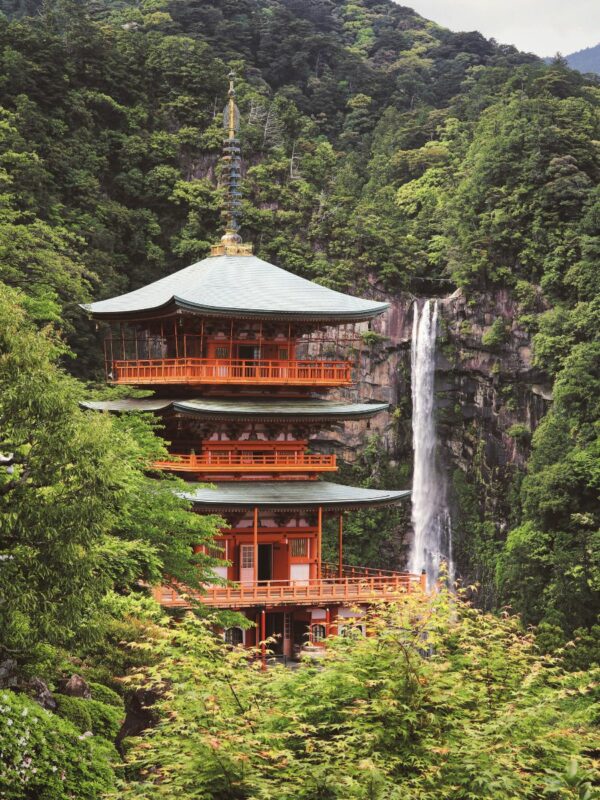
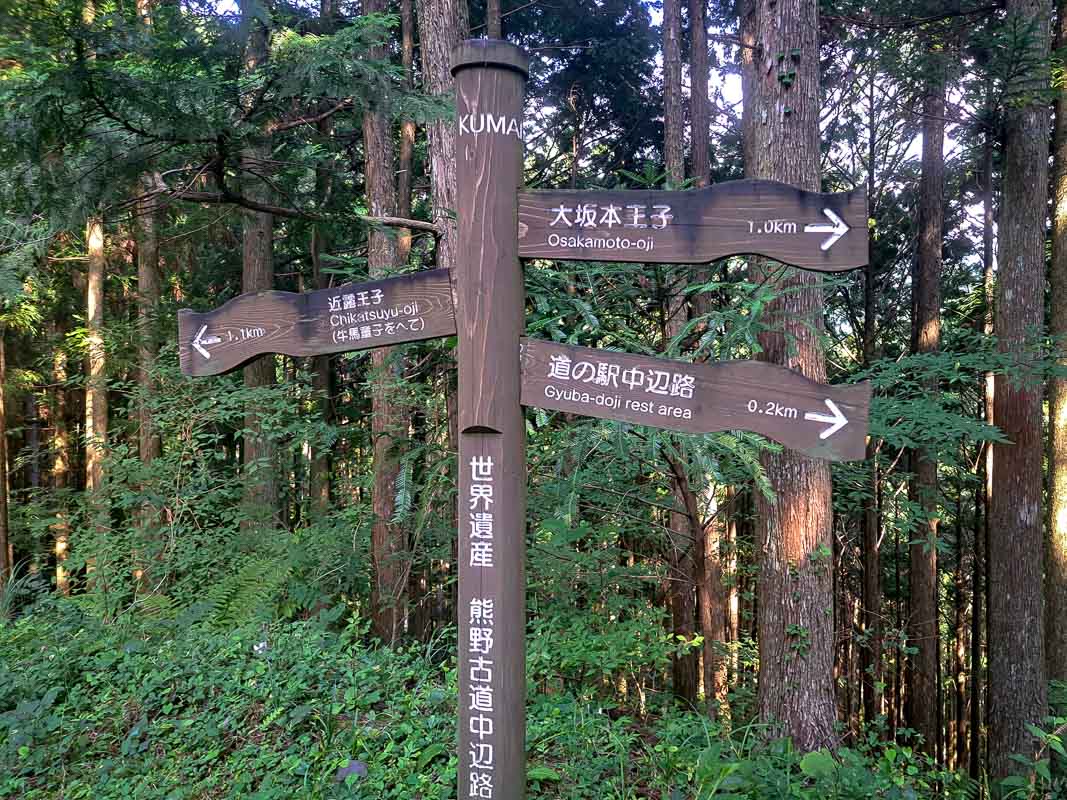
The official suggested walks specifically list Takijiri-to-Hongu as a two-day walk, while the official Kumano model itineraries include slower and more forgiving variations. The official timings are not decorative, though: day two is long. Start early and treat 24.5 kilometres of wet stone, roots and repeated climbing with a little respect.
My Recommended 2-Day Kumano Kodo Itinerary
Takijiri-oji to Hongu is the cleanest answer to the two-day question. You walk the historic approach to Kumano Hongu Taisha, collect stamps all the way through, and finish at the shrine’s completion stamp.
Walking from Takijiri to Hongu is also one of the official ways to qualify for the Kumano Kodo half of the Dual Pilgrim programme. You do not need to have walked the Camino to enjoy the credential, but if Santiago is somewhere in your past or future, this route counts.
Before Day 1: Stay in Kii-Tanabe
Stay in Kii-Tanabe the night before and catch the morning bus to Takijiri-oji. Do not try to arrive from Osaka or Kyoto that morning. Even the official route guidance says the connections leave too little time, and the first climb begins almost immediately.
Tip: Pick up your pilgrim credential in Tanabe before you leave. Stamp stands sit along the route, and the Hongu Taisha stamp goes in the completion space at the front.
Day 1: Takijiri-oji to Chikatsuyu
Day one is roughly 16 kilometres and around six hours of walking. From Takijiri-oji the trail climbs steeply to Takahara, then keeps rolling through forest, small oji shrines and the Gyuba-doji statue before dropping into Chikatsuyu.
It is a proper opening day without being silly. Stop at Takahara, carry lunch, collect the stamps and leave enough daylight to enjoy Chikatsuyu rather than stumbling into dinner with one boot half undone.
Stay in Chikatsuyu or slightly farther along around Nonaka if the right minshuku is available. The family-run accommodation, bath, dinner and next-day bento are not admin. They are half the trip.
Day 2: Chikatsuyu to Hongu

This is the catch: day two is about 24.5 kilometres and the official estimate is around nine hours. You pass Tsugizakura-oji, climb and descend repeatedly, then join the gentler final approach from Hosshinmon-oji to Hongu.
Start early, carry the bento from your accommodation and do not plan a tight onward bus. When Kumano Hongu Taisha finally appears, stamp the completion page in your credential, visit the shrine and walk down to the enormous Oyunohara torii.
Then stay. Yunomine, Kawayu and Wataze are all close enough for a post-walk soak, and charging straight back to Osaka would be a strangely efficient way to miss the best bit.
My Recommended 3-Day Kumano Kodo Itinerary
This three-day route has an actual shape. It starts gently around Hongu, gives you a proper onsen evening, then links the final two walking stages through Koguchi to Nachi Falls.
Before Day 1: Get to the Hongu Area
Arrive the previous afternoon. Hongu is the practical base; Yunomine is the atmospheric one; Kawayu is the river-onsen option. I would choose Yunomine or Kawayu because hot water is part of the Kumano Kodo experience, not an optional wellness garnish.
You can reach the area by bus from Kii-Tanabe or Shingu. Current timetables matter, so check them close to travel and avoid planning a knife-edge connection from Osaka on the morning you intend to walk.
Tip: Send your main luggage to Kii-Katsuura before coming inland. Three days is short enough that a tiny hiking pack is all you need, and the stone steps are much more pleasant without your entire Japan wardrobe.
Day 1: Hosshinmon-oji to Hongu
Start with the friendliest section of the route. Take the bus to Hosshinmon-oji, then walk roughly seven kilometres through small settlements, forest and shrine sites to Kumano Hongu Taisha.
This is not a huge hiking day. Good. It gives you time to collect stamps, visit Hongu Taisha, walk down to the enormous Oyunohara torii and get back to your onsen village without turning dinner time into a sprint.
If you want more walking, the Dainichi-goe trail links Hongu with Yunomine. It is only a few kilometres, but it climbs sharply and adds real effort. Take the bus if your legs or timing say no. Pilgrimage points are not awarded for missing dinner.
Day 2: Ukegawa to Koguchi
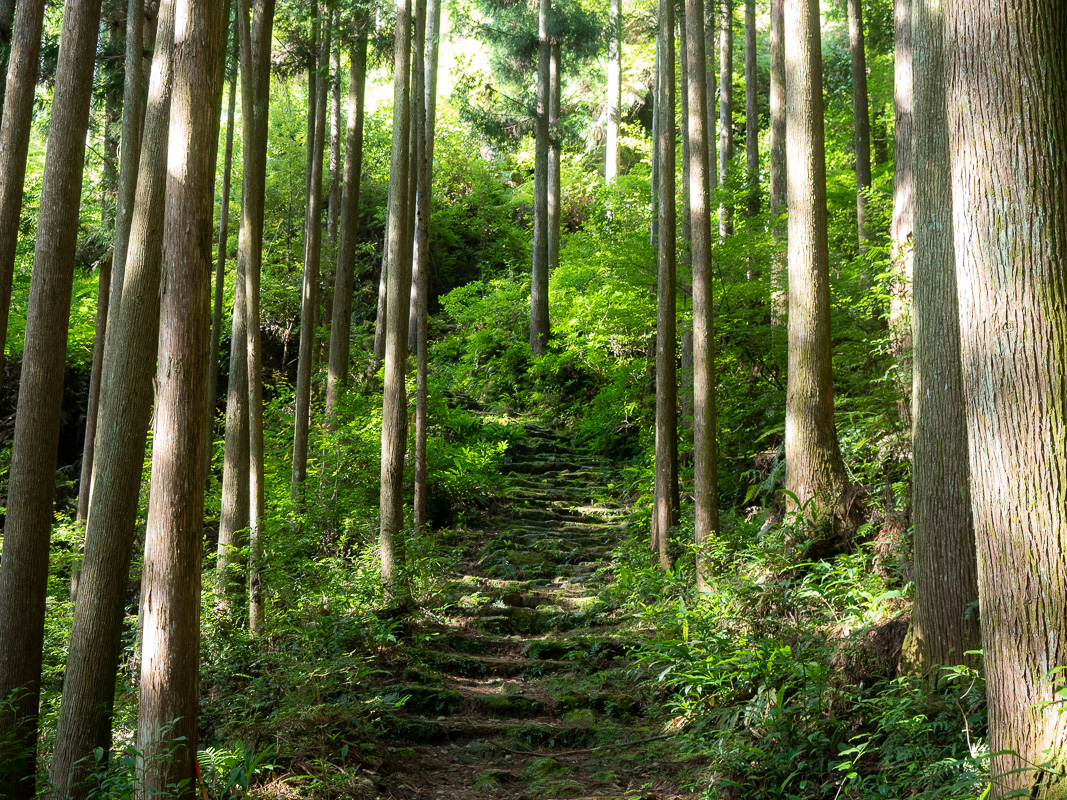

This is where the short trip becomes a proper hike. Start at Ukegawa and cross Kogumotori-goe to Koguchi: roughly 13 kilometres, 4.5 to 6 hours, with around 670 metres of climbing and a similar amount of descent.
The route is quieter than the western Nakahechi sections. There are viewpoints, forest, old stone and long stretches where the trail simply gets on with being a trail. Carry lunch and enough water because there is no cheerful mid-mountain ramen shop.
Near the end, the river around Kowaze and Koguchi is excellent in warm weather. We ate our bento on a rock in the water before town, and the swimming hole at Koguchi campground was another favourite. My swimming-hole guide has the exact spots.
Stay in Koguchi. There are very few beds, so this night controls the whole itinerary. Book it first.
Day 3: Koguchi to Nachi Falls

The final day is the hard one: about 14 kilometres, 7 to 9 hours, roughly 1,260 metres up and 930 metres down. Ogumotori-goe climbs early, keeps climbing, then eventually tips you toward Nachi.
This is why I like finishing the short route here. The walk has weight, and then the forest opens toward Kumano Nachi Taisha, Seiganto-ji and Nachi Falls. It feels like an arrival rather than a bus stop you have inserted for SEO purposes.
Heads up: Start early. The Koguchi-to-Nachi day is not technical, but it is steep, humid in summer and too long to begin casually after breakfast photos.
From Nachi, take the bus to Kii-Katsuura. Stay the night, eat tuna and find an onsen. My Kii-Katsuura guide covers the finish properly.
The Harder 2-Day Hongu-to-Nachi Route
Walk Ukegawa to Koguchi on day one, then Koguchi to Nachi on day two. This is the stronger alternative if reaching Nachi Falls matters more to you than walking into Hongu.
It works because the walking is contiguous and the finish is excellent. The trade-off is equally obvious: you miss Takijiri, Chikatsuyu, most of the imperial route and the official Takijiri-to-Hongu pilgrimage.
You also cannot wing the Koguchi night. If accommodation there is full, the itinerary is effectively broken. Check beds before trains, flights or heroic declarations.
The Easier 2-Day Highlights Version
If you care more about shrines and atmosphere than mileage, walk Hosshinmon-oji to Hongu on day one and Daimon-zaka to Nachi on day two. Use buses between the Hongu area and Kii-Katsuura.
This is disjointed, but honest about being disjointed. You get two beautiful, culturally important sections without taking on the hardest day of the route. It suits non-hikers, families with older children or anyone fitting Kumano into a wider Japan trip.
I would still stay in an onsen village after day one and in Kii-Katsuura after day two. Otherwise the trip becomes two walks surrounded by a surprising amount of public transport.
Can You Walk the Full Nakahechi in Three Days?
A very fit hiker could force Takijiri to Nachi into three enormous days. I would not recommend it. The normal route is roughly 70 kilometres with repeated climbing, fixed dinner times and a final day that already contains more than 1,200 metres of ascent.
Compressing it means racing through Hongu, cutting out the onsen villages or arriving at family-run accommodation late. Those are not side attractions. They are half the reason to walk here.
If three days is the hard limit, skip sections using the bus and enjoy the parts you keep. There is no prize for technically covering more trail while seeing less of it.
How Hard Are These Short Routes?
The three-day trip has one easy day, one moderate day and one hard day. Hosshinmon to Hongu is approachable for most active travellers. Ukegawa to Koguchi is a proper half-day mountain walk. Koguchi to Nachi earns the early start.
Short does not mean soft.
The difficulty comes from cumulative stone steps, humidity, wet roots and elevation rather than exposure or technical scrambling. In rain, the old stone can be slick. In July, I found the heat far more punishing than the navigation.
The easy two-day highlights option removes most of that physical difficulty. The trade-off is more bus time and less of the continuous pilgrimage feeling.
Where to Stay on a Short Kumano Kodo Trip
My accommodation guide explains the booking order and alternatives. If you choose the Hongu-to-Nachi route instead, lock in Koguchi first and use Minshuku Wakatake for a simple finish near Kii-Katsuura station.
What to Pack and How to Handle Luggage
Walk with a daypack. Send your main bag to your Hongu-area accommodation or onward to the next sensible stop using the options in my luggage-transfer guide, then use the Kumano Kodo packing list for the small set of things you actually need.
Bring rain protection, grippy footwear, water, bento, snacks, cash, blister supplies and a warm layer outside summer. One hiking pole is useful on slick stone steps even if, like me, coordinating extra appendages feels unnecessarily advanced.
Would I Do Only Two or Three Days?
Yes. I would walk Takijiri to Hongu. It is hard enough to feel earned, long enough to settle into the rhythm of the trail, and it finishes somewhere that actually means something.
Three days gives you more choices, but more is not automatically better. The Hongu-to-Nachi version has bigger mountain days and the spectacular Nachi finish; the two-day Takijiri route has the stronger pilgrimage story. With limited time, that is the one I would keep.
Kumano Kodo Travel Planning Cheatsheet
🚑 Should I buy travel insurance for Japan?
100% YES! — Japan has “free” healthcare but it’s only for citizens! Tourists need travel insurance in case anything happens on your visit. Also be aware many policies won’t cover hiking as it’s a high risk activity! (that’s right, check the t&c’s on your complimentary credit card insurance)
I highly recommend World Nomads as you can get specific add-ons for the crazy activities you’re doing – and starts at just $7 a day!
🏩 What’s the best way to book my Kumano Kodo accommodation?
Your only realy two options here are Kumano Travel and Booking.com. Its a complicated process so I wrote this guide here on the best kumano kodo accomodation options
If you don’t want to figure it all out (it’s meant to be a holiday after all) you can book a package tour. Here are my recommendations for both guided and self-guided.
💸How do you pay for things in Japan?
Japan may have flying robots.. but they also still use cash! So you’ll want to get some folding tender out from an ATM when you land. EFTPOS / Debit / Credit Card and Paywave (contactless payments) is common at bigger businesses but small bars, and street vendors want cash.
I personally use a Wise debit card for all my international money needs as they only convert the funds when you make payment, plus they offer a much better spread (margin on the true exhange rate) than the banks do. They work in all Japanese ATMs I tried.
🚙 Do you need to rent a car in Japan?
I wouldn’t reccommend it — Transport in Japan is expensive whatever mode you chose, but fortunalty the publc transport system is out of this world in terms of both freqency and coverage. If you are heading to a lot of off the beaten track places, then you may want a rental. I use Discover Cars to find the cheapest rates on rentals cars and remember you can save money if you avoid picking up at the airport.
🚆 What about the JR Rail Pass?
We didn’t – but it depends on the length and itenirary of your trip. The JR Pass is expensive (and just went up in price again!) and if you’re walking the Kumano Kodo you wont need it for probably 6 days straight anyway.
Do the math, but in most cases buying the train fares you need, when you need it will work out more afforably overall – and give you more flexibility (as the JR Pass doesn’t cover all lines)
📲 How do I get internet/data/wifi in Japan and on the trail?
This one needs a whole nother article, but the short version is;
- local SIM cards are cheaper but generally require a fixed term contract (not practical for people visiting)
- Tourist ‘short stay’ SIMs are a bit more expensive but will give you plenty of data while your visiting and are best for solo travelllers.
- If you’re travelling as 2 or more people, renting a pocket WIFI unit from the airport is the most economical option – Works out cheaper than getting two tourists sims
- Use a travel eSIM like Saily or Airalo. This works from the moment you land is is SOOOOO much easier than trying to pick a data pack in japanese. It also gives you connectivity across neighbouring asian countries if you buy a regional sim! TIP: I used to use Airalo but now find Saily a much better product – you can get 5% off with code SPECIAL5
✈️ What’s the best site to buy flights to Japan?
For finding cheap flights, I recommend Skyscanner. Once you find the flight you’re looking for, I’d then suggest booking directly with the carrier (even if it costs a few $$ more than with one of the agreggators/agencies).
💧Can you drink the water on the Kumano Kodo?
Yes — Japan is very clean. In all townships you’ll pass through and stay along the Kumano Kodo the tap water is drinkable. If you want to drink water from the rivers and streams you generally can but should do so at your own risk. ALWAYS follow best practice and drink from fast flowing water as far up stream as possible. I drank the water and was fine.. but i’d generally recommend a Brita Water Bottle for rehydrating on the trail safely.
🎫 Do I need a visa for Japan?
Likely Not — Japan now recognises 70 countries as ‘visa exempt’ for short term stay. So if you’re a US, UK, NZ, AU and EU passport holder you don’t need a Japansese visas. However, some other countries do (check here!). And if you plan to stay for more than 90 days (an average tourist visa length), you will need to look into the Japanese working holiday visa scheme, or the new Digital Nomad visa scheme.


