

Whanganui River Journey: My 4-Day Canoe Route

Tip: I did the full Taumarunui to Pipiriki journey in February 2023, compressing the usual five days into four. It is totally doable, but that first day is long.
The Whanganui River Journey is the most fun New Zealand Great Walk to do with a group of mates. You are in canoes rather than walking boots, the barrels swallow an irresponsible amount of food, and the river carries you steadily into a part of the North Island that roads mostly forgot.
I paddled the full 145 km from Taumarunui to Pipiriki with my partner and a big group of friends. We used Owhango Adventures, camped for three nights and did it self-guided. That gave us the freedom to stop, mess around and tip canoes over without having to keep to anyone else’s pace.
My honest recommendation is to do the full journey over five days. The three-day Whakahoro to Pipiriki section gets more attention, but the upper river was actually my favourite: quieter, more peaceful and broken up by rapids that were fun without being too crazy. Our four-day version works, but it creates a 57 km opening day.

Table of Contents
Which Whanganui Journey Should You Do?
Do the full Taumarunui to Pipiriki journey, and take five days if you have them. The upper river was my favourite section. It was far quieter than the popular lower stretch, with peaceful gaps between small rapids and hardly anyone else around.
If time is tight, starting at Whakahoro still gives you an excellent 88 km trip through the deep gorges, Bridge to Nowhere and the best-known rapids. I just would not call it the better journey. The changing river, and those quiet first two standard stages, are a big part of what made the full trip.
The current DOC guide lists the full journey at 145 km / five days and the Whakahoro to Pipiriki section at 88 km / three days. River levels can make the same distance feel very different.
Who I Booked With
I used Owhango Adventures, and I would use them again. We stayed at their fairly basic lodge the night before, then they handled the Taumarunui drop-off, Pipiriki pick-up, canoes, life jackets, paddles, waterproof barrels and safety briefing.
The barrels are the great leveller. Suddenly there is room for fresh food, a few luxuries and enough snacks to make a tramping pack look rather miserable. At the other end, Owhango had a hot shower waiting. Beautiful.
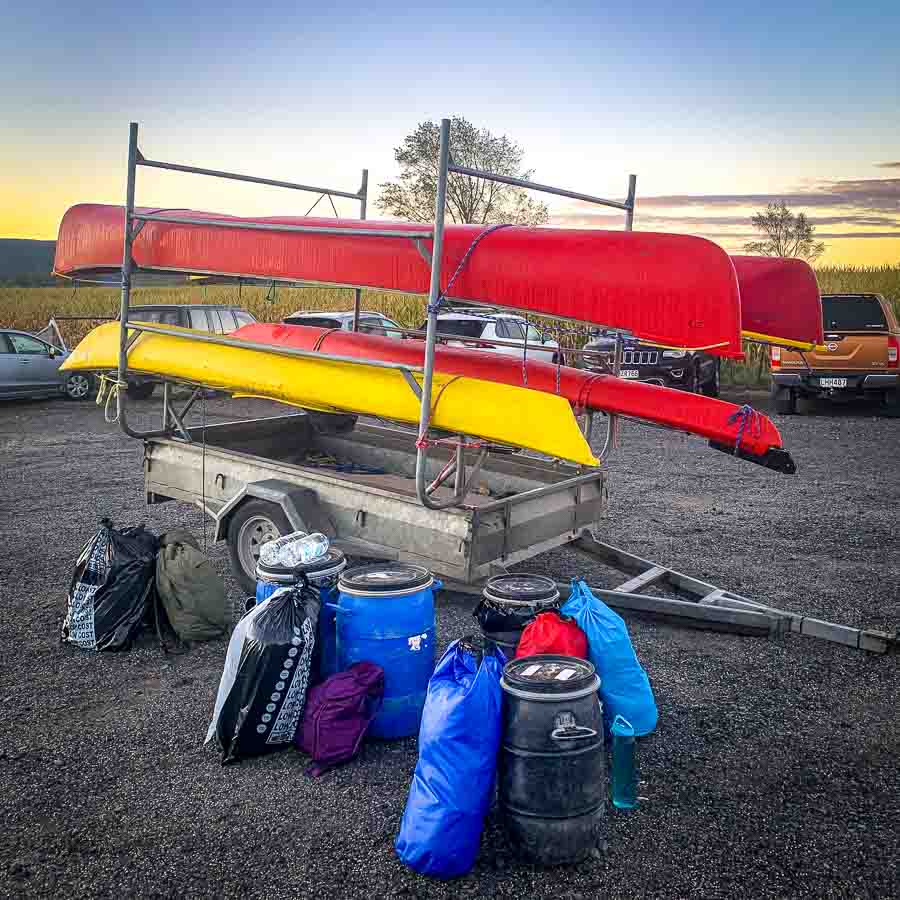
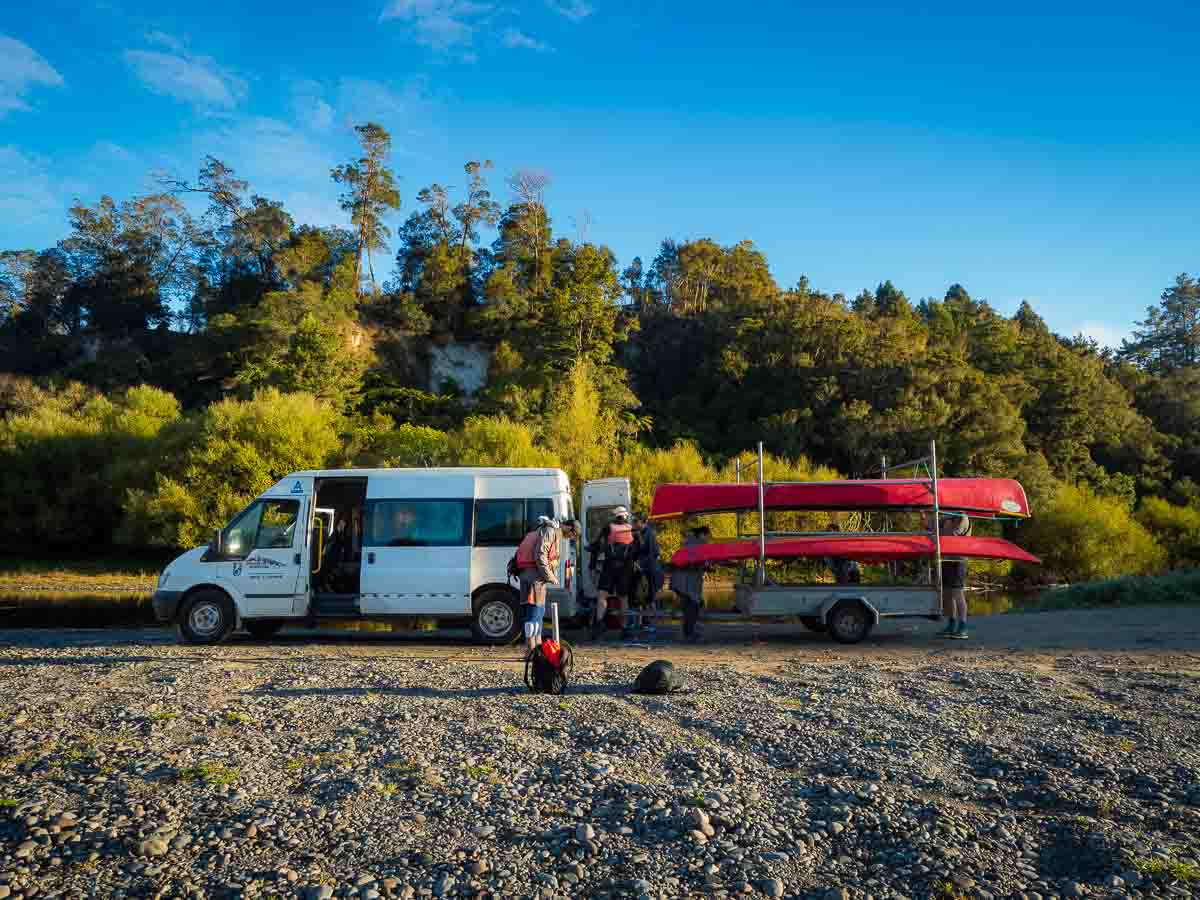
Freedom-hire prices move around by operator and group size, but roughly NZ$240-260 per person is a sensible current baseline for a three-to-five-day canoe, equipment and shuttle package. DOC hut or campsite bookings, food and any guided upgrade sit on top of that. Ask Owhango for the exact trip quote rather than treating that number as scripture.
Guided means more history, more confidence paddling through rapids and less planning your trip, but also more cost, more stopping as the guide talks through features, and a lot less freedom. We were in a big group of mates and enjoyed doing our own thing. One day it could still be nice to return with a cultural guide and understand more of the awa we were happily bumbling down.
Day 1: Taumarunui to Whakahoro
Our first day combined two normal stages into 57 km, with DOC times totalling roughly 9-13 hours. We launched at Ngā Huinga in Taumarunui, paddled 22 km to Ohinepane, then carried on another 35 km to Whakahoro.
It was the hardest day on the arms, but also my favourite section of the river. The upper stretch runs through farmland, pine forest and broad river bends, with long peaceful gaps where our group seemed to have the place to itself. There were plenty of rapids to keep things interesting, but none felt particularly crazy. Ōhura Falls was another early highlight.
You will definitely get a sore butt and back (because humanity is yet to invent a comfortable canoe seat). Ours arrived early and stayed for the rest of the trip.
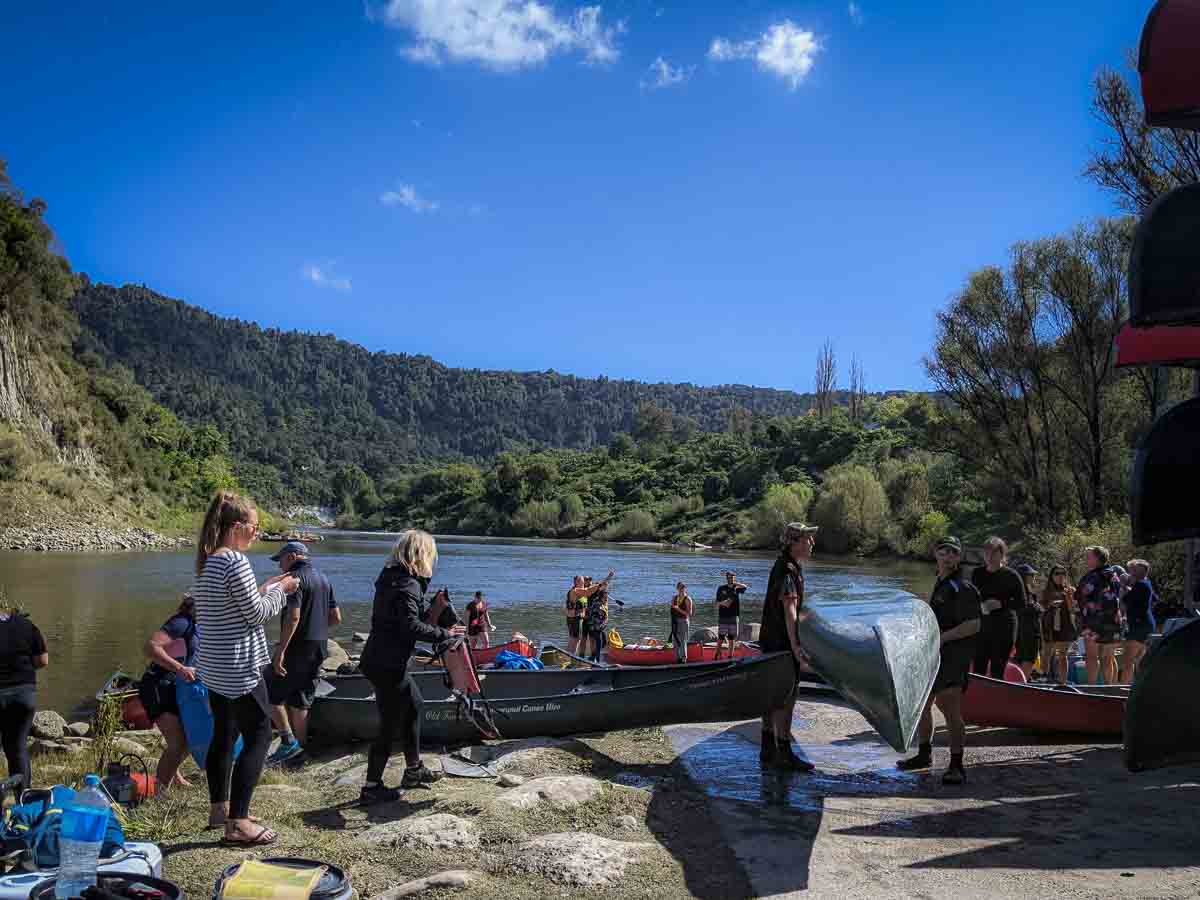
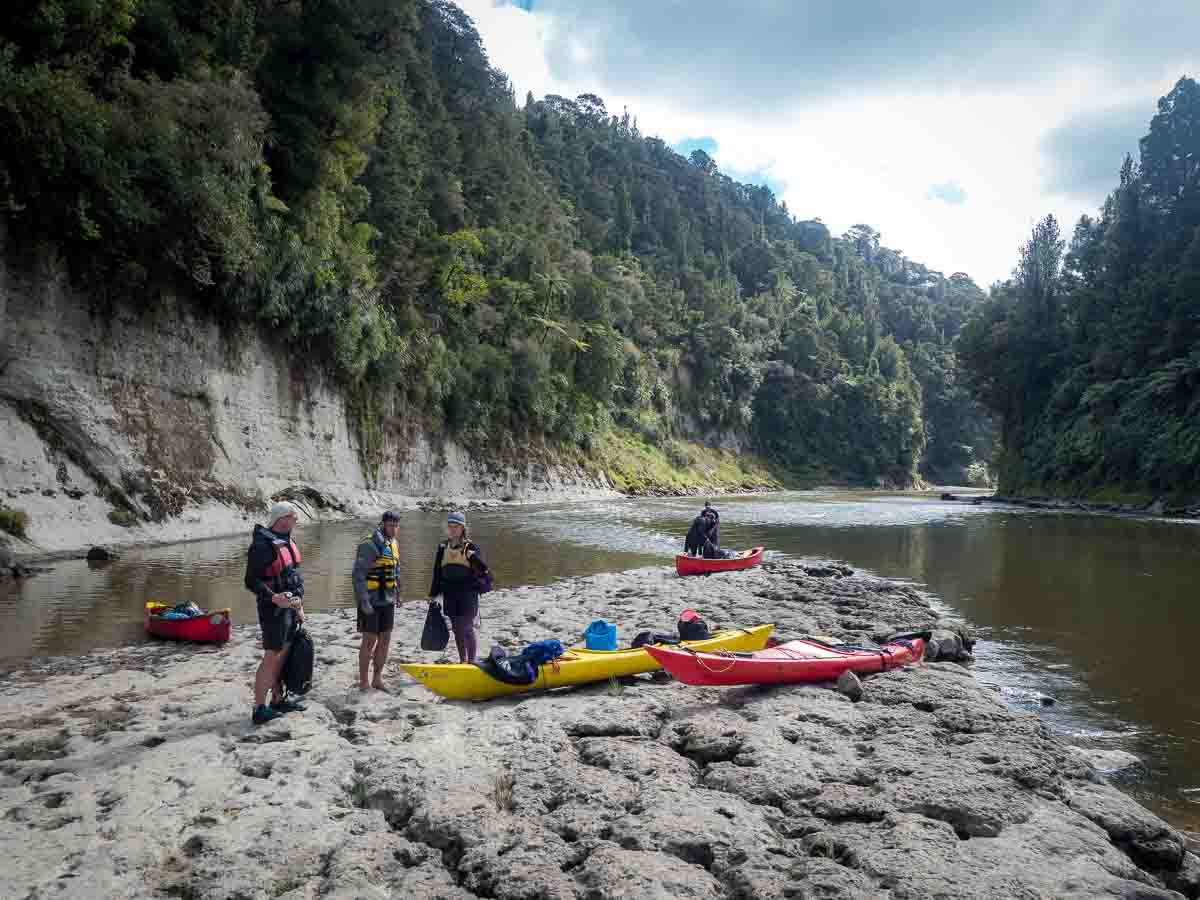
Heads up: I would only compress this first day if your group has some paddling fitness, can launch at first light and has checked the river flow with the operator. In low water, DOC warns that normal six-to-seven-hour days can stretch past eight.
Day 2: Whakahoro to John Coull
This is where the Whanganui Journey properly starts looking like the trip you came for. The standard stage is 37.5 km and DOC allows 7-9 hours. The banks rise, native forest closes in and the road network quietly disappears.
There are still long calm stretches, but the river now feels remote rather than merely rural. You pass the Mangapapa and Ohauora campsites, Tarepokiore rapid and Tamatea’s Cave. The cave is wāhi tapu, so admire it from the river and do not enter.

The rapids are generally Grade 1 or 2, which means fun rather than terrifying, but a fully loaded Canadian canoe still has opinions of its own. Point the bow where you want to go, keep paddling and accept that somebody in the group will eventually provide entertainment.
Day 3: John Coull to Tīeke Kāinga
Day three is 29 km, another 7-9 hours on DOC timings, and includes the Bridge to Nowhere side trip. Leave the canoes at Mangapurua Landing and walk roughly 3 km return through the bush to the concrete bridge.
The Bridge to Nowhere walk takes about 90 minutes return. It is an odd, fascinating remnant of the failed Mangapurua farming settlement, and a welcome chance to ask your legs to do something while your shoulders sulk.
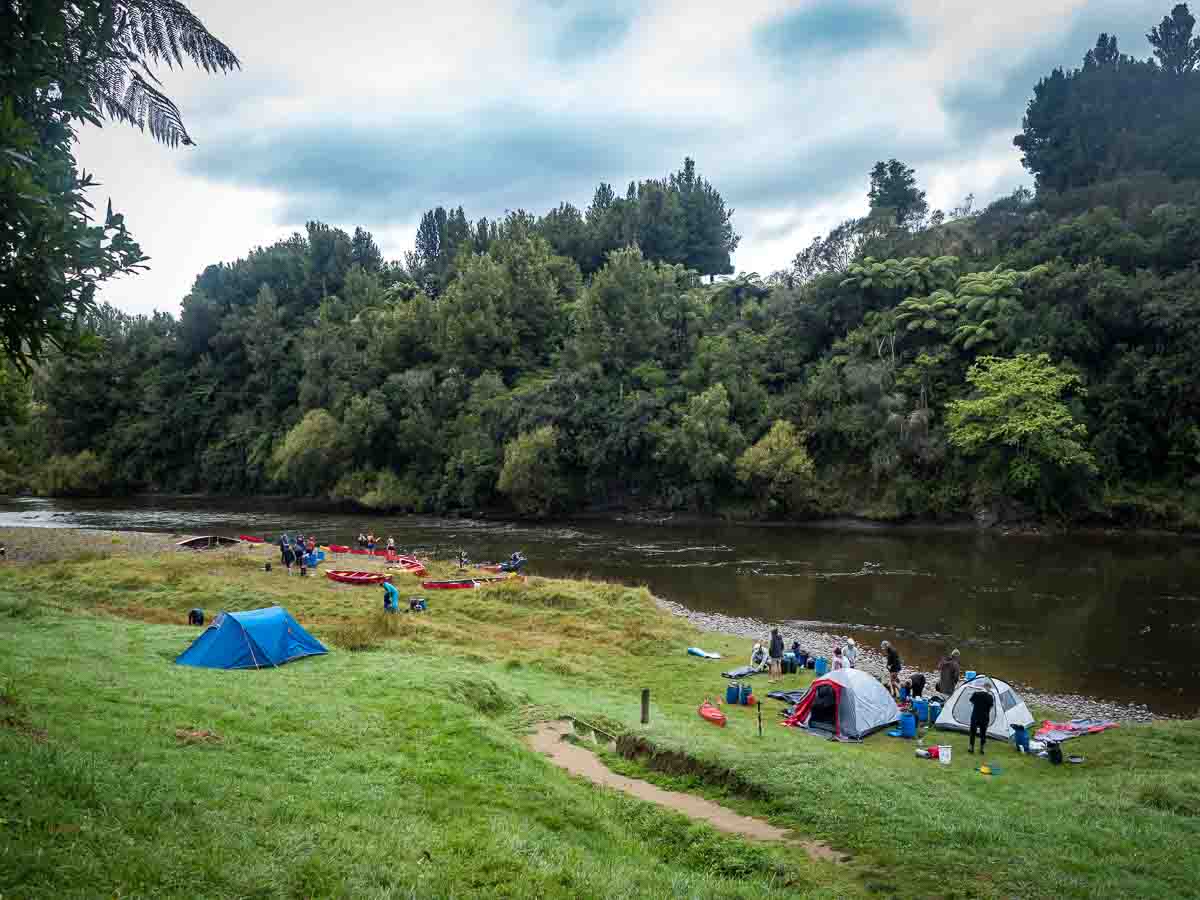
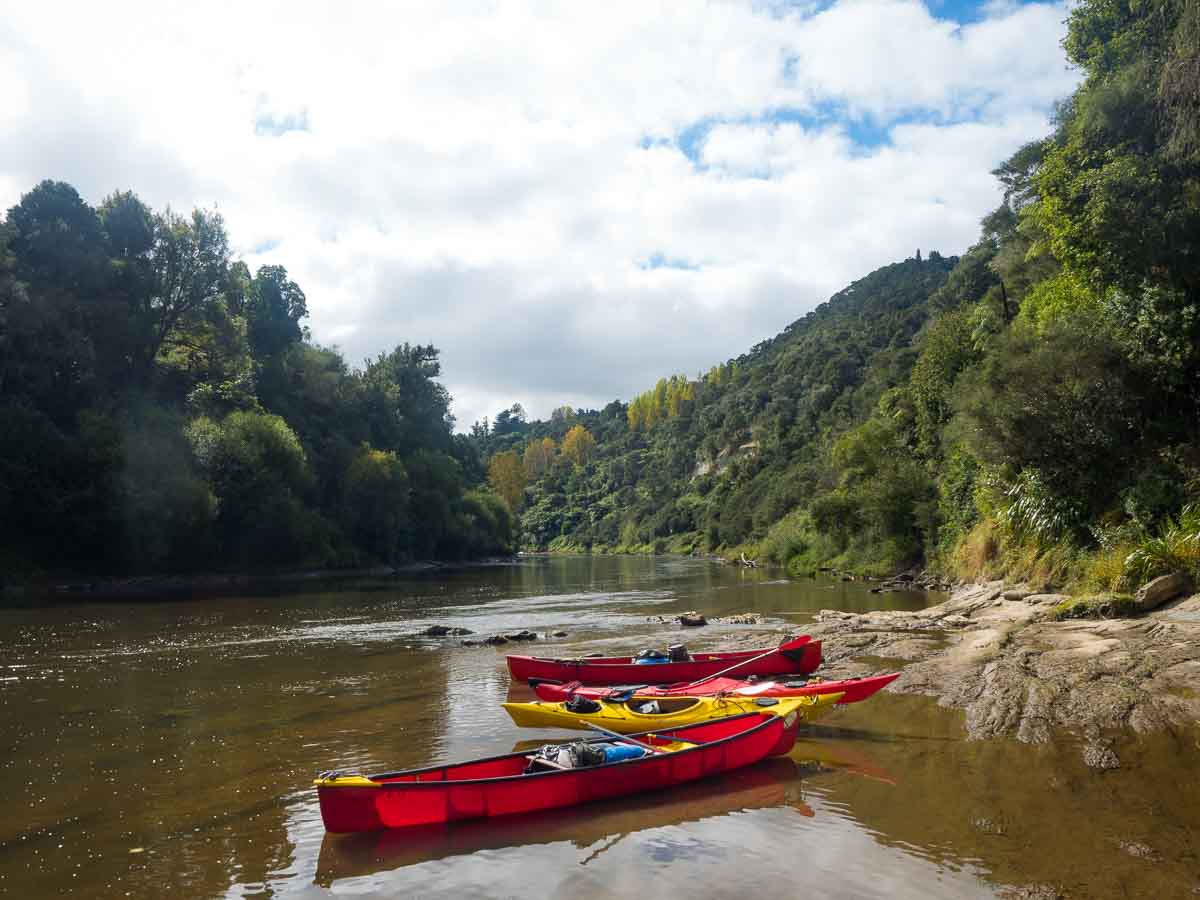
Tīeke Kāinga is not just another DOC bunkroom. It is a functioning marae and an important cultural stop on the river. Follow the tikanga explained on arrival, remove your shoes where asked, keep alcohol away and approach the place as a guest rather than a customer collecting a bed.
The cultural depth is also the strongest argument for a guided trip. We saw an extraordinary landscape and had a brilliant time together, but a good local guide can explain the history and living relationship with the Whanganui River in a way a laminated river map simply cannot.
Day 4: Tīeke Kāinga to Pipiriki
The final 21.5 km takes around 4-6 hours and ends with the river’s best-known rapids. Ngaporo and Autapu arrive after several days of practice, which is useful because the finish at Pipiriki is close enough for everybody to become slightly overconfident.
The gorge gradually opens, native forest gives way to farmland and the pick-up point appears almost too quickly. Then came the Owhango shuttle, the hot shower and the strange discovery that standing upright still felt a bit like sitting in a canoe.

How Hard Is the Whanganui River Journey?
The standard journey is physically steady rather than technically hard. You need enough fitness to paddle for six or seven hours, confidence in the water and the ability to follow a safety briefing when every rapid suddenly looks faster from river level.
Complete beginners should take the guided option. Our large self-guided group had enough collective confidence and common sense to manage it, but the river is remote, there is no mobile coverage and help is not sitting around the next bend with a towel.
Weather and river level matter more than gym fitness. Never launch into a rising or flooded river, carry a personal locator beacon, keep your life jacket on and listen for jet boats. DOC recommends moving to the true right side of the river when one approaches, then following the driver’s signals.
Huts, Campsites and What to Pack
Book every hut or campsite through DOC during the Great Walk season. For 2026/27, huts cost NZ$35 per adult per night and most campsites cost NZ$19. We camped, which worked well with a large group and all that barrel space.
The barrels are waterproof until somebody fails to close one properly. Put phones, cameras, sleeping bags and dry clothes inside separate dry bags anyway. Bring strapped footwear that stays on in a capsize, quick-dry layers, a warm layer, rain gear, sun protection, stove and food. Treat all hut and campsite water before drinking it.
Tip: Pack one complete dry outfit that never comes out on the river. Pulling on warm socks after a wet landing is a tiny domestic luxury, but by day three it feels vaguely five-star.
Would I Do It Again?
Yes, and I would do the full journey again. Next time I would take the standard five days so the quieter upper river did not have to be squeezed into one enormous opening stage. Starting at Whakahoro is convenient, but it cuts out my favourite part.
What stays with me is the group trip: canoes spread across a silent gorge, everyone regrouping at camp, and the river getting better each day. It is less about conquering 145 km than disappearing downstream together for a few days. That is why it deserves its place beside the actual Great Walks.
Afterward, stay around Ruapehu rather than bolting home. National Park Village and Ohakune make easy recovery bases, and you can compare them through my Ruapehu accommodation search. If your shoulders still speak to you, the Tongariro Crossing or a quiet walk through Ohinetonga Scenic Reserve gives your legs a turn.
New Zealand Travel Planning Cheatsheet
🚑 Should I buy travel insurance for New Zealand?
100% YES! — New Zealand has “free” healthcare but it’s only for citizens. Tourists need travel insurance in case anything happens on your visit. Also be aware many policies won’t cover hiking as it’s a high risk activity! (that’s right, check the t&c’s on your complimentary credit card insurance)
I highly recommend World Nomads as you can get specific add-ons for the crazy activities you’re doing – and starts at just $7 a day!
🚙 Do you need to rent a car in New Zealand?
I’d reccommend it — Renting a car isn’t a necessity to get around in NZ with plenty of domestical flights and intercity busses. But, If you want to go on road trips or adventures outside of the major cities, you’ll need to rent a car. I always use Discover Cars for my rental bookings (it’s like Skyscanner for cars!) as they compare all availible providers for the best price.
Better yet, rent a van! This is the most cost effective way to see Aotearoa as you’re getting your transport and accomodation together as one! (Checkout my reccommended van rentals here)
📲 Will my phone work in New Zealand?
You’ll need to get a local SIM card when in New Zealand, which is super easy and doesn’t require ID. Spark generally has the best coverage and you can get pre-paid plans for around $30 for 30 days.
Alternativly – I now always use Airalo when travelling. This app generates an eSIM that will work the moment you touch down. It costs slightly more than a local SIM but the convenience is well worth it. You can signup here
💸How do you pay for thing in New Zealand?
Cash has gone out of fashion in New Zealand, so you’ll be able to pay for almost everything with EFTPOS / Debit / Credit Card. Paywave (contactless payments) is very common, but vendors who accept American Express cards are not (so bring a backup!).
I personally use Wise for all my international money needs as they only convert the funds when you make a payment and offer a much better spread (margin on the true exchange rate) than the banks do. They also provide free debit cards for your account!
→ Get the Wise card I use — set it up before you fly so it’s ready to tap the moment you land.
🏩 What’s the best way to book my New Zealand accommodation?
My go-to for Kiwi hotels is Booking.com. For hostels, I use Hostel World. If you want a home-y feeling, check out AirBnB.. but don’t expect prices to be that much cheaper than hotels.
✈️ What’s the best site to buy flights to New Zealand?
For finding cheap flights, I recommend Skyscanner. Once you find the flight you’re looking for, I’d then suggest booking directly with the carrier (even if it costs a few $$ more than with one of the agreggators/agencies).
💧Can you drink the water in New Zealand?
Yes — everywhere in New Zealand you can drink the tap water. If you’re out hiking you can even drink the water from mountainous rivers and streams. I recommend a Brita Water Bottle and a packet of water purificiation tablets for long hikes and backcountry camping.
🎫 Do I need a visa for New Zealand?
NZ has a ‘traditional visa’ which is a document stamped in your passport allowing you to enter and stay in New Zealand for a specified period, while an “NZeTA” (New Zealand Electronic Travel Authority) is a travel authorization that allows certain passport holders to visit New Zealand without needing a separate visa – essentially a visa waiver for eligible travelers; meaning you need a full NZ visa if you don’t qualify for an NZeTA based on your passport and travel intentions.


