

Hiking the Abel Tasman Coast Track: My 4-Day Route

Disclosure: I’ve hiked the Abel Tasman twice (almost). Once in the reverse direction from Wainui to Mārahau doing a car swap before setting out. The second time was in part from Mārahau using the water taxi to return to our car at the start.
The Abel Tasman is the easiest New Zealand Great Walk I have done, and probably the one I would recommend first. The track is mild, the huts sit beside genuinely good beaches, and water taxis let you shorten or rearrange the trip without turning it into a major rescue operation.
I did my full hike in four days from Wainui to Mārahau, with nights at Whariwharangi, Awaroa and Anchorage. It is not the standard DOC itinerary: we used a short opening day to Whariwharangi, passed through Tōtaranui on day two, then made day three rather enormous.
I stayed in three huts along the way. That kept the packs light enough that the beaches still felt like places to stop, rather than attractive things viewed while staggering towards a tent.
Beaches, jandals, one stupid tide decision. Great trip.
Table of Contents
The Short Version
Book the huts around the Awaroa low tide, then book your transport. That one crossing has no all-tide alternative. Everything else – direction, number of days and whether you walk the northern end – is wonderfully flexible.
For a normal first trip, I would walk three or four days. Use a water taxi from Tōtaranui if you want to skip the northern end, but the 25 km day from Awaroa to Anchorage is only sensible if long days with a pack are already your idea of fun.
DOC lists the complete Coast Track as 60 km from Mārahau to Wainui. That is the route I walked, just in the opposite direction. Check the current DOC track page before booking.
Which Abel Tasman Route Should You Walk?
You do not need to walk the official 60 km end to end. The northern road end at Wainui has no water-taxi service, while Tōtaranui does. Plenty of walkers therefore begin or finish at Tōtaranui and skip the Wainui-Whariwharangi section.
The cleanest multi-day version is Mārahau to Tōtaranui, or the reverse, with a water taxi handling the other direction. It keeps the trip linear, covers the best-known beaches and avoids coordinating two cars over a surprisingly long drive.
I started at Wainui and walked the whole lot. The first night at Whariwharangi was quiet, remote and completely worth the extra transport effort. For an easier first Great Walk, three or four days between Mārahau and Tōtaranui is still the sweet spot.
And if you only have one day? The water taxis turn the southern track into a menu. Pick a bay, get dropped off, then walk back towards Mārahau until somebody produces a beer. That is the whole appeal.
Day 1: Wainui to Whariwharangi Hut
The first day is a gentle 5.7 km introduction along the quieter northern end of the park. We needed the short day after getting off the ferry, getting supplies and completing our car swap.
From the Wainui road end, the track follows the inlet before climbing over a low saddle and dropping towards Whariwharangi. DOC allows two hours. It is a deliberately easy opening, with no major climb and plenty of time to wander down to the beach.
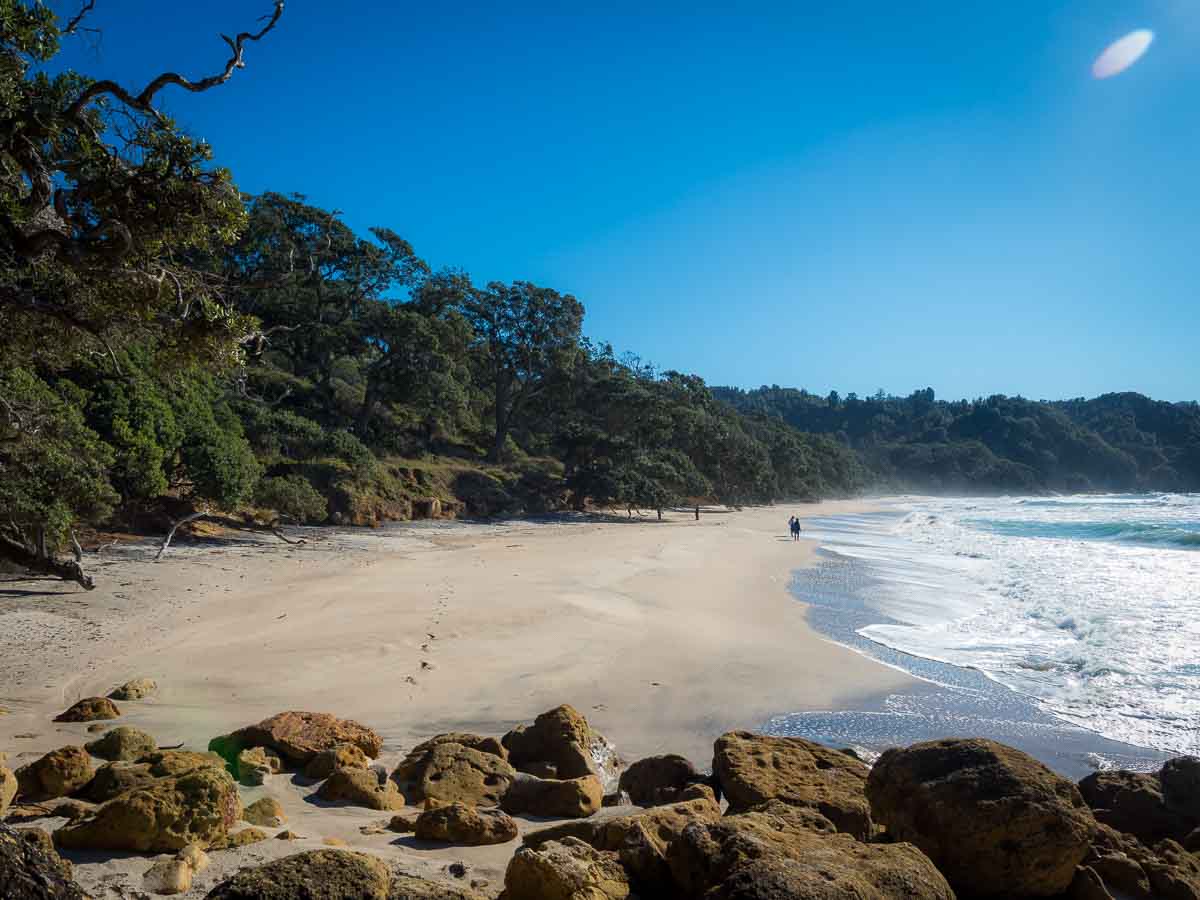
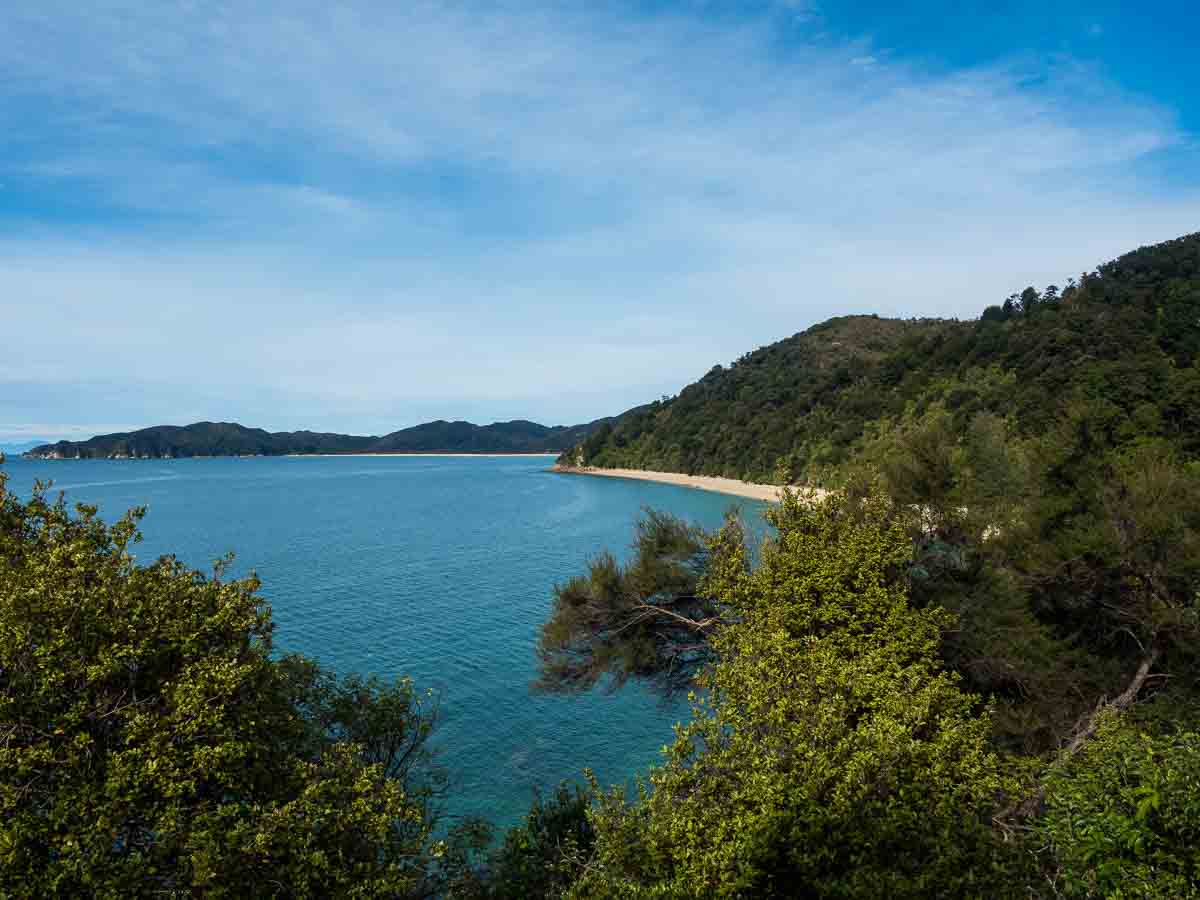
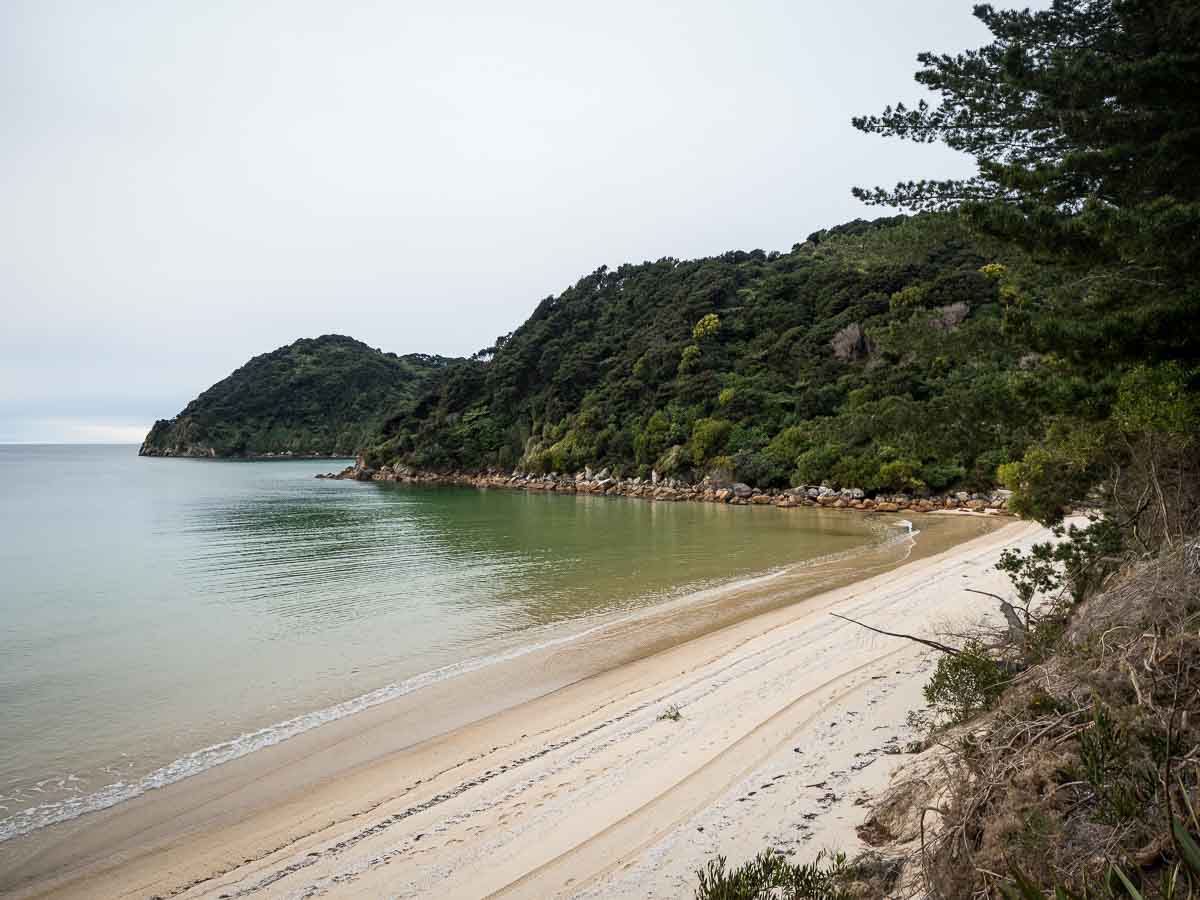
Whariwharangi is an old homestead tucked just behind the beach. It feels much more remote than the southern huts, partly because the water taxis cannot travel north of Tōtaranui. Once the last day walkers turn around, things become properly quiet.
Day 2: Whariwharangi to Awaroa Hut
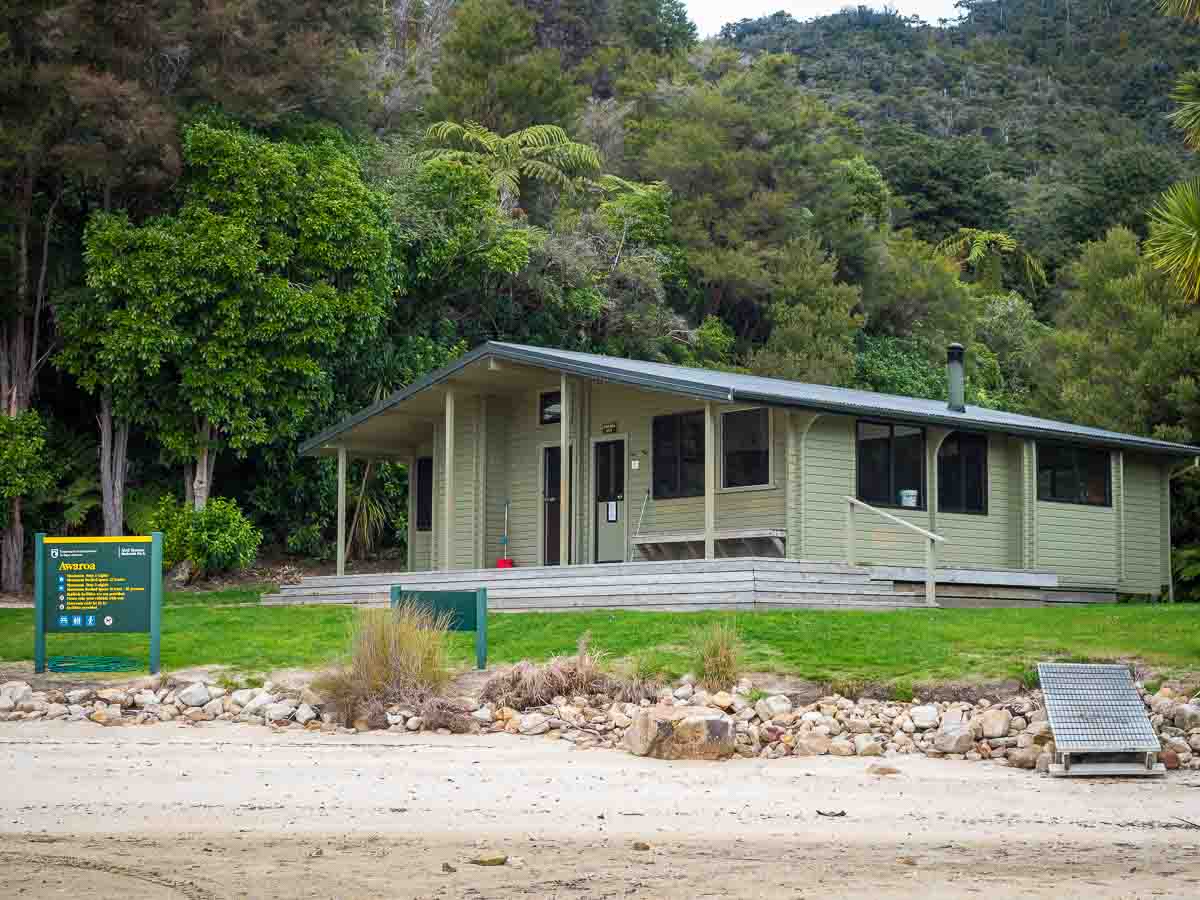
Day two continues south through Tōtaranui, then carries on to Awaroa. It is about 16.9 km in total, with beach walking, short headlands and the compulsory Awaroa crossing waiting near the end.
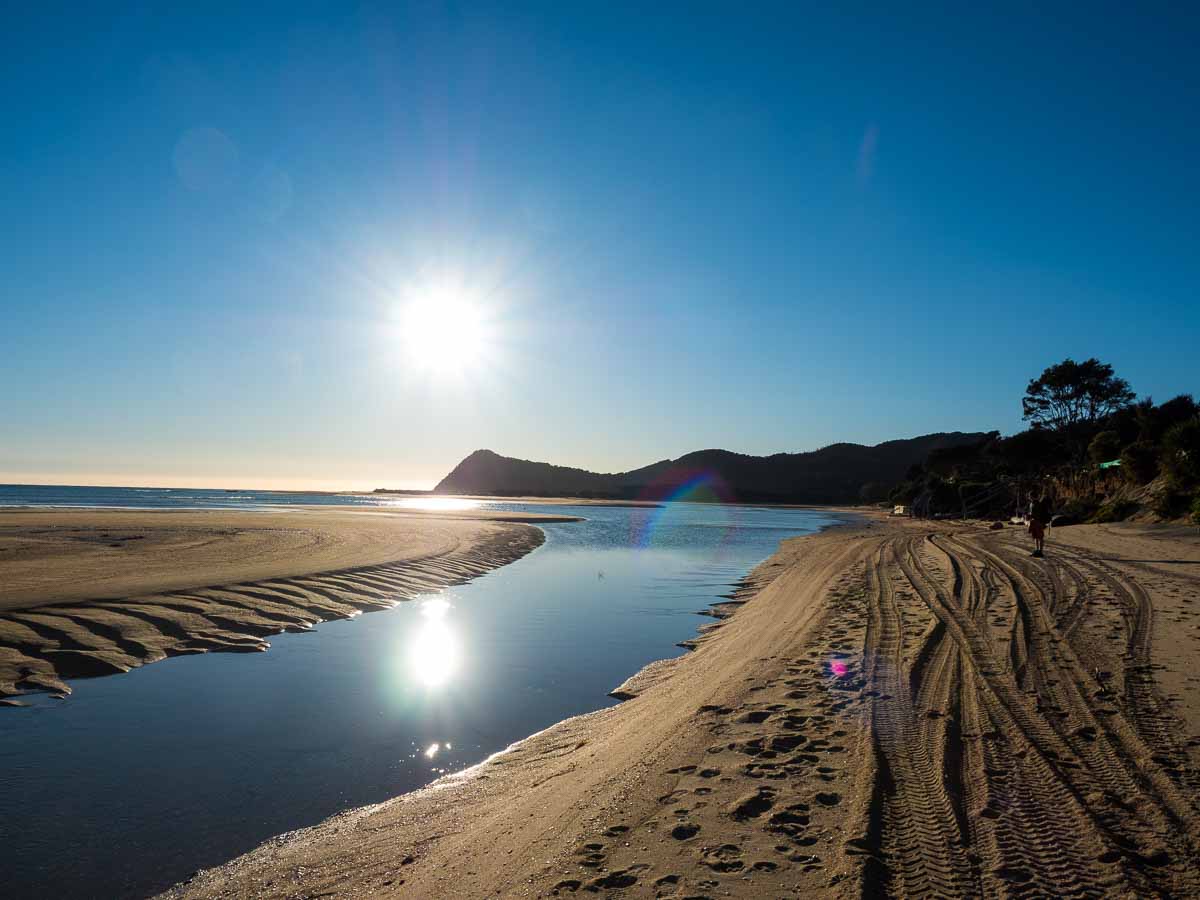
This is where your itinerary stops being flexible. DOC allows the inlet crossing from 1 hour 30 minutes before low tide until 2 hours after, in daylight and safe conditions. There is no track around it, so work backwards from the tide before you book Awaroa Hut.
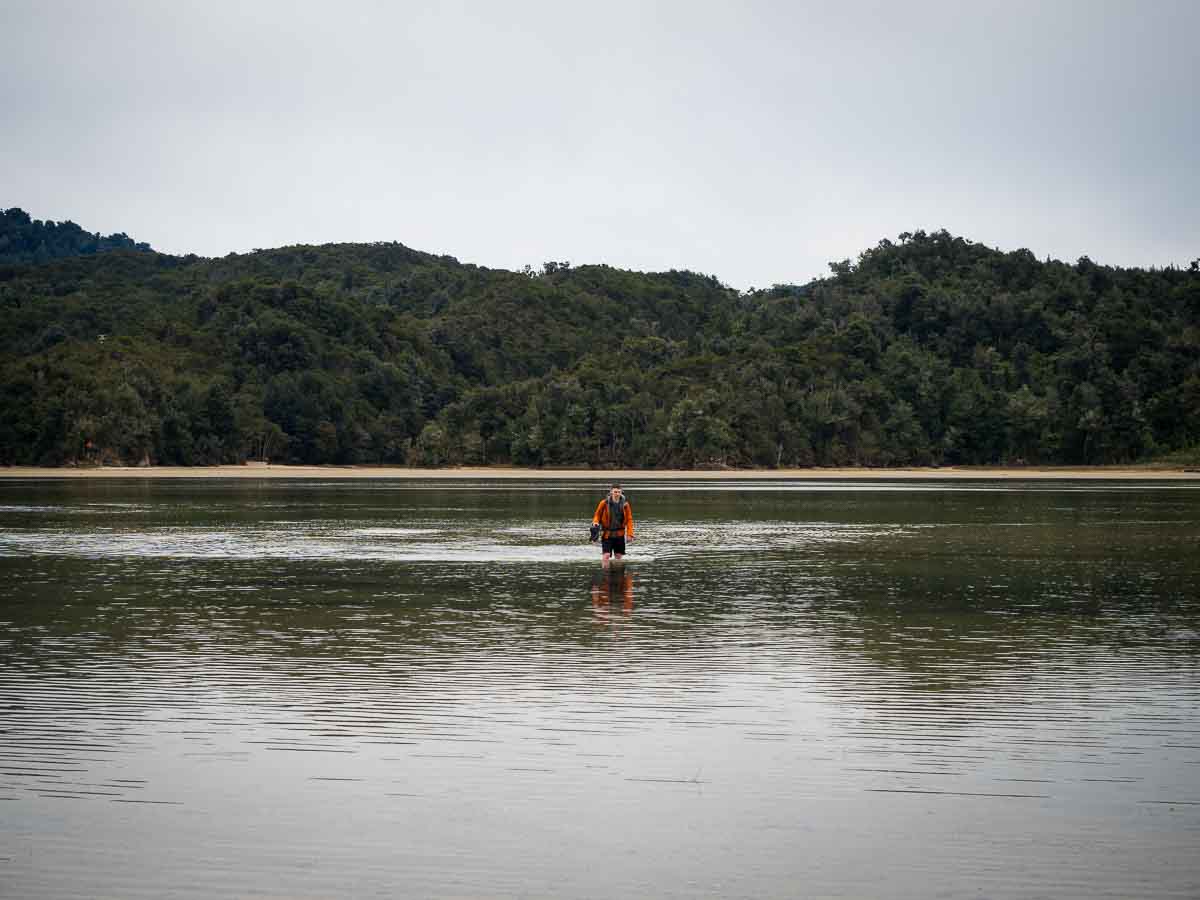
We were running late and entered right at the far end of that window. Water was already rushing back in and at its deepest I had to carry my pack over my head so it didn’t get wet.
Brilliant planning.
Heads up: Do not use my crossing as a target. Allow about 25 minutes, check the official Abel Tasman tide table, and cross earlier in the safe window when you can. Tide height, rain and storm surge can all change the reality underfoot.
Day 3: Awaroa to Anchorage
This is the big day: roughly 25 km and about eight and a half DOC hours before swimming, lunch and staring at beaches. You leave Awaroa, cross Tonga Saddle, walk the length of Onetahuti and continue through Bark Bay and Torrent Bay to Anchorage.
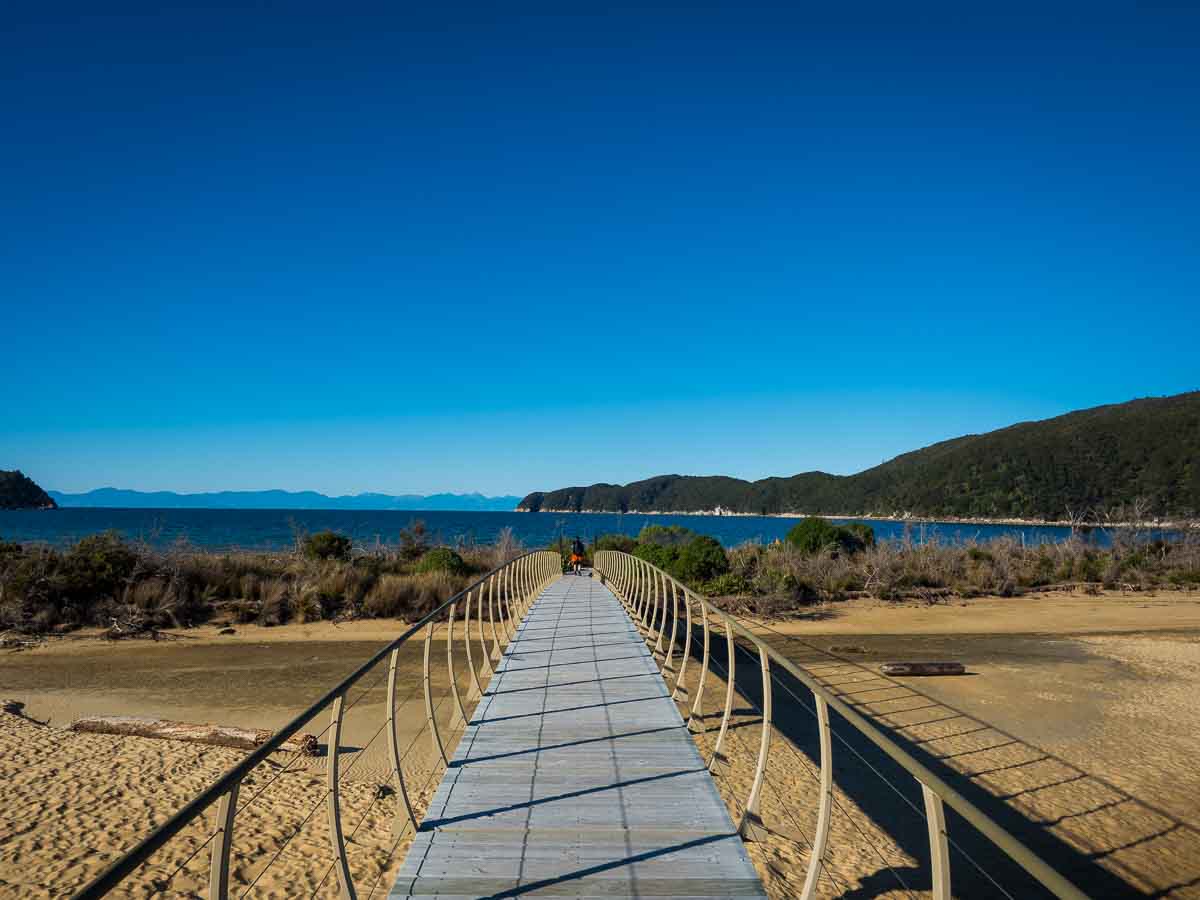
The track itself is never especially technical. The difficulty comes from stacking several normal sections together. Onetahuti is a long, open beach; Bark Bay has a quick all-tide route around its estuary; and the Falls River suspension bridge marks the point where the southern half begins feeling busier.
At Torrent Bay you can save 3.1 km by crossing the estuary around low tide. I would take the longer all-tide route at least once because it leads to Cleopatra’s Pool.

The best fresh-water swimming spot in Abel Tasman National Park is Cleopatra’s Pool, complete with a natural rock waterslide. It is cold enough to restore a bit of life to your legs before the final walk into Anchorage.
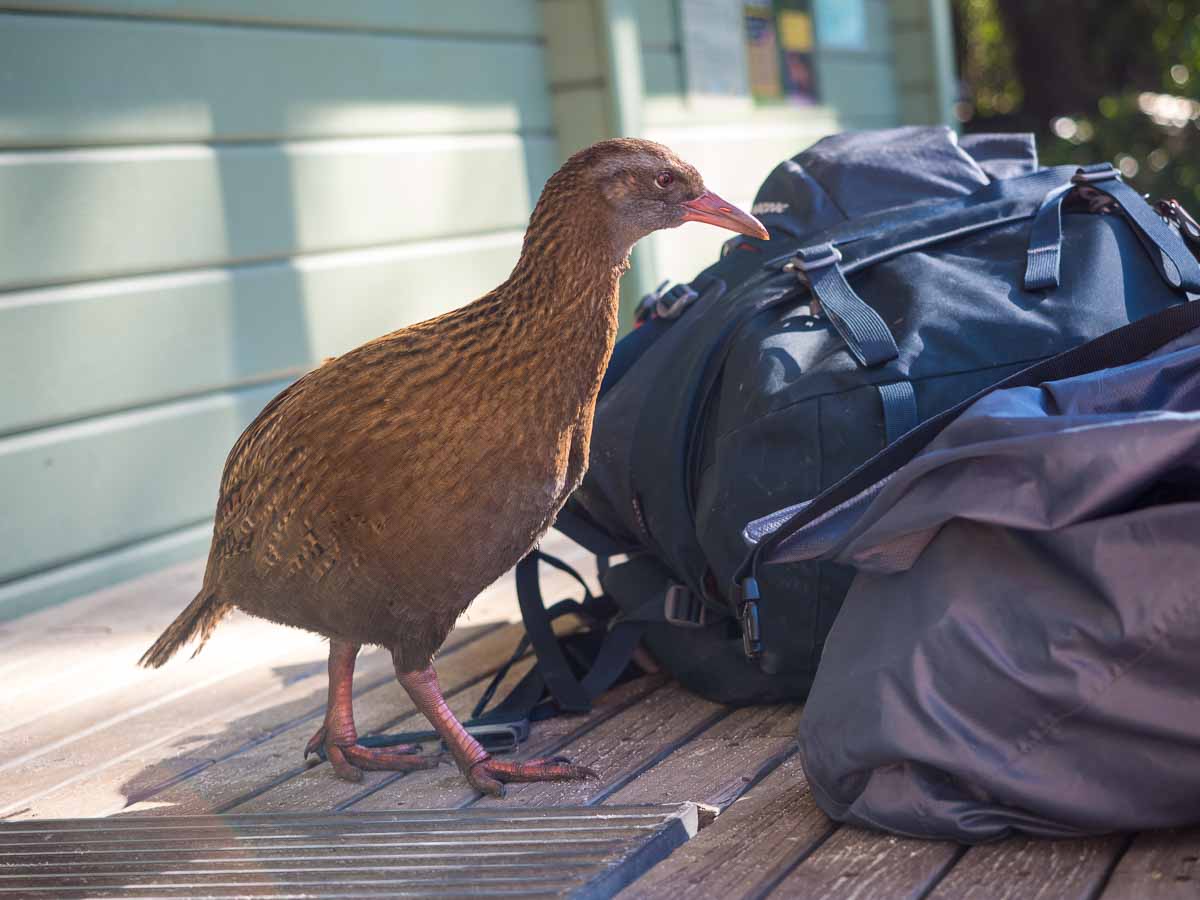
Keep your food zipped up when you reach the hut too. The local weka inspect unattended packs with a level of confidence that suggests this is not their first offence.
Day 4: Anchorage to Mārahau
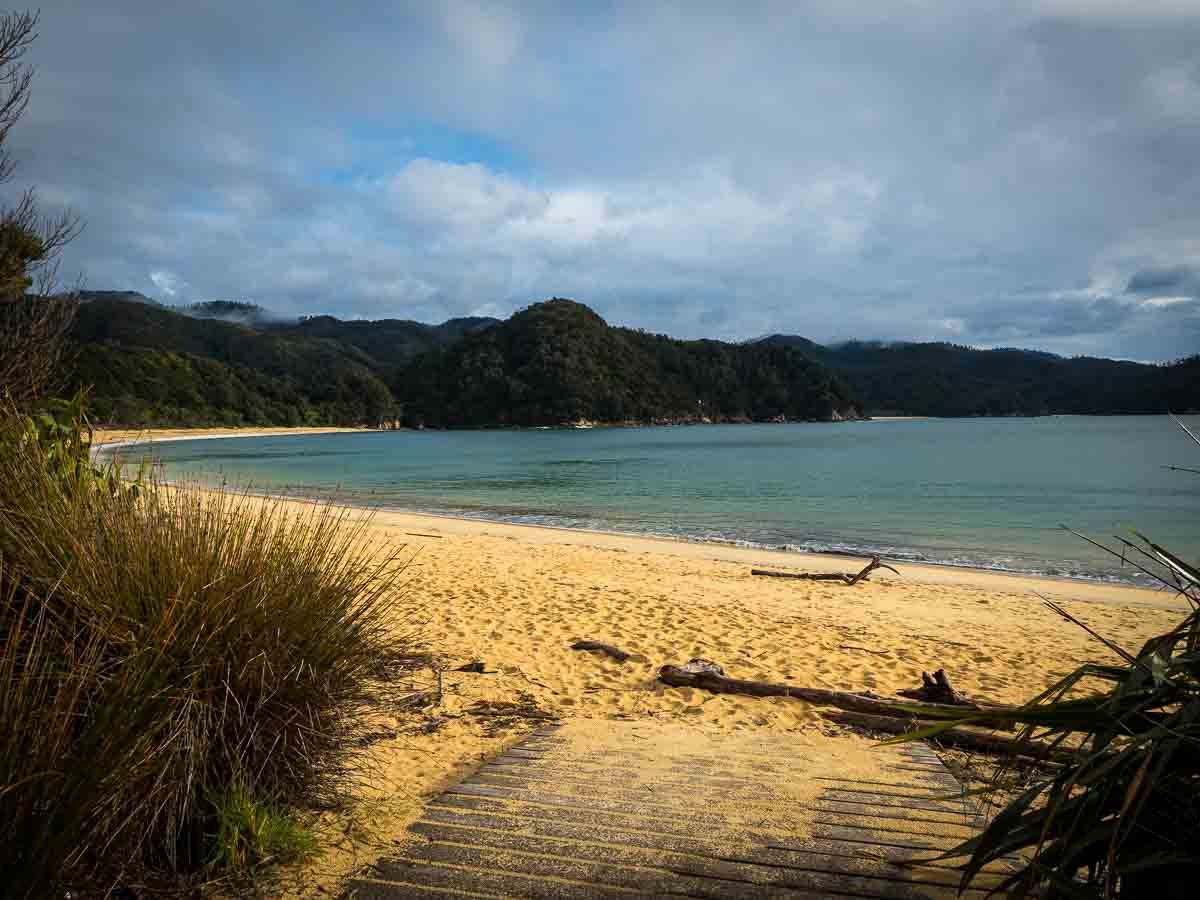
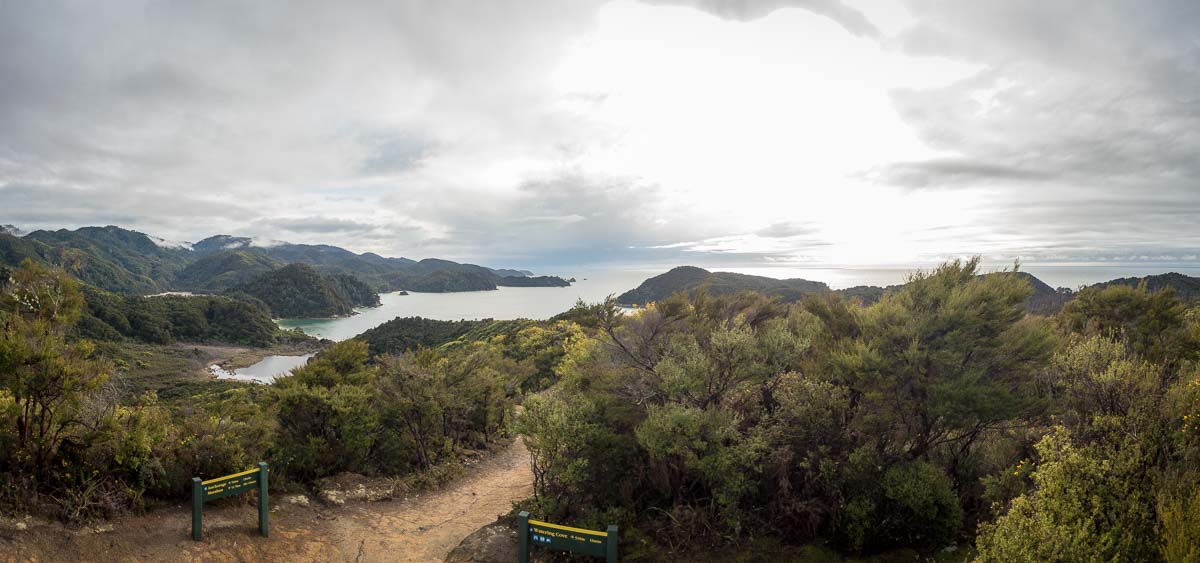
The final 12.4 km is an easy four-hour walk through the busier southern end of the park. The track climbs gently out of Anchorage, winds above Watering Cove and Apple Tree Bay, then crosses the Mārahau causeway back to the road.
After the previous day it feels almost suspiciously civilised. There are regular beaches below the track, water taxis moving along the coast and, at the end, an actual cafe and cold beer rather than another packet of dehydrated something.
How I Would Organise the Transport
The simplest setup is a water taxi from Mārahau or Kaiteriteri, then a one-way walk back. Water taxis serve Anchorage, Bark Bay, Onetahuti, Awaroa and Tōtaranui, which is why this Great Walk is so easy to shorten or repair when the bookings do not line up perfectly.
Current AquaTaxi one-way fares run from roughly NZ$59 to Anchorage to NZ$70 for Tōtaranui, including one pack up to 20 kg. Book ahead and check the timetable before reserving huts; the boats do not stop everywhere on every run.
We used two cars. We met at the Mārahau car park, left one there, then drove over the hill through Takaka and left the second at Wainui. It gave us complete freedom, but it also involved a long gravel-road shuffle before we had walked a single step.
Tip: For an excellent day trip, take a morning water taxi to Torrent Bay and walk the 18 km back to Mārahau via Cleopatra’s Pool. Torrent Bay is normally drop-off only for public visitors, which suits this direction.
When to Walk the Abel Tasman
October to April gives you the warmest swimming weather and the busiest huts. January is the obvious beach-holiday choice, but it is also when the park feels least remote and hut bookings are at their most competitive.
I would lean towards late summer or early autumn: long enough days, water that has had a chance to warm up, and slightly less of the school-holiday rush. The Coast Track is open all year, though winter brings shorter daylight, cooler nights and cheaper huts.
This is still New Zealand. Carry a proper waterproof layer, warm clothes for the hut and a dry bag or pack liner even when the forecast looks immaculate. The beaches improve the mood; they do not negotiate with rain.
Huts, Campsites and Current Cost
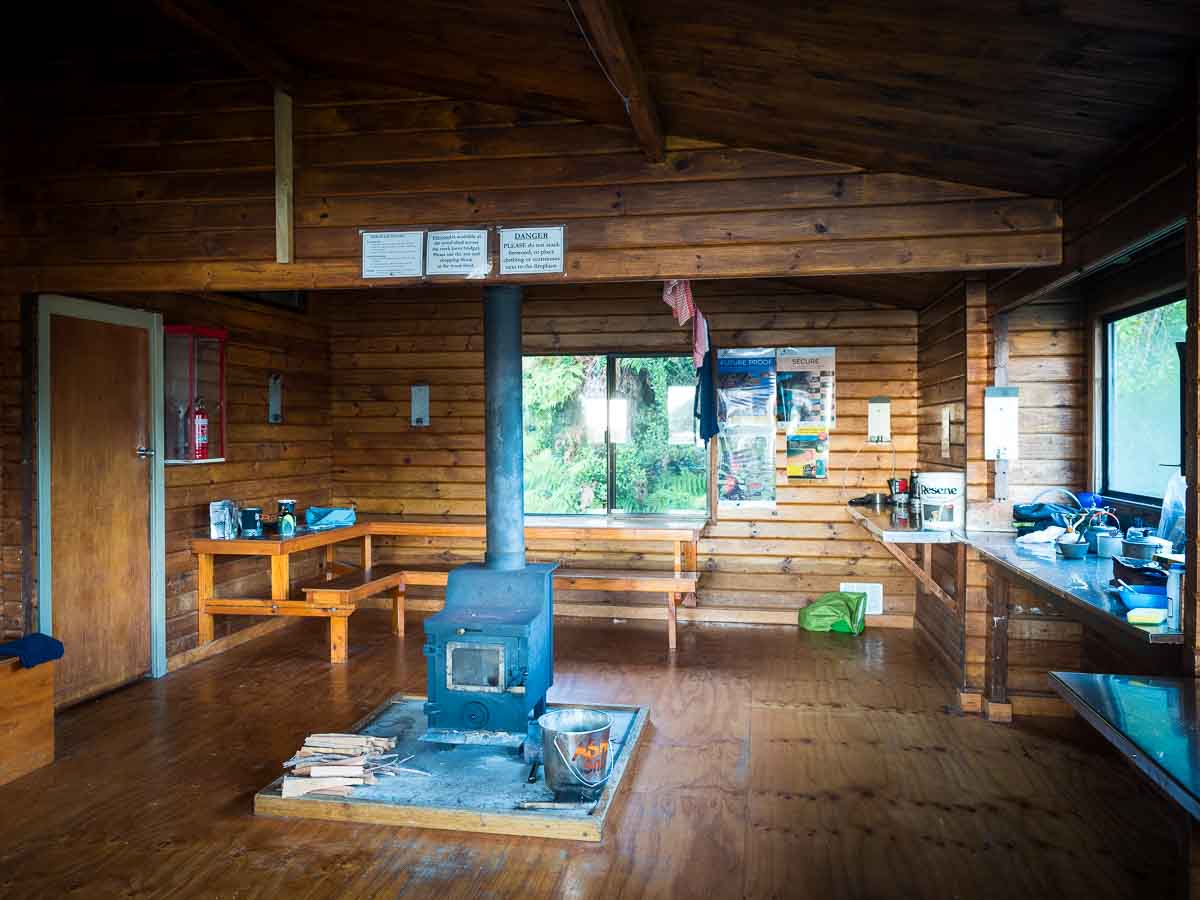
I prefer the huts. They give you a mattress, water, toilets and a communal kitchen without carrying a tent, but they do not have gas or lighting. Bring a stove, fuel and head torch, and treat the tap water before drinking it.
For the 2026/27 season, DOC hut bookings cost NZ$55 per night for New Zealand adults and NZ$84 for international adults from October to April. Winter rates are lower. Campsites cost NZ$21 for New Zealand adults year-round, or NZ$31 for international adults during October to April.
The huts can feel busy in summer, but the social side is part of this track. Campsites buy you a bit more beach and a bit less bunkroom snoring, in exchange for carrying the entire bedroom.
How Hard Is the Abel Tasman Track?
Physically, this is a mild Great Walk. The track is formed and well marked, the climbs are generally short, and water taxis give you far more escape options than most multi-day tracks.
I hiked it in jandals, so the terrain is hardly savage. That is a confession, not footwear advice: trail shoes are the sensible choice for wet roots, long days and the occasional muddy section.
The real planning difficulty is the tide. Awaroa can pin you in place, while Torrent Bay and Bark Bay simply decide whether you take the shortcut or the all-tide route. Sort that before debating the weight of your second T-shirt.
Would I Walk It Again?
Absolutely. Abel Tasman is sometimes dismissed as the easy Great Walk, as though beaches, swimming and a track you can enjoy without suffering are somehow character flaws.
I would probably make the next trip a walk-and-kayak combination, or use the water taxi to build a relaxed three-day route around Bark Bay and Anchorage. The flexibility is the point. You do not need to collect every kilometre for the park to work.
For the wider comparison, read my guide to New Zealand’s Great Walks. If Abel Tasman is one stop in a South Island road trip, compare rental cars here – just remember that returning a hire car from Wainui is not a recognised form of one-way rental.
New Zealand Travel Planning Cheatsheet
🚑 Should I buy travel insurance for New Zealand?
100% YES! — New Zealand has “free” healthcare but it’s only for citizens. Tourists need travel insurance in case anything happens on your visit. Also be aware many policies won’t cover hiking as it’s a high risk activity! (that’s right, check the t&c’s on your complimentary credit card insurance)
I highly recommend World Nomads as you can get specific add-ons for the crazy activities you’re doing – and starts at just $7 a day!
🚙 Do you need to rent a car in New Zealand?
I’d reccommend it — Renting a car isn’t a necessity to get around in NZ with plenty of domestical flights and intercity busses. But, If you want to go on road trips or adventures outside of the major cities, you’ll need to rent a car. I always use Discover Cars for my rental bookings (it’s like Skyscanner for cars!) as they compare all availible providers for the best price.
Better yet, rent a van! This is the most cost effective way to see Aotearoa as you’re getting your transport and accomodation together as one! (Checkout my reccommended van rentals here)
📲 Will my phone work in New Zealand?
You’ll need to get a local SIM card when in New Zealand, which is super easy and doesn’t require ID. Spark generally has the best coverage and you can get pre-paid plans for around $30 for 30 days.
Alternativly – I now always use Airalo when travelling. This app generates an eSIM that will work the moment you touch down. It costs slightly more than a local SIM but the convenience is well worth it. You can signup here
💸How do you pay for thing in New Zealand?
Cash has gone out of fashion in New Zealand, so you’ll be able to pay for almost everything with EFTPOS / Debit / Credit Card. Paywave (contactless payments) is very common, but vendors who accept American Express cards are not (so bring a backup!).
I personally use Wise for all my international money needs as they only convert the funds when you make a payment and offer a much better spread (margin on the true exchange rate) than the banks do. They also provide free debit cards for your account!
→ Get the Wise card I use — set it up before you fly so it’s ready to tap the moment you land.
🏩 What’s the best way to book my New Zealand accommodation?
My go-to for Kiwi hotels is Booking.com. For hostels, I use Hostel World. If you want a home-y feeling, check out AirBnB.. but don’t expect prices to be that much cheaper than hotels.
✈️ What’s the best site to buy flights to New Zealand?
For finding cheap flights, I recommend Skyscanner. Once you find the flight you’re looking for, I’d then suggest booking directly with the carrier (even if it costs a few $$ more than with one of the agreggators/agencies).
💧Can you drink the water in New Zealand?
Yes — everywhere in New Zealand you can drink the tap water. If you’re out hiking you can even drink the water from mountainous rivers and streams. I recommend a Brita Water Bottle and a packet of water purificiation tablets for long hikes and backcountry camping.
🎫 Do I need a visa for New Zealand?
NZ has a ‘traditional visa’ which is a document stamped in your passport allowing you to enter and stay in New Zealand for a specified period, while an “NZeTA” (New Zealand Electronic Travel Authority) is a travel authorization that allows certain passport holders to visit New Zealand without needing a separate visa – essentially a visa waiver for eligible travelers; meaning you need a full NZ visa if you don’t qualify for an NZeTA based on your passport and travel intentions.


