

Heaphy Track Guide: My 4-Day Route (After Two Trips)

The Heaphy changes character more dramatically than any of the other Great Walks I’ve done. You start around Golden Bay, cross tussock and limestone country, drop through thick forest, then suddenly finish among nikau palms and the rough West Coast sea.
I walked the full track in 2017 and returned for part of it in 2023. Both times I went from Brown Hut to Kohaihai, which is still the direction I would choose: one proper climb at the start, then the coast as the finish.
My short answer: walk it in four days if 20 km days with a full pack are normal for you. Take five if they aren’t. The Heaphy isn’t especially technical, but 78.4 km is still 78.4 km.
It sneaks up on you.

Table of Contents
My Four-Day Heaphy Track Itinerary
This is the exact hut pattern I would use again. It makes day one a bit of a monster, but the second day becomes pleasantly short and you avoid turning a four-day tramp into four equally long slogs.
DOC’s standard four-day version stops at Perry Saddle on night one and combines Perry to James Mackay on day two. That is also perfectly sensible. I simply preferred getting the big climb and another seven kilometres out of the way while my legs were fresh.
Day 1: Brown Hut to Gouland Downs
Day one is 24.5 km and starts with the only sustained climb of the trip. The track rises gradually through beech forest toward Aorere Shelter, then reaches Flanagans Corner – at 915 m, the high point of the whole Heaphy.
Perry Saddle Hut appears after about 17.5 km. This is where you decide whether seven more kilometres sounds clever or deeply annoying.
There is a deep, very cold swimming hole in Gorge Creek near Perry Saddle Hut. It makes more sense if you are stopping here; with another two hours to Gouland, I would keep the dry clothes dry.
We continued. It made for a massive first day, but the route from Perry across to Gouland Downs is mostly downhill and the open tussock feels completely different from the forest you have just climbed through.
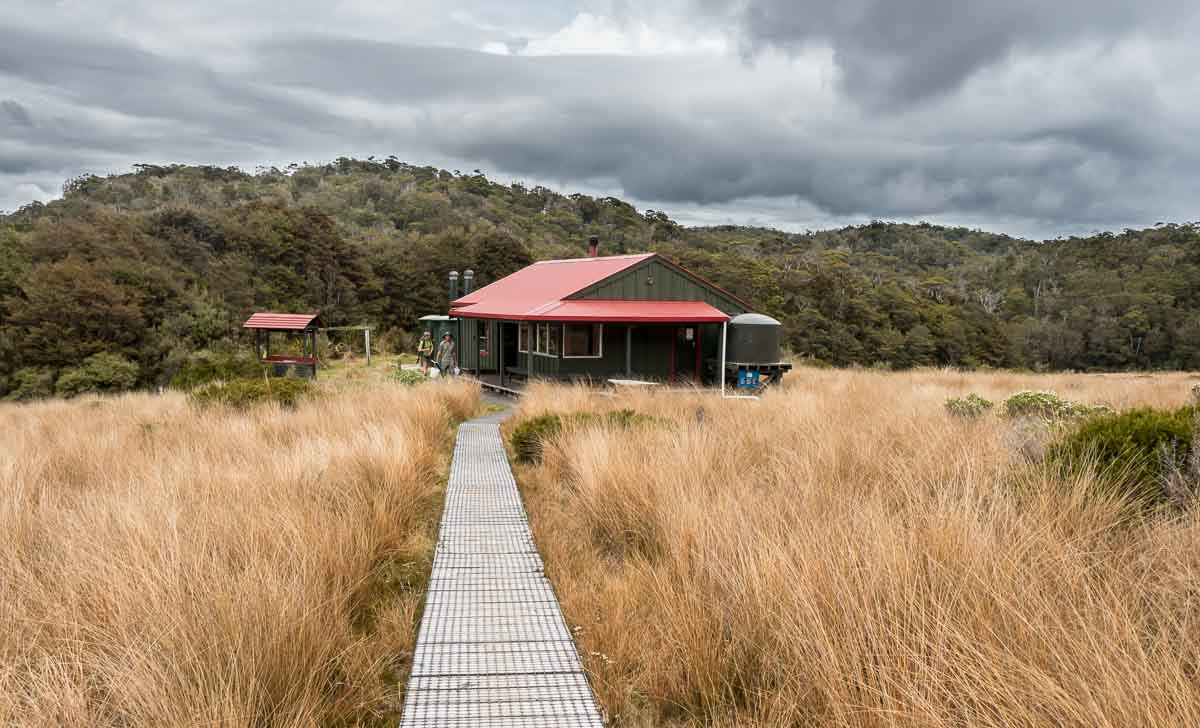
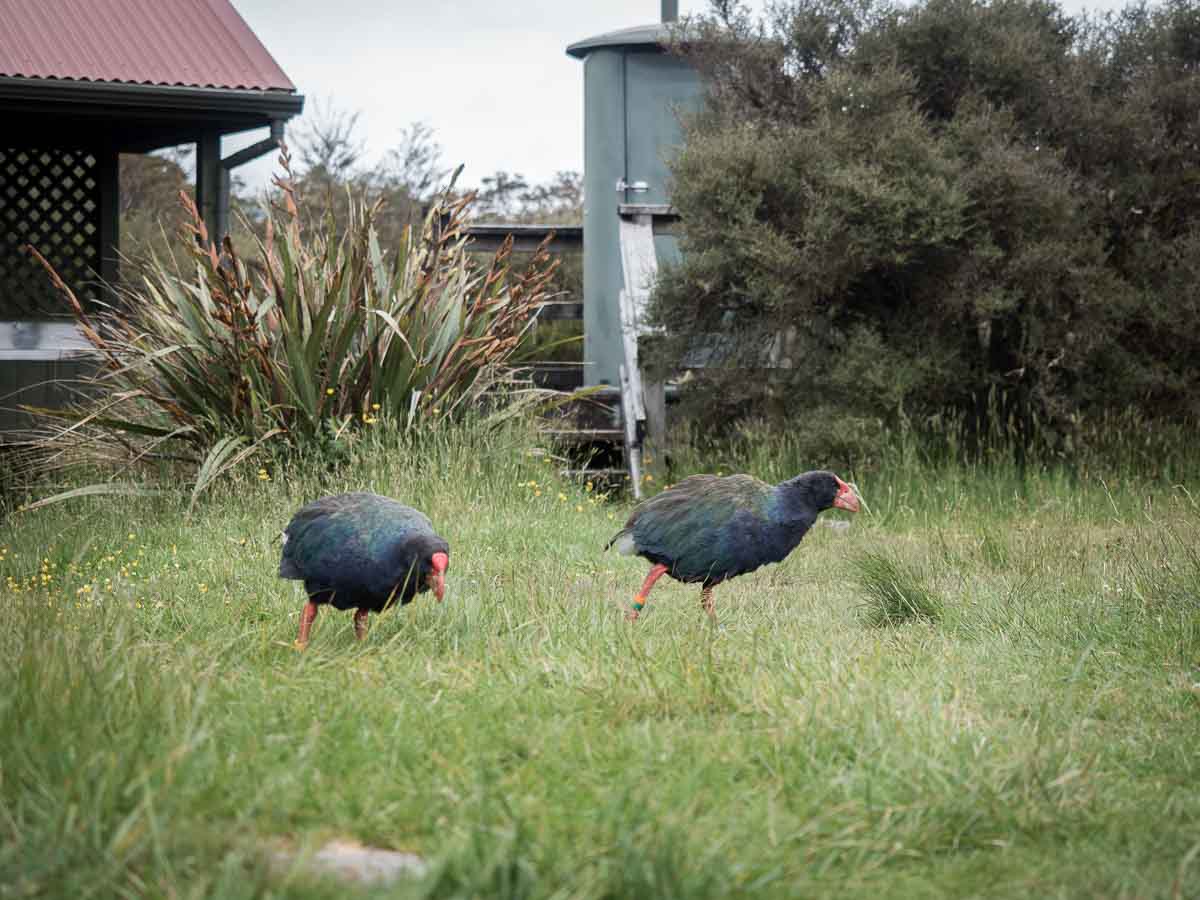
We got accosted by takahē at Gouland Downs Hut on the first night. Not a bad welcome.
DOC has released takahē into the downs and you can also hear great spotted kiwi/roroa around here. We met giant snails too. The wildlife is one of the reasons I would stay at little Gouland rather than rushing straight past it.
Day 2: Gouland Downs to James Mackay Hut

I enjoyed this day because it is mostly flat, and after the first-day distance it feels almost suspiciously civilised. Gouland to Saxon Hut is only 5.4 km across open downs; Saxon to James Mackay adds another 11.8 km of tussock, small creeks and patches of beech.
The landscape is wide and exposed rather than dramatic. In clear weather it is easy walking. When the mist drops, the downs lose their edges very quickly, so this is not the place to wander off because a limestone arch looked interesting.
James Mackay Hut sits above the Heaphy valley with the river mouth and Tasman Sea far below. You arrive with time to sit around, meet the other walkers and eat dinner at a pace slightly more dignified than inhaling it.
Day 3: James Mackay to Heaphy Hut
This is where the track properly changes. The route drops for 20.5 km from the downs into taller West Coast forest, follows the sound of the Heaphy River and eventually reaches Lewis Shelter.
Lewis is an emergency shelter, not an overnight hut. It also comes with sandflies, naturally.
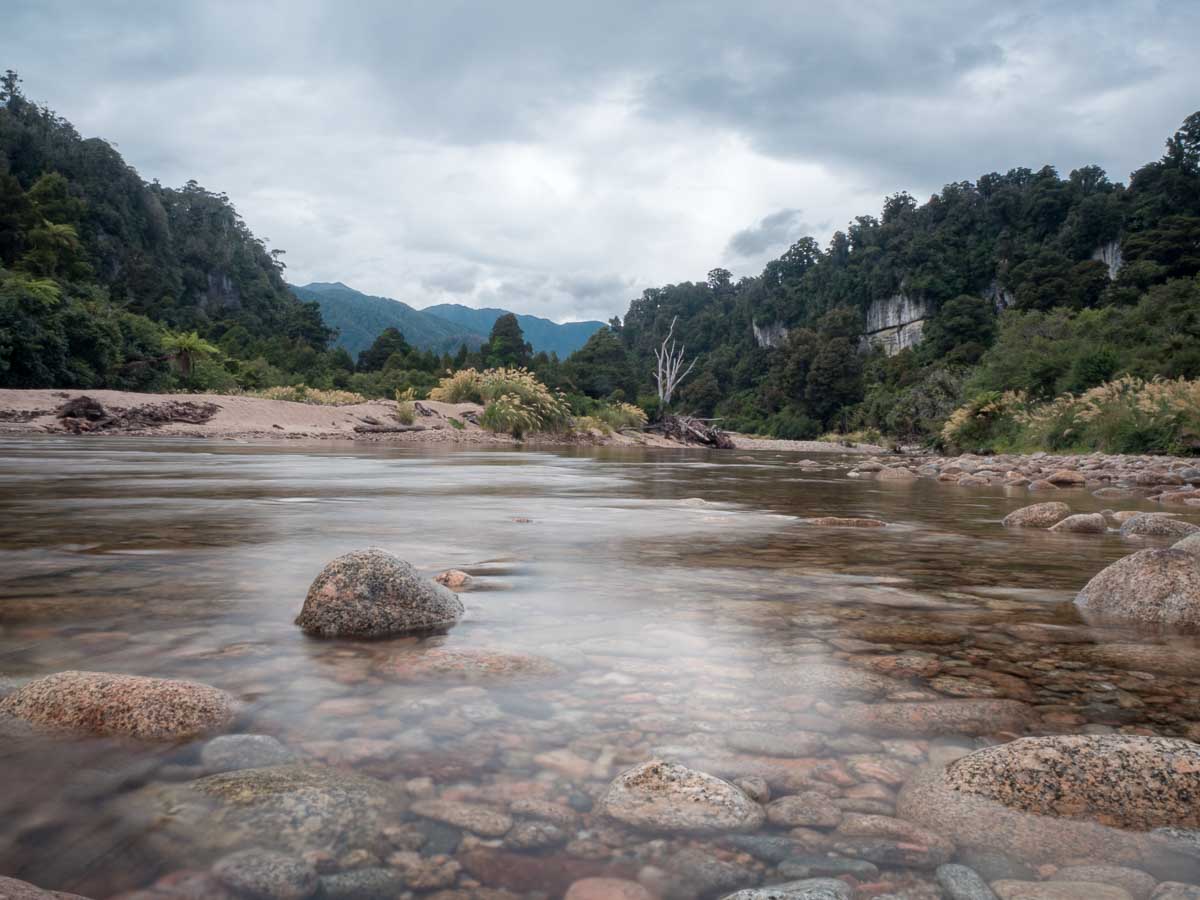
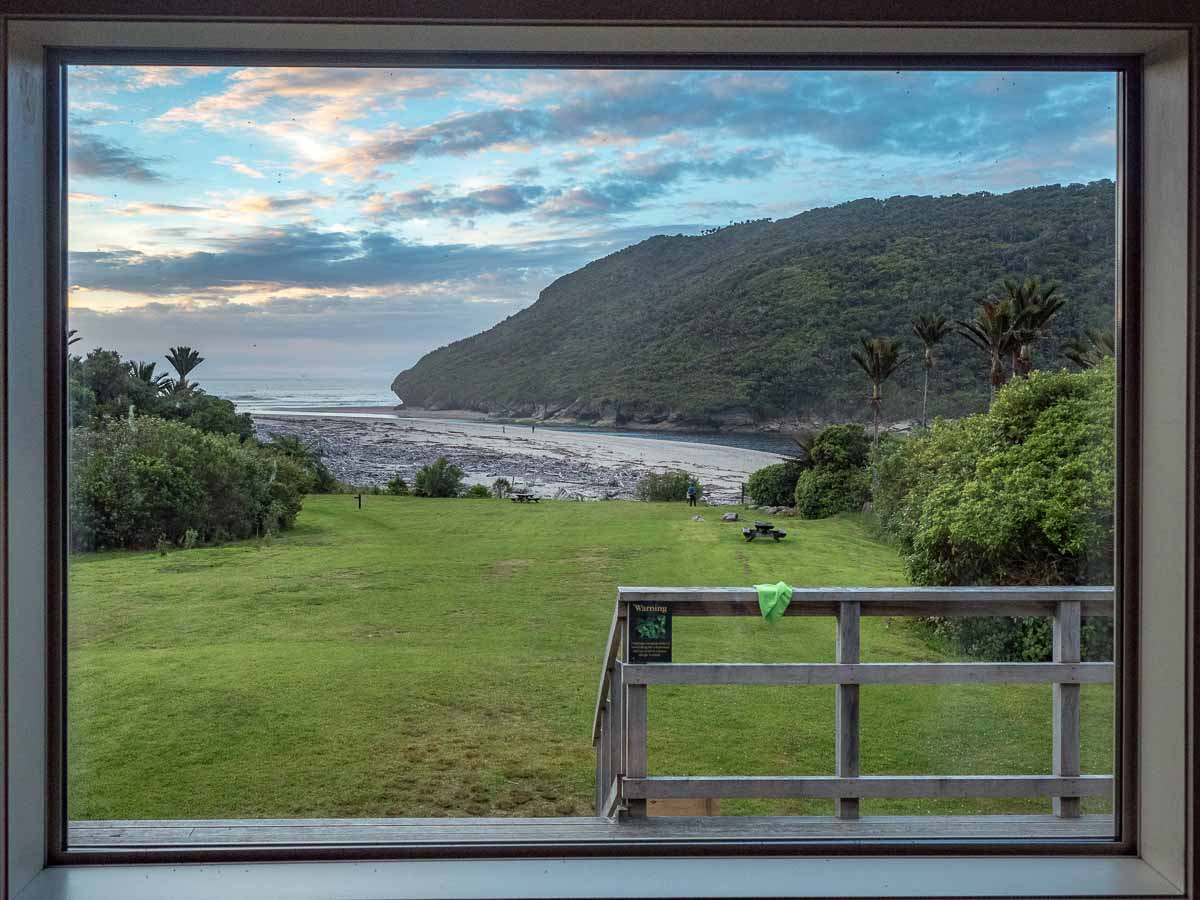
From there you cross the 101 m Lewis River bridge, then the much larger Heaphy River bridge. Rātā, rimu and kahikatea take over, the first nīkau palms appear and the sea gets steadily louder.
Heaphy Hut is the best-located hut on the track. It sits back from the river mouth with the coast right outside, but do not treat that river mouth as a swimming hole – the current can carry you straight into the sea.
Day 4: Heaphy Hut to Kohaihai
The final 16.2 km follows the coast through nīkau forest, past Katipo Creek and Crayfish Point, then over Kohaihai Bluff. It is the best finish of any Great Walk I’ve done.

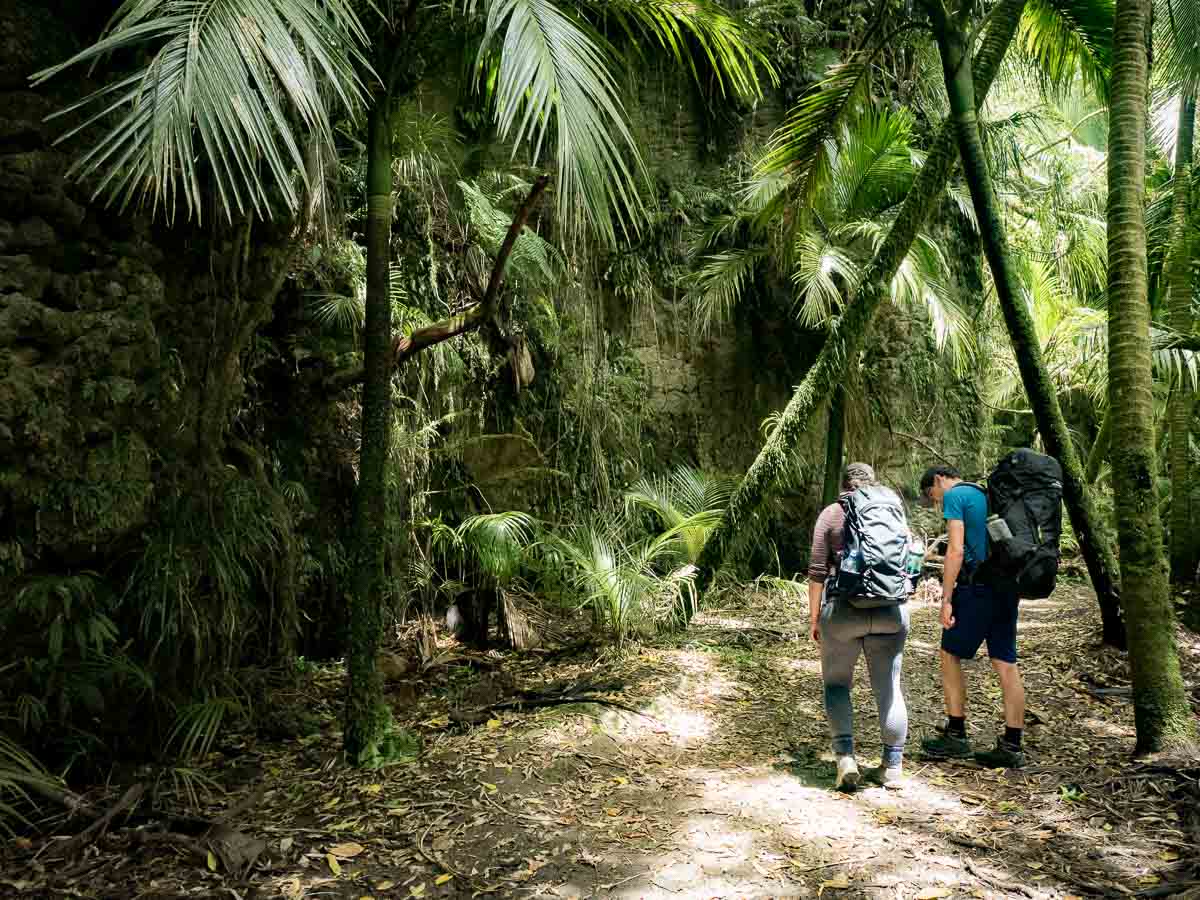
The walking is not hard, but the coast gets the final say. Rough seas can send wave surges across sections of track and unbridged streams rise fast after rain. The newer high track at Crayfish Point means you no longer need to time a beach traverse there, although I would still check the tide and conditions before leaving Heaphy Hut.

Scotts Beach makes an obvious final stop before the short climb over the bluff. From the top, Kohaihai appears below and the track drops to the river, shelter and car park.
Heads up: Do not wade or swim at the Heaphy or Kohaihai river mouths. Check the DOC tide information and current track alerts before the coastal day.
How Hard Is the Heaphy Track?
Technically, it is an intermediate Great Walk. The track is marked, the gradients are generally forgiving and there is nothing comparable to an alpine crossing. The hard bit is doing the distance with four days of food on your back.
Four days means roughly 17 to 25 km every day. If you are not used to that, take five. You will enjoy the huts more and spend less time calculating how many kilometres remain while pretending to admire a tree.
A good five-day route is Brown Hut to Perry Saddle, Perry Saddle to Saxon, Saxon to James Mackay, James Mackay to Heaphy, then Heaphy to Kohaihai.
When I Would Walk It
The Heaphy is open to walkers all year, but that does not make every month the same trip. October to April gives you longer days and the easiest hut routine, while winter brings colder nights, more mud and a real chance of snow around Perry Saddle.
Mountain bikes are allowed from 1 May to 30 November and usually take two or three days. If you walk in that window, expect to share the track and keep an ear open on descents. Most riders are considerate; a loaded bike still arrives much faster than a tramper staring at a giant snail.
The West Coast can produce heavy rain in any month. Check the current DOC alerts before leaving, not just a town forecast from three valleys away.
Huts, Campsites and Current Prices
All Heaphy huts and campsites need to be booked in advance, all year. The huts are pretty flash by backcountry standards, with bunks, mattresses, toilets, heating and basic cooking space, but no food, cooking utensils, showers or bedding. Carry your own stove rather than assuming every hut has gas.

The huts were one of my favourite parts. On my second visit they were not even full, and staying in them meant meeting walkers and bikers without having to manufacture conversation in a crowded campground.
For my exact four-day route, three summer hut nights cost NZ$132 for a New Zealand adult or NZ$198 for an international adult. Add the NZ$235 return bus and the useful baseline is NZ$367 or NZ$433 before food and getting yourself to Nelson. That final number depends mostly on how enthusiastically you panic-buy freeze-dried curry.
There is a small giardia risk in hut and stream water, so treat or boil it. And pack every meal and snack from the start; there are no shops once you leave the road end. Obvious, yes. Still worth saying before somebody arrives at Brown Hut with two muesli bars and optimism.
Sorting the End-to-End Transport
The Heaphy is not a loop. Brown Hut is 156 km from Nelson; Kohaihai is 110 km from Westport. By road, the two ends are roughly 460 km and seven hours apart, which is the one genuinely annoying part of planning it. The cheapest option depends almost entirely on how many people are splitting the bill.
- Scheduled bus: NZ$235 per person. The Heaphy Bus runs a discounted return service from Nelson to Brown Hut and from Kohaihai back to Nelson. For one or two people, this is usually the cheapest complete solution. The catch is its limited summer timetable, currently concentrated around late December to February.
- Car relocation: NZ$515 total. Heaphy Track Help moves a standard vehicle from Brown Hut to Kohaihai. That is NZ$258 each for two people, NZ$172 each for three, or NZ$129 each for four. Once three or four people are sharing it, this is both cheaper than the bus and wonderfully simple: walk out, find your own car, leave.
- Fly back to Nelson: NZ$569 per person. Golden Bay Air packages the shuttle from Nelson to Brown Hut, then a Kohaihai-to-Karamea shuttle and flight back to Nelson. It is fast, scenic and substantially dearer. Leave some slack in the itinerary because West Coast flying and perfect punctuality are not natural companions.
- Private shuttle: NZ$1,200 per vehicle. Tasman Adventure quotes that for Kohaihai to Brown Hut for up to six passengers. It makes little sense for a couple, but drops to NZ$200 each with six people and can rescue dates that do not fit the scheduled bus.
What I would book: solo or as a couple in summer, take the NZ$235 bus. With three or four people and a car, pay for relocation. I would only choose the NZ$569 flight package if time mattered more than money, or because finishing a Great Walk with a flight over the coast sounds rather good.
Tip: Book the huts first, then lock in transport immediately. If using a rental car relocation, get written permission from the rental company before handing the keys to anyone.
What I Would Actually Pack
This is a well-marked hut walk, not an expedition. I did not need a map or navigation device on either visit, although I still carry an offline map and a PLB because ‘the track looked obvious’ is a fairly useless rescue plan.
- Grippy trail shoes or boots – Altra Lone Peaks are a solid light option
- Waterproof jacket and dry hut clothes
- Sleeping bag, cooker, fuel and eating gear
- Four or five days of food plus one spare meal
- Water treatment
- A proper headtorch such as the Black Diamond Spot
- Insect repellent for the West Coast sandflies
- PLB, first-aid kit and offline DOC track information
Poles are optional here. The gradients are kind and I would not carry them just for the Heaphy, although one can help if your knees dislike long descents or the track is muddy.
Do Not Rush Out of Karamea
Finishing at Kohaihai puts you in one of the more isolated corners of the South Island. That is inconvenient when arranging transport, but excellent once the walking is over.

Last Resort is not pretending to be luxury. That is fine. After 78.4 km, a hot shower, clean bed and restaurant on the same property feels luxurious enough.
For coffee and a homemade pie the next day, I would also aim for Vinnie’s Cafe. Check it is open before emotionally committing to the pie; Karamea is not exactly burdened by an excess of backup brunch options.
Then visit the Oparara Basin. The limestone arches and tannin-dark water continue the Kahurangi feeling without asking you to carry a pack another 20 km.
If the Heaphy is part of a longer South Island road trip, compare rental cars here – but sort the relocation permission before booking the track, not while standing at Brown Hut with no signal.
New Zealand Travel Planning Cheatsheet
🚑 Should I buy travel insurance for New Zealand?
100% YES! — New Zealand has “free” healthcare but it’s only for citizens. Tourists need travel insurance in case anything happens on your visit. Also be aware many policies won’t cover hiking as it’s a high risk activity! (that’s right, check the t&c’s on your complimentary credit card insurance)
I highly recommend World Nomads as you can get specific add-ons for the crazy activities you’re doing – and starts at just $7 a day!
🚙 Do you need to rent a car in New Zealand?
I’d reccommend it — Renting a car isn’t a necessity to get around in NZ with plenty of domestical flights and intercity busses. But, If you want to go on road trips or adventures outside of the major cities, you’ll need to rent a car. I always use Discover Cars for my rental bookings (it’s like Skyscanner for cars!) as they compare all availible providers for the best price.
Better yet, rent a van! This is the most cost effective way to see Aotearoa as you’re getting your transport and accomodation together as one! (Checkout my reccommended van rentals here)
📲 Will my phone work in New Zealand?
You’ll need to get a local SIM card when in New Zealand, which is super easy and doesn’t require ID. Spark generally has the best coverage and you can get pre-paid plans for around $30 for 30 days.
Alternativly – I now always use Airalo when travelling. This app generates an eSIM that will work the moment you touch down. It costs slightly more than a local SIM but the convenience is well worth it. You can signup here
💸How do you pay for thing in New Zealand?
Cash has gone out of fashion in New Zealand, so you’ll be able to pay for almost everything with EFTPOS / Debit / Credit Card. Paywave (contactless payments) is very common, but vendors who accept American Express cards are not (so bring a backup!).
I personally use Wise for all my international money needs as they only convert the funds when you make a payment and offer a much better spread (margin on the true exchange rate) than the banks do. They also provide free debit cards for your account!
→ Get the Wise card I use — set it up before you fly so it’s ready to tap the moment you land.
🏩 What’s the best way to book my New Zealand accommodation?
My go-to for Kiwi hotels is Booking.com. For hostels, I use Hostel World. If you want a home-y feeling, check out AirBnB.. but don’t expect prices to be that much cheaper than hotels.
✈️ What’s the best site to buy flights to New Zealand?
For finding cheap flights, I recommend Skyscanner. Once you find the flight you’re looking for, I’d then suggest booking directly with the carrier (even if it costs a few $$ more than with one of the agreggators/agencies).
💧Can you drink the water in New Zealand?
Yes — everywhere in New Zealand you can drink the tap water. If you’re out hiking you can even drink the water from mountainous rivers and streams. I recommend a Brita Water Bottle and a packet of water purificiation tablets for long hikes and backcountry camping.
🎫 Do I need a visa for New Zealand?
NZ has a ‘traditional visa’ which is a document stamped in your passport allowing you to enter and stay in New Zealand for a specified period, while an “NZeTA” (New Zealand Electronic Travel Authority) is a travel authorization that allows certain passport holders to visit New Zealand without needing a separate visa – essentially a visa waiver for eligible travelers; meaning you need a full NZ visa if you don’t qualify for an NZeTA based on your passport and travel intentions.


