

Kii-Katsuura Tuna Market: How to See the Tuna Auction

After completing the Kumano Kodo guide, we made our way out of the forest and down to the peaceful seaside town of Nachi-Katsuura (also known as Kii-Katsuura).
Katsuura is famous for its tuna market. More specifically, it is Japan’s biggest landing port for fresh tuna, and you can stand above the auction floor and watch the morning catch being sold.
(And what’s better, you don’t need to get up at 5am to see the theatrics!)
I loved this morning. It was a 7am start, completely free, and there was basically nobody else there. After the famous fish markets in Tokyo, where the tourists can feel like a second auction happening upstairs, Kii-Katsuura was almost comically quiet.

Table of Contents
The Short Version
Stay in Kii-Katsuura the night before, walk down at 7am, watch for half an hour or so, then eat tuna for breakfast when Nigiwai Market opens. That is the whole plan. You do not need a tour or a complicated reservation to enjoy it.
The optional English-guided tour is worthwhile if you actually want to understand the bids and fish grading. If you are happy to stand there slightly confused while enormous tuna are shuffled around below you, the free version is excellent.
What the Auction Was Actually Like
I was anticipating intense bidding. Something similar to the bustle I experienced at Toyosu Market in Tokyo.
Instead, the whole thing was remarkably subdued. Buyers moved between the rows, inspected the fish and quietly got on with it. Given the town itself is so laid back, this kinda made sense.
Kii-Katsuura does not put on a show for you. It is a working port, and the auction would be happening whether you were peering through the screens or still asleep at your hotel. That is what makes it feel so much more intimate than Tokyo.


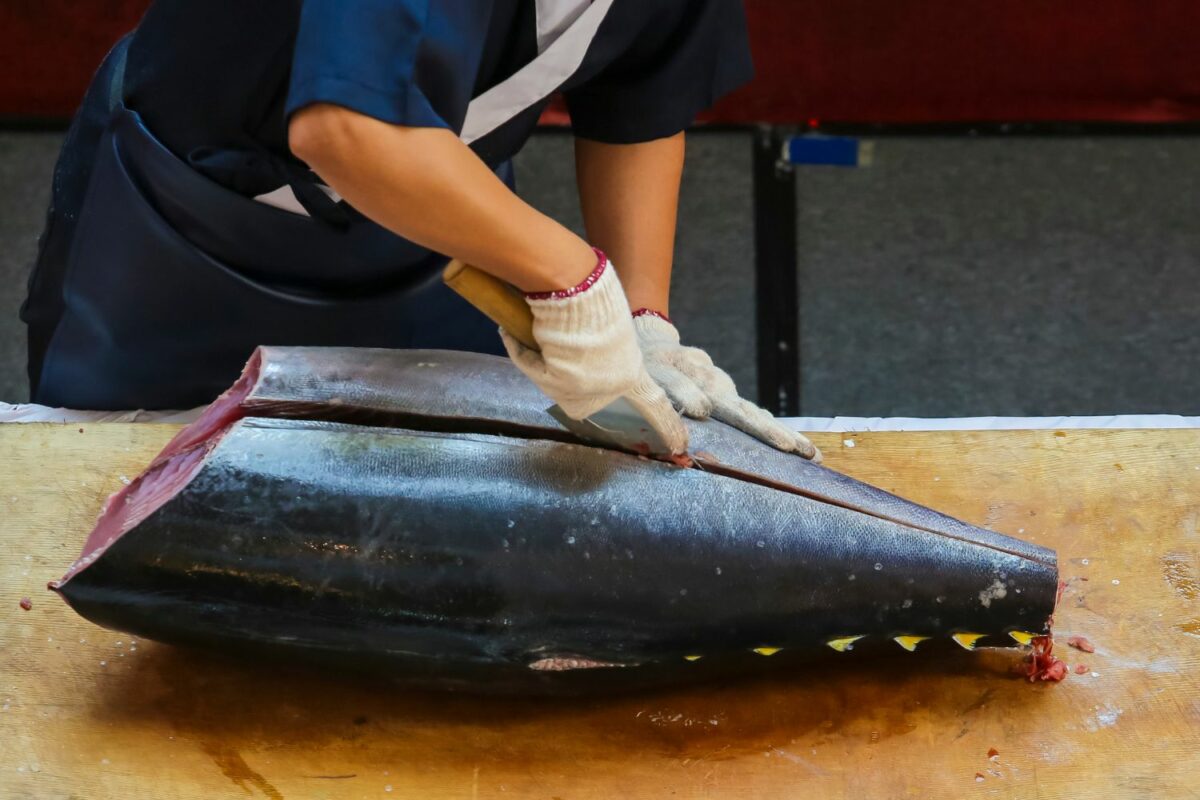
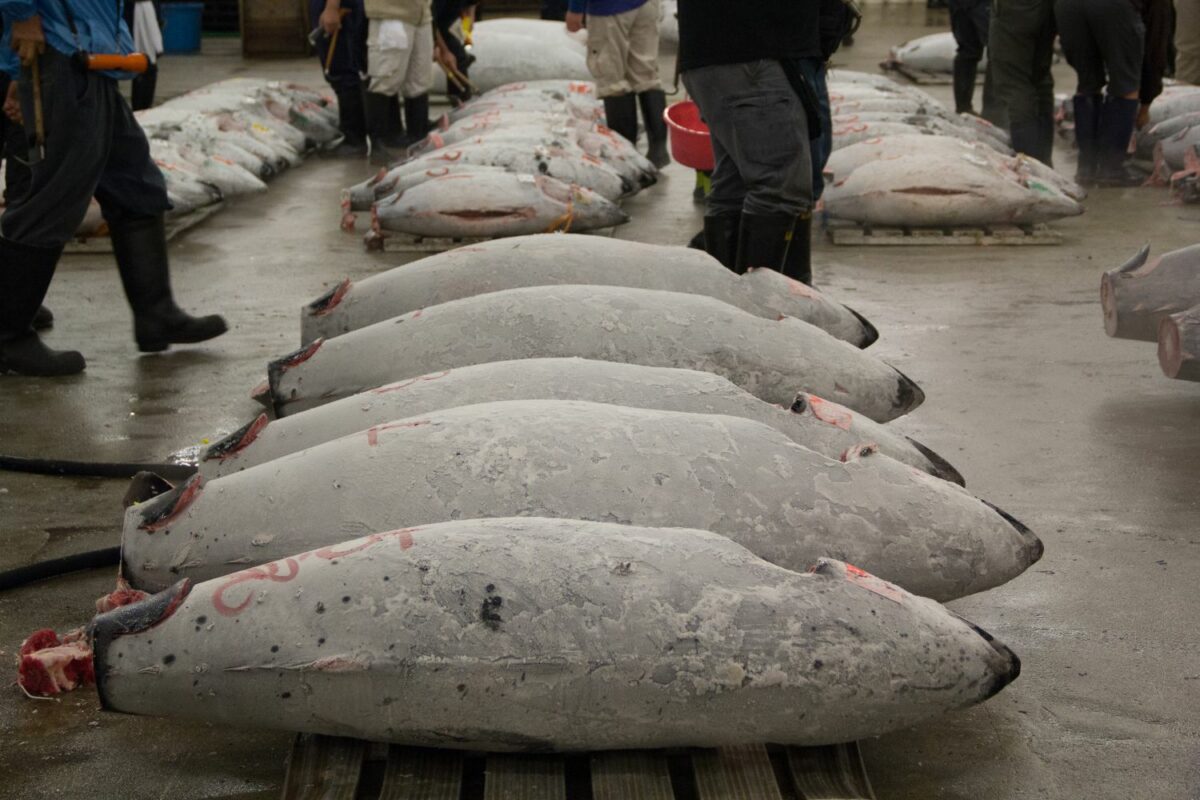
You also do not need to understand the bidding to enjoy it. The scale does most of the work: rows of whole tuna, buyers checking the flesh, workers moving between the fish and boxes of ice waiting nearby.
It is quiet rather than theatrical. Still bloody interesting.
How to Visit the Kii-Katsuura Tuna Market
The port is about a five-minute walk from JR Kii-Katsuura Station. Head toward Katsuura Port and Nigiwai Market; the auction buildings sit alongside it, so there is not much opportunity to get dramatically lost.
Aim for 7am. The exact auction depends on the boats and market calendar, so there is no promise that every morning will look identical, but this is when the official guided visits meet and when you have the best chance of seeing the day get underway.
Tip: Check the fish-market calendar before setting an alarm. Tours do not run on Tuesdays or market closure days, and the amount of action depends on what has actually been landed.

From Osaka or Kyoto, this is not a sensible dawn day trip. Kii-Katsuura is a proper journey around the Kii Peninsula, so stay the night before. I use Booking.com for Kii-Katsuura stays when the smaller local properties are not available.
The timing is particularly easy if you have just finished the Kumano Kodo. Walk into Nachi, continue to Kii-Katsuura, eat too much, sleep, then start the next morning surrounded by tuna. Japan is good at these odd little transitions.
Free Viewing or the Guided Tour?
I went free and was perfectly happy. Visitors watch from above the working floor, which gives you a clear view without getting in anyone’s way.

The current English-guided option also uses the second-floor viewing deck, but adds a certified local guide and headset so you can understand what the buyers are doing. Some bookable versions include food and run until about 8:30am.
Booking the tour: The official Nachi-Katsuura tuna auction tour runs year-round except Tuesdays and market holidays, and needs at least two adults. Check the live page for the available course and price rather than relying on an old quoted fee.
Book the guide if the process interests you. Go free if you mainly want the atmosphere, the scale of the fish and an excellent excuse to eat tuna before 9am.
Eat Tuna Afterwards
This is the important bit.
The auction itself is not a breakfast market. Once you have watched the fish being sold, walk next door to Katsuura Port Nigiwai Market, which is currently listed as open from 8am to 4pm (food last orders 3:30pm) and usually closes on Tuesdays.
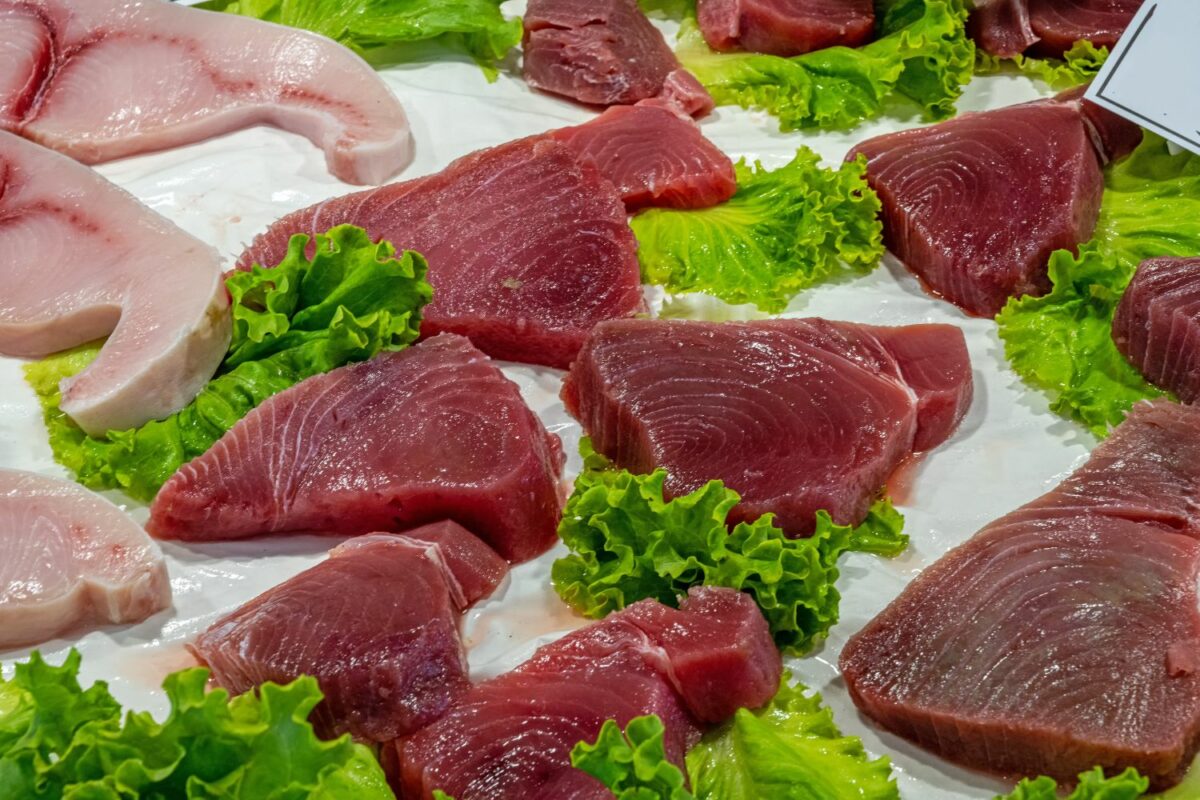
Order a tuna bowl, sashimi, or whatever looks best when you arrive. Katsuura’s point of difference is fresh tuna that has not been frozen, so this is not the morning to panic and order toast.
If you miss breakfast, come back for lunch. The official Nigiwai Market page has the current hours, and my Kumano Kodo food guide covers the wider route once you have had enough tuna (temporarily, obviously).
What to Do After the Market
Do not get on the next train out.
Kii-Katsuura is worth at least one unhurried day after the Kumano Kodo. Start with the auction, eat at Nigiwai, put your feet in the harbour foot onsen, then take the bus toward Daimon-zaka and Nachi Falls. If your legs are cooked, swap the shrine stairs for a proper onsen and call that cultural immersion.
My things to do in Kii-Katsuura has the full plan, including where to soak, eat and stay. The tuna auction is not a giant attraction. It is just a very good half-hour glimpse into why this small seaside town exists.
And at 7am, before the rest of the visitors wake up, it feels like you have stumbled into it by accident.
Japan Travel Planning Cheatsheet 🇹🇿
🚑 Should I buy travel insurance for Japan?
100% YES! — Japan has “free” healthcare but it’s only for citizens! Tourists need travel insurance in case anything happens on your visit. Also be aware many policies won’t cover hiking as it’s a high risk activity! (that’s right, check the t&c’s on your complimentary credit card insurance)
I highly recommend World Nomads as you can get specific add-ons for the crazy activities you’re doing – and starts at just $7 a day!
🏩 What’s the best way to book my Kumano Kodo accommodation?
Your only realy two options here are Kumano Travel and Booking.com. Its a complicated process so I wrote this guide here on the best kumano kodo accomodation options
If you don’t want to figure it all out (it’s meant to be a holiday after all) you can book a package tour. Here are my recommendations for both guided and self-guided.
💸How do you pay for things in Japan?
Japan may have flying robots.. but they also still use cash! So you’ll want to get some folding tender out from an ATM when you land. EFTPOS / Debit / Credit Card and Paywave (contactless payments) is common at bigger businesses but small bars, and street vendors want cash.
I personally use a Wise debit card for all my international money needs as they only convert the funds when you make payment, plus they offer a much better spread (margin on the true exchange rate) than the banks do. They work in all Japanese ATMs I tried.
→ Get the Wise card I use — set it up before you fly so it’s ready to tap the moment you land.
🚙 Do you need to rent a car in Japan?
I wouldn’t reccommend it — Transport in Japan is expensive whatever mode you chose, but fortunalty the publc transport system is out of this world in terms of both freqency and coverage. If you are heading to a lot of off the beaten track places, then you may want a rental. I use Discover Cars to find the cheapest rates on rentals cars and remember you can save money if you avoid picking up at the airport.
🚆 What about the JR Rail Pass?
We didn’t – but it depends on the length and itenirary of your trip. The JR Pass is expensive (and just went up in price again!) and if you’re walking the Kumano Kodo you wont need it for probably 6 days straight anyway.
Do the math, but in most cases buying the train fares you need, when you need it will work out more afforably overall – and give you more flexibility (as the JR Pass doesn’t cover all lines)
📲 How do I get internet/data/wifi in Japan and on the trail?
This one needs a whole nother article, but the short version is;
- local SIM cards are cheaper but generally require a fixed term contract (not practical for people visiting)
- Tourist ‘short stay’ SIMs are a bit more expensive but will give you plenty of data while your visiting and are best for solo travelllers.
- If you’re travelling as 2 or more people, renting a pocket WIFI unit from the airport is the most economical option – Works out cheaper than getting two tourists sims
- Use a travel eSIM like Airalo or Airalo. This works from the moment you land is is SOOOOO much easier than trying to pick a data pack in japanese. It also gives you connectivity across neighbouring asian countries if you buy a regional sim! TIP: Grab your Airalo eSIM before you fly and you’ll have data the moment you land, with no hunting for a SIM kiosk.
✈️ What’s the best site to buy flights to Japan?
For finding cheap flights, I recommend Skyscanner. Once you find the flight you’re looking for, I’d then suggest booking directly with the carrier (even if it costs a few $$ more than with one of the agreggators/agencies).
💧Can you drink the water on the Kumano Kodo?
Yes — Japan is very clean. In all townships you’ll pass through and stay along the Kumano Kodo the tap water is drinkable. If you want to drink water from the rivers and streams you generally can but should do so at your own risk. ALWAYS follow best practice and drink from fast flowing water as far up stream as possible. I drank the water and was fine.. but i’d generally recommend a Brita Water Bottle for rehydrating on the trail safely.
🎫 Do I need a visa for Japan?
Likely Not — Japan now recognises 70 countries as ‘visa exempt’ for short term stay. So if you’re a US, UK, NZ, AU and EU passport holder you don’t need a Japansese visas. However, some other countries do (check here!). And if you plan to stay for more than 90 days (an average tourist visa length), you will need to look into the Japanese working holiday visa scheme, or the new Digital Nomad visa scheme.


