

Paparoa Track Guide: My 4-Day Route

I walked the Paparoa Track over four days and would recommend doing exactly the same. Most walkers skip Ces Clark Hut and finish in three, but that first smaller hut, a short day along the tops and a bit more time to enjoy the weather made the four-day route feel spot on.
We got very lucky – three bluebird days on the West Coast. The Paparoa Range went from alpine tussock and huge ridge views to humid rainforest, nīkau palms and the clear Pororari River. Phenomenal.
The only real catch is that this is a shared mountain-bike track. It was built with riders very much in mind, and as a walker you will occasionally need to step aside while a bike whistles past. A small price to pay, but worth knowing before you wander around the next blind corner.
Table of Contents
The Short Version
Book all three huts and walk the track in four days. Ces Clark is the smallest and least expensive hut, day two becomes a relaxed 9.7 km ridge walk, and you avoid turning Paparoa into another exercise in collecting kilometres.
The current DOC Paparoa guide recommends Ces Clark for walkers wanting the easier four-day route. There are no campsites on the track, so the hut sequence needs to be booked before you start solving the transport.
Getting There: The Easy Setup
Leave your car in Punakaiki and take the morning shuttle to Smoke-ho. I left mine at Punakaiki Beach Camp, almost directly across from the walking finish, then used their shuttle to reach the start. It turns an awkward one-way track into a very simple morning.
The current Punakaiki to Smoke-ho shuttle is NZ$95 per adult and includes secure parking and a shower when you finish. They also run from Greymouth for NZ$70 and Blackball for NZ$35.
Heads up: DOC recommends against leaving a vehicle overnight at Smoke-ho or the two Punakaiki track car parks because of break-ins. The Beach Camp parking and shuttle arrangement is easier anyway.
Day 1: Smoke-ho to Ces Clark Hut
The first day is only 10.3 km, but it includes the roughest track and most of the climbing. We started in the afternoon after the shuttle dropped us at Smoke-ho. The track follows the old Croesus route through podocarp and beech forest before climbing roughly 600 metres towards the bushline.
The first hour lulled us into thinking this was going to be a total cruise.
Then you hit the climb.
It becomes steeper and rougher underfoot, passing the historic Croesus Top Hut before reaching Ces Clark on the edge of the alpine scrub. DOC allows four to five hours, which still leaves plenty of time for the view if you take the morning shuttle.

Ces Clark was only half full. I cooked my standard tramping dinner while we watched the stars come out and chatted to a couple from Auckland who had somehow brought a bottle of wine with them. Respect.

Day 2: Ces Clark to Moonlight Tops
This was my favourite day by far.
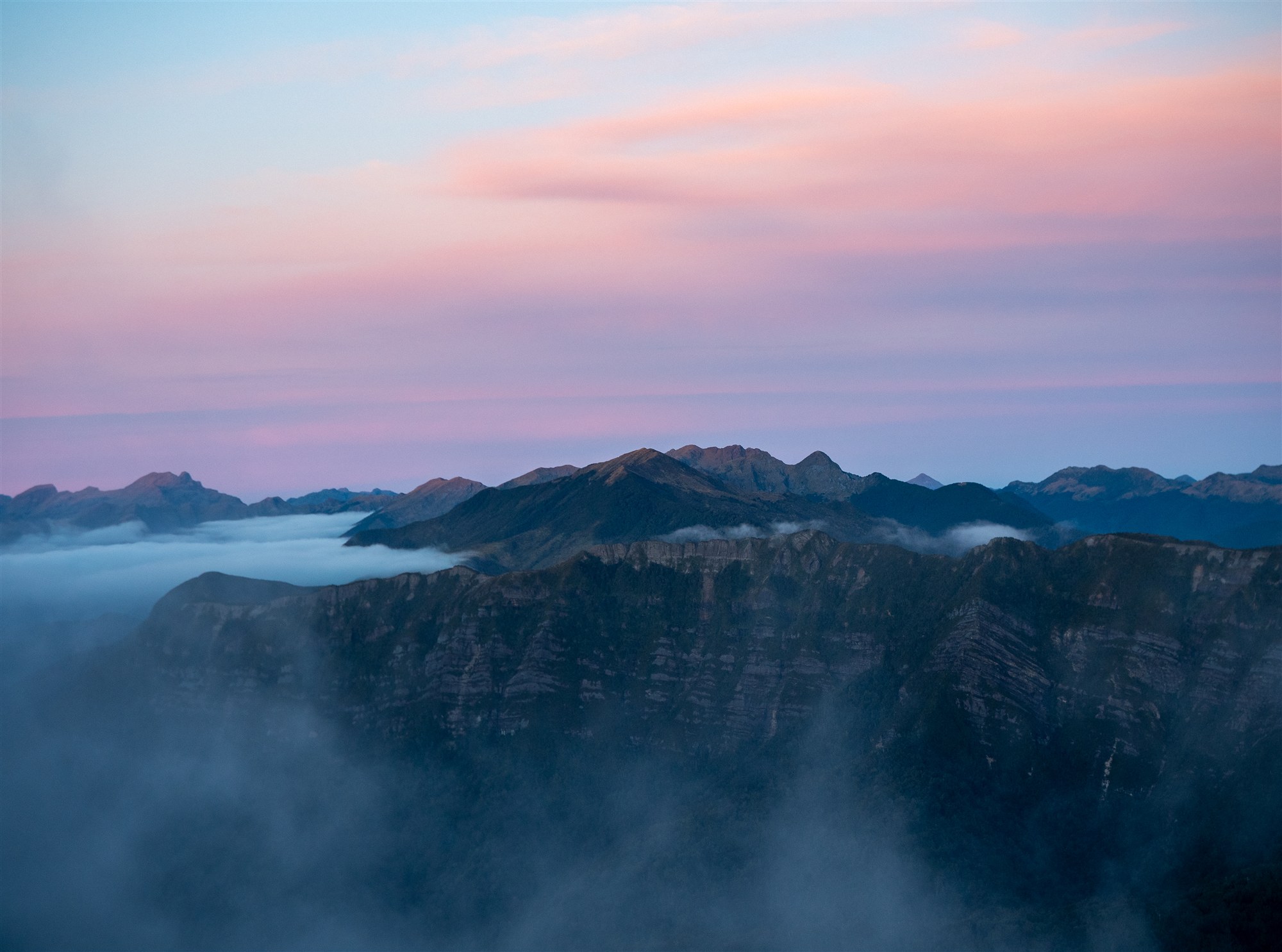
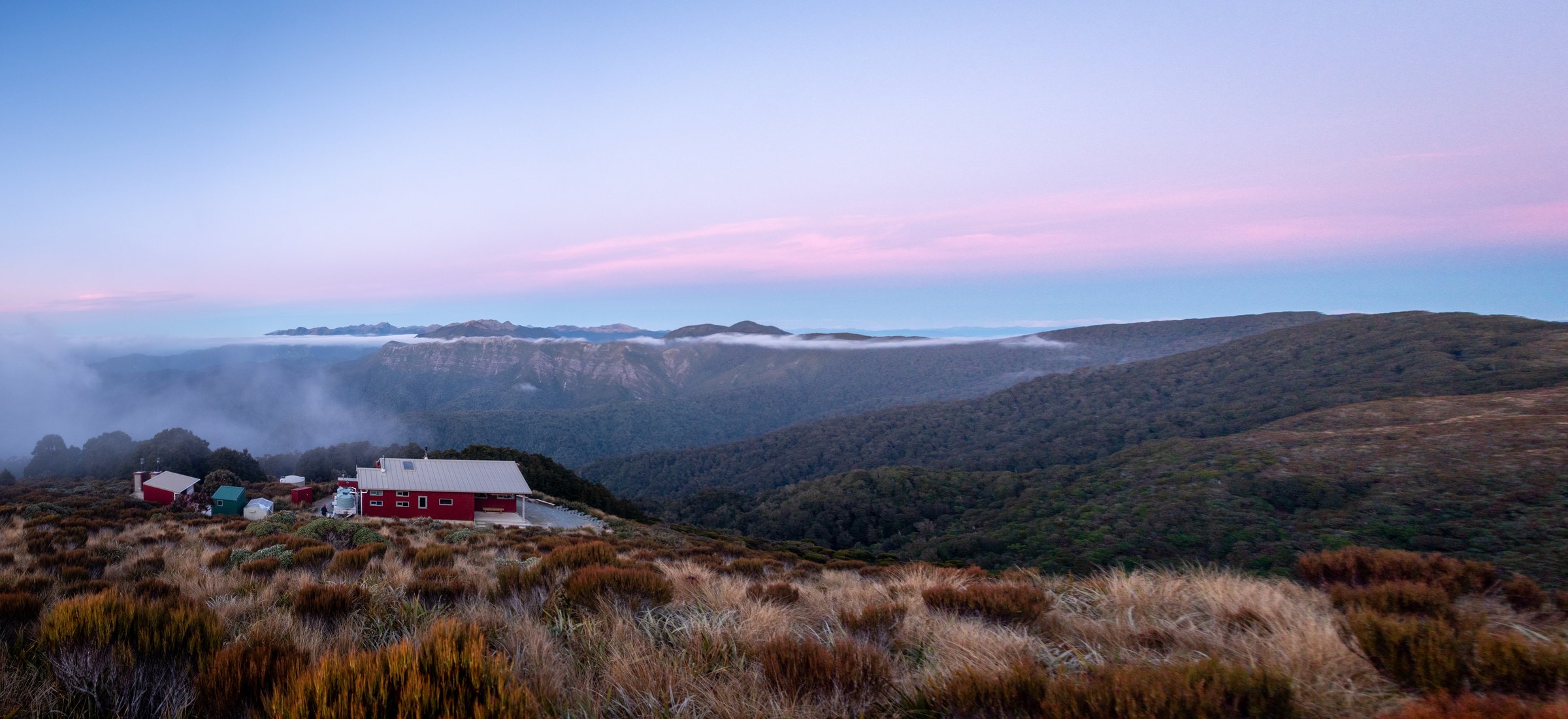
The official stage is just 9.7 km and around three hours, but rushing it would miss the point. Most of the day’s walking is along an undulating ridgeline with enormous views in both directions.
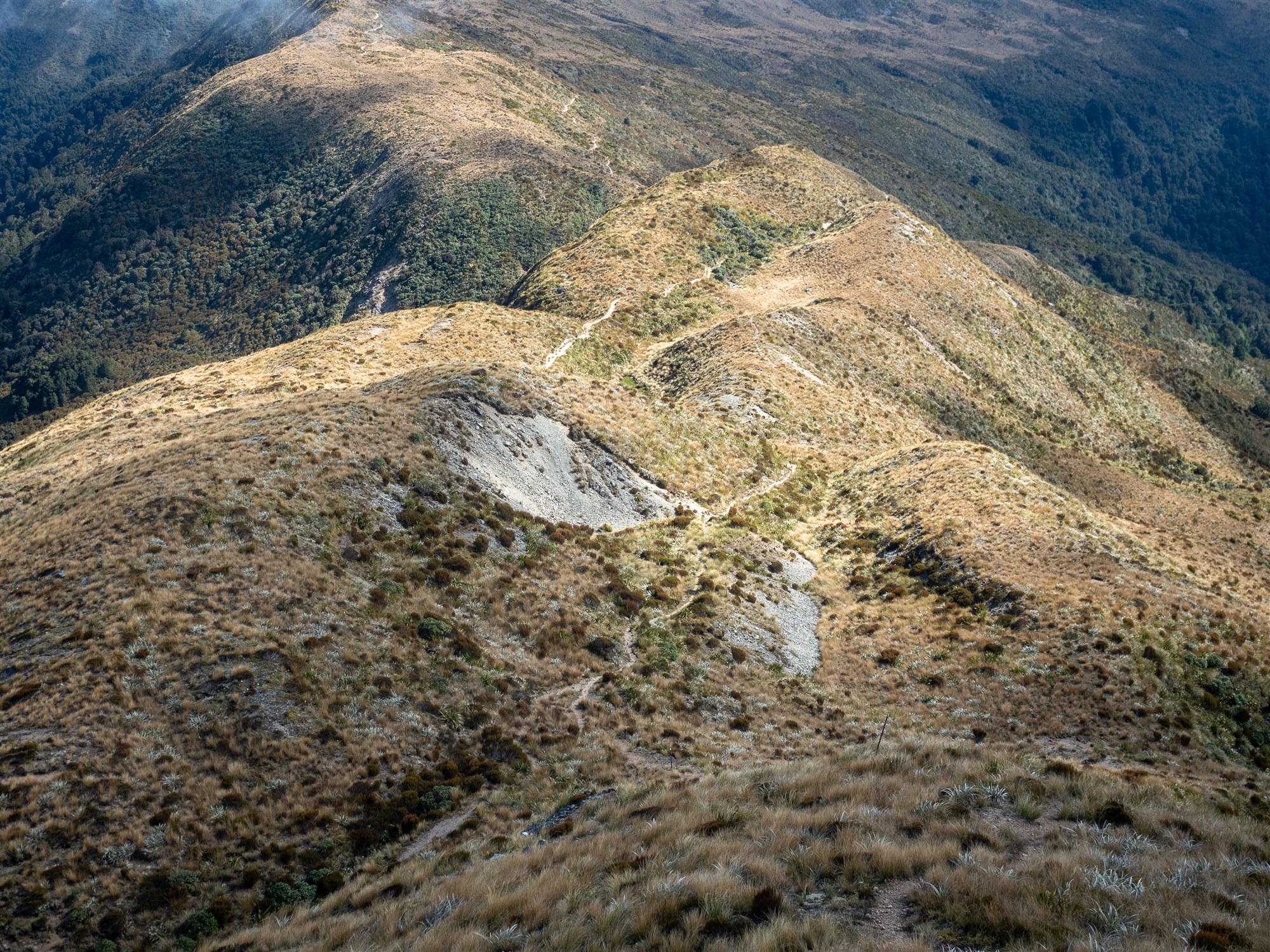
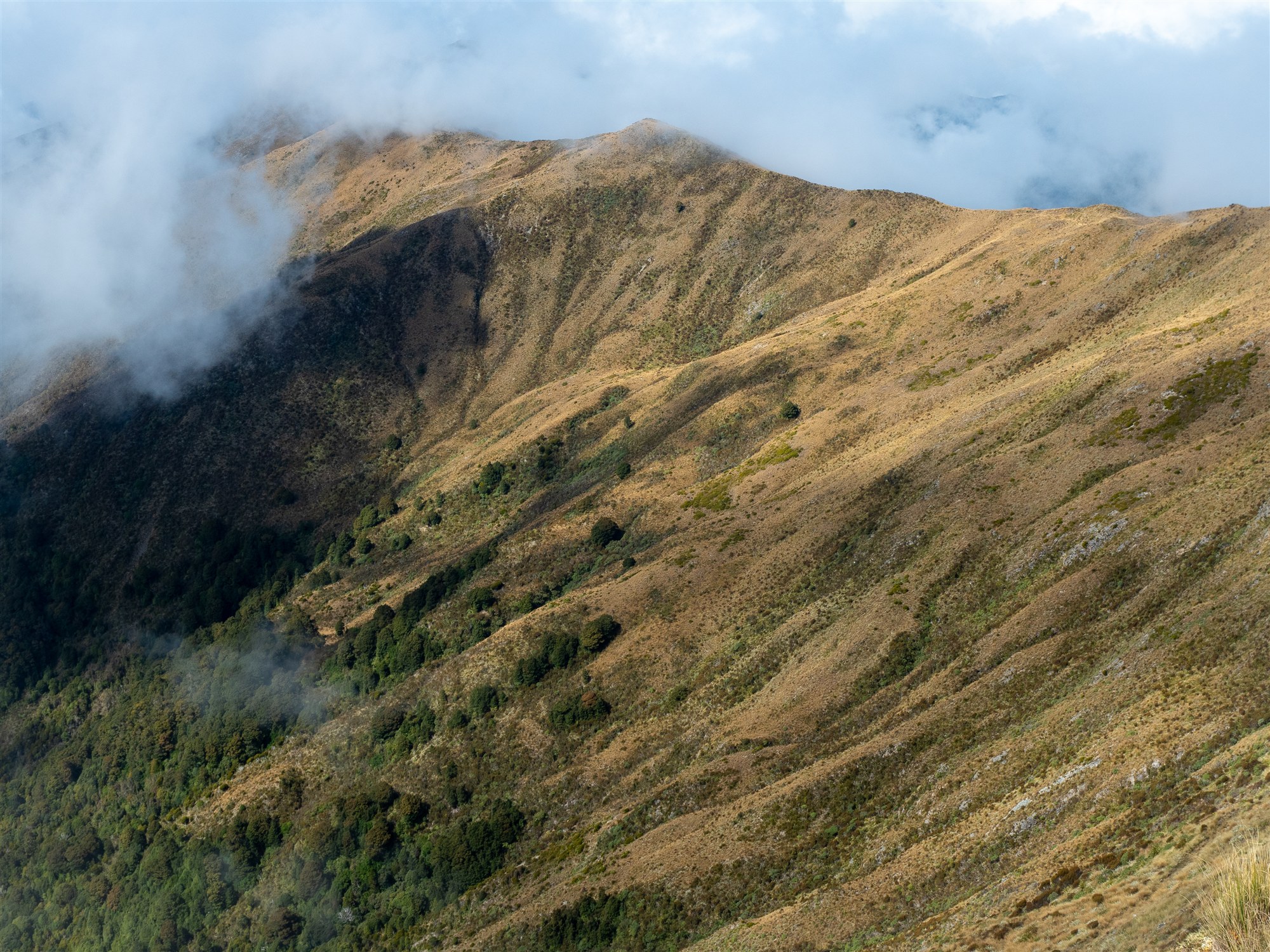
The Paparoa limestone creates rock towers, dips and sinkholes across the range. We lost count of how many times we stopped just to stand still and take it in. The main track surface is excellent too – broad, graded and clearly designed to let bikes keep moving.
There are exposed sections where strong wind or thick cloud would completely change the day. We had still air and blue sky, which on this range is less a planning achievement and more winning a small weather lottery.
Day 3: Moonlight Tops to Pororari Hut
Day three is the longest proper walking day: 19.1 km before any Pike29 detour. The track follows the escarpment above Pike Stream, then eventually drops from the open tops into ancient podocarp forest.
This is also where bike traffic becomes hard to ignore. Most riders were good about slowing down, but the track is built for speed and walkers are the softer object in any disagreement. Keep an ear open and step aside somewhere sensible.
Is the Pike29 Viewpoint Worth It?
We did the Pike29 side trip, and the viewpoint itself is not especially spectacular. From the Paparoa junction it is roughly 6 km return to the vent-shaft viewpoint, turning the day into something closer to 25 km.
You are still more than a kilometre from the vent shaft, and the former mine site is far below at the other end of the memorial track. The value is in understanding why the Paparoa and Pike29 tracks exist: they remember the 29 men killed in the 2010 Pike River Mine disaster.
I am glad we went, but I would not sell it as the scenic highlight of the Paparoa. Read the panels, give the place the time it deserves, then carry on to Pororari.
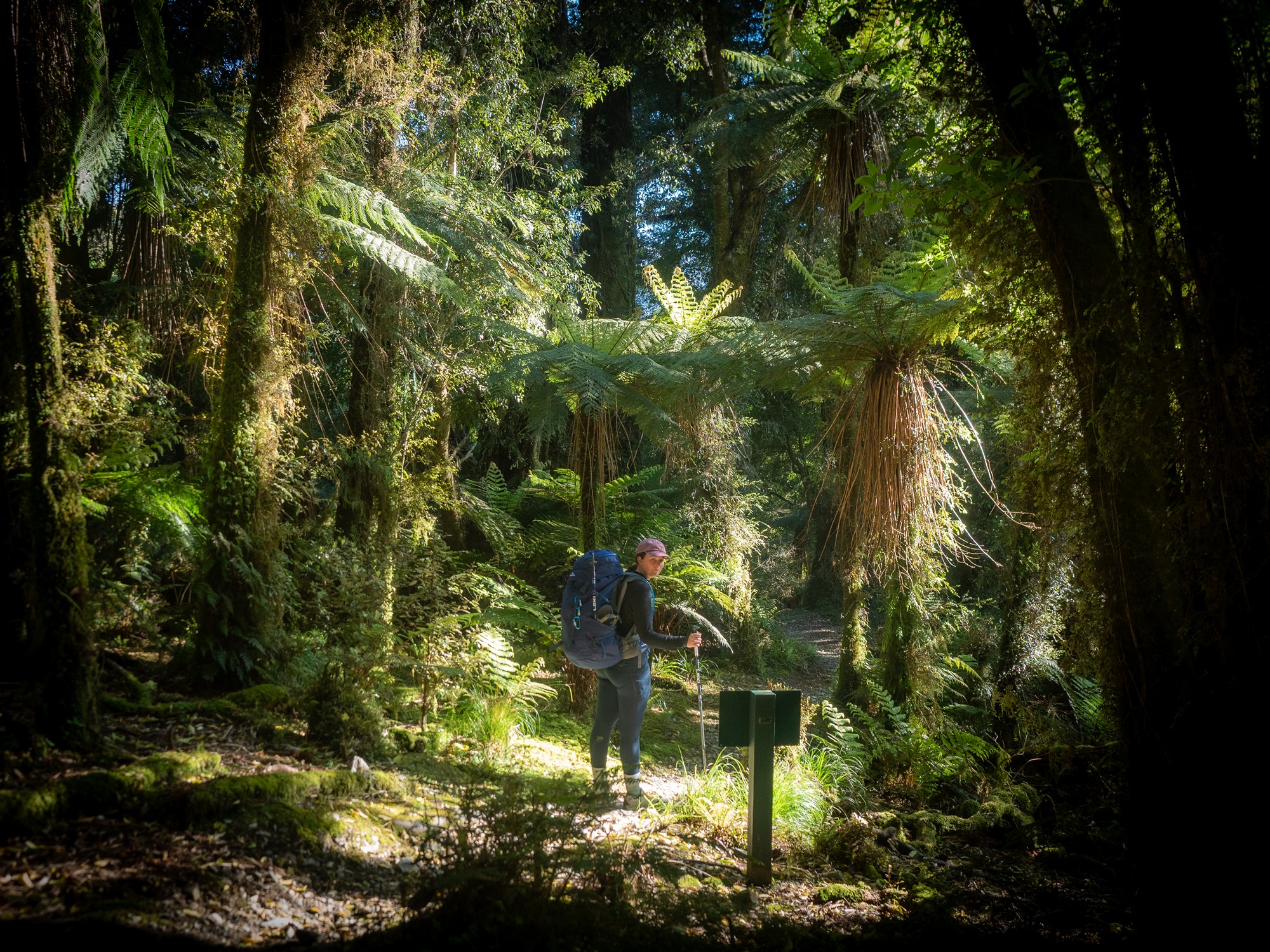
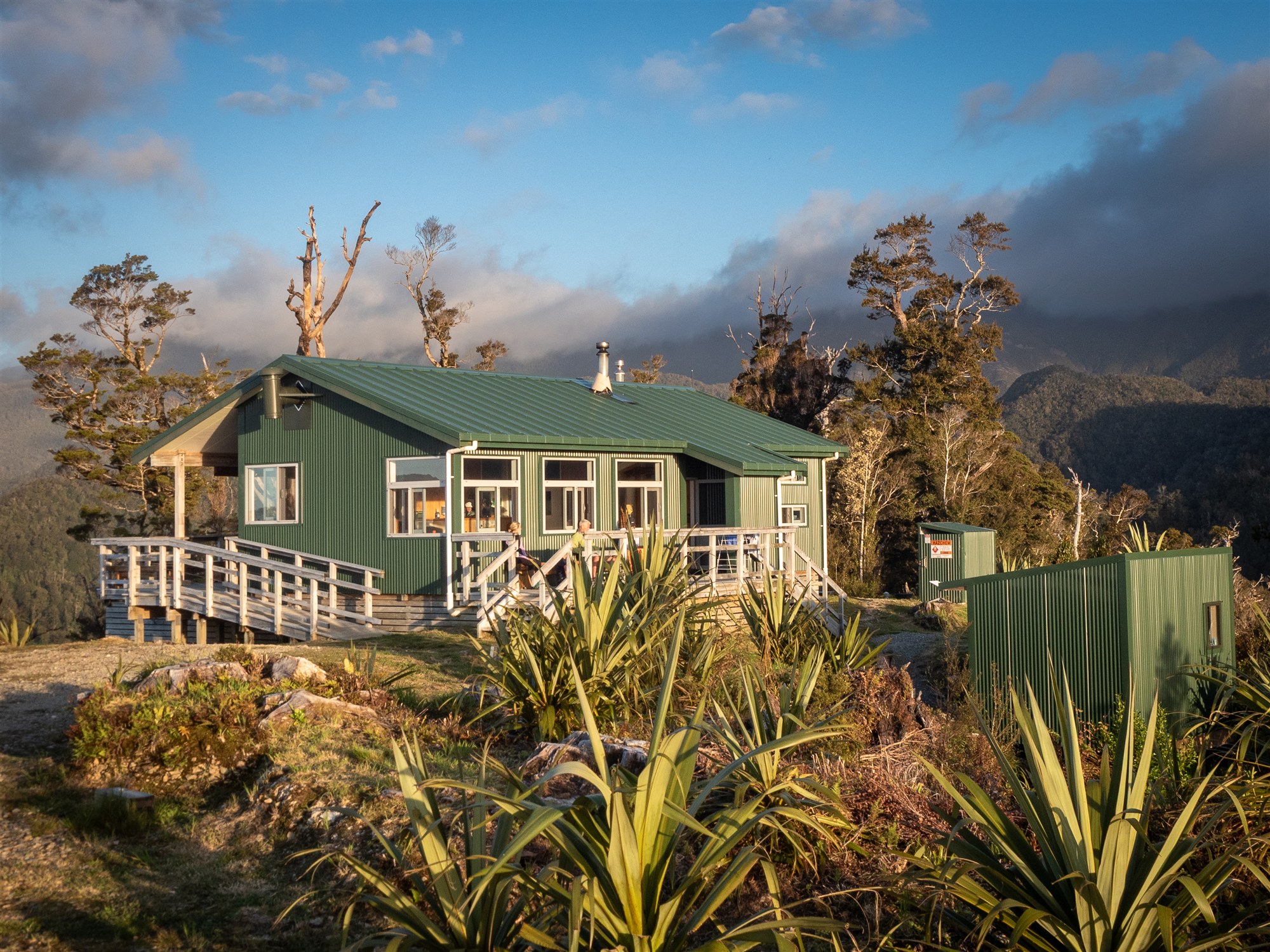
Pororari Hut is tucked into the bush above the river and felt more like a fancy eco-lodge than a hut. We had a hot cuppa on the deck, listening to the river burble below. Hard to complain about that.
Day 4: Pororari Hut to Punakaiki
The final 16 km was much better than a routine walk-out. The track descends beside the Pororari River through huge nīkau palms, ferns and limestone walls, slowly changing from mountain route to humid West Coast gorge.

The highlight was swimming beneath the swing bridge. We had blue sky, clear water and no need to preserve dry socks for another hut. Proper end-of-track luxury.
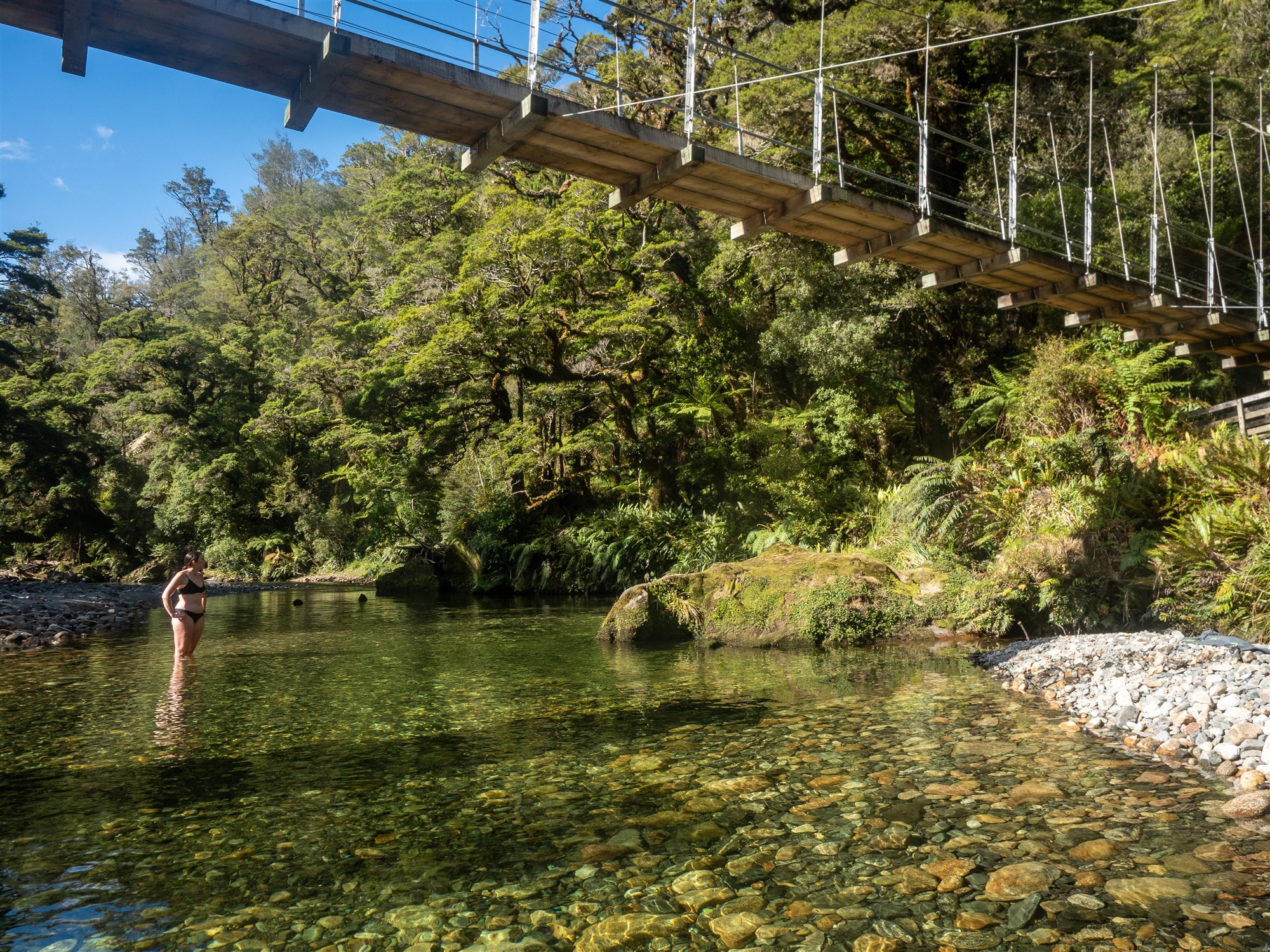
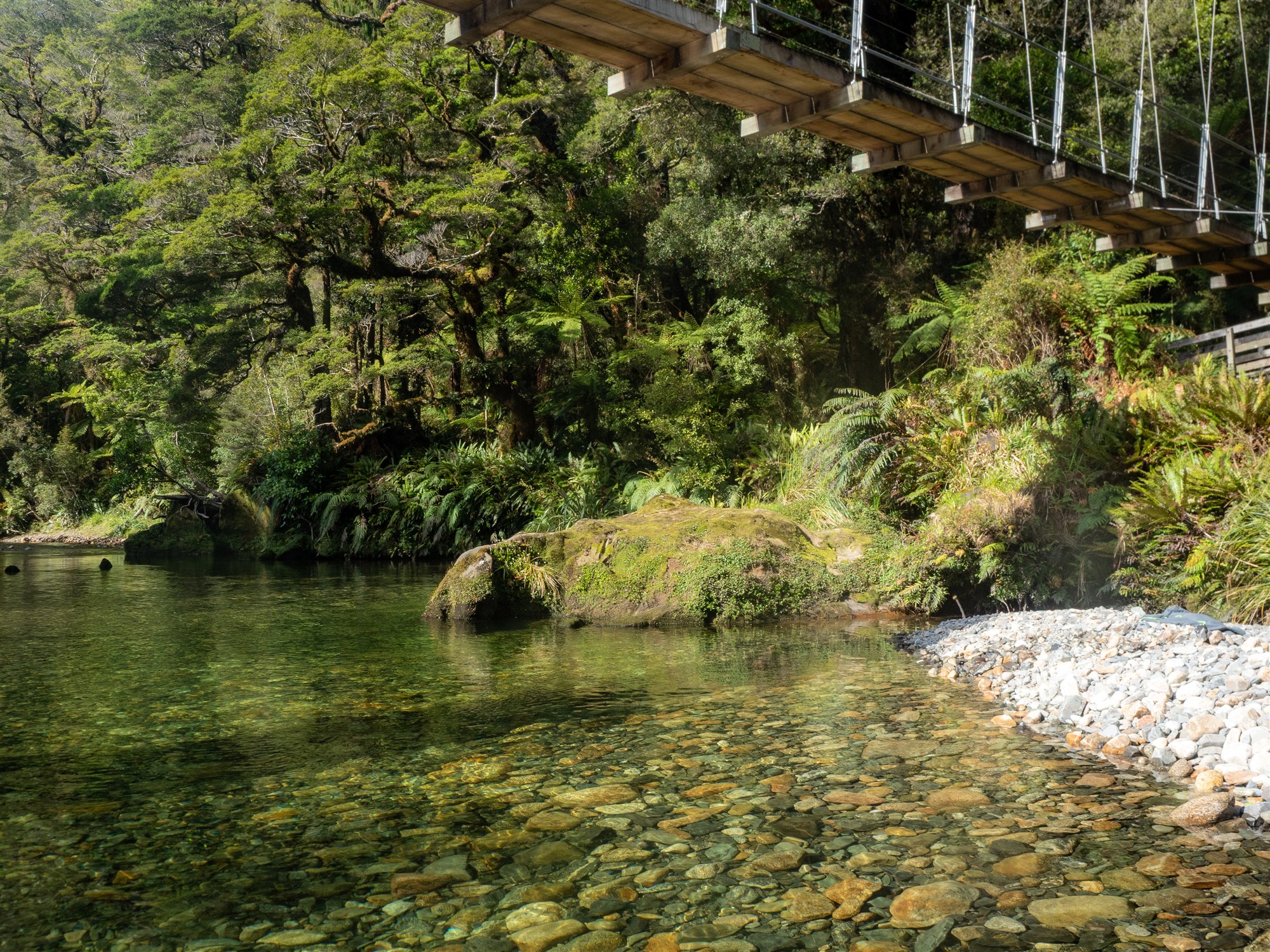
Walkers turn towards the Pororari River car park for the 16 km finish. Mountain bikers continue to Waikori Road instead, so follow the walking sign at the final junction rather than blindly chasing somebody on two wheels.

Huts, Cost and What to Carry
Book Ces Clark, Moonlight Tops and Pororari through DOC. For the 2026/27 summer season, New Zealand adults pay NZ$50, NZ$78 and NZ$61 respectively – NZ$189 for the three hut nights. International adults pay NZ$285 in total.
All three huts have mattresses, heating, gas cooktops, cold water and toilets. The toilets are basically modern longdrops.. but clean ones. There are no showers, food or cooking utensils. Bring a sleeping bag, billy, bowl and whatever you need to turn dehydrated powder into dinner.
Solar phone charging worked at Moonlight Tops and Pororari when I visited, but not at Ces Clark. Treat that as a bonus, not infrastructure. Carry a power bank, proper rain shell, warm layers, pack liner, water treatment and a personal locator beacon. Most of the track has no mobile coverage.
Tip: Paparoa gets around 6,000 mm of rain a year. We somehow got three bluebird days; your booking confirmation does not include the same arrangement. Pack for West Coast rain even when the forecast looks excellent.
Where I Would Stay Before or After

We used Punakaiki Beach Camp for the parking and shuttle, and it also makes the most practical place to stay on either side of the hike. The cabins, campsites, car storage and track transport keep the whole setup in one place.

Where to Eat and What to Drink
For a relaxed post-hike feed, head to the Punakaiki Rocks Hotel & Garden Bar. It is a proper country pub serving breakfast, lunch and dinner, with a garden bar, pizza oven and the sort of hearty food that makes sense after 55 km. If whitebait is in season and appears on the board, that is the local order.
Have a Monteith’s with it. Greymouth is the beer’s original home, so this is one of the few times choosing the obvious tap is also choosing local. If you want a nicer meal, the Ocean View Restaurant & Bar at Scenic Hotel serves dinner overlooking the Tasman Sea. Book ahead; Punakaiki is small and dinner options are not endless.
Once you have showered, go and see Pancake Rocks around high tide, eat something substantial and give the Truman Track another hour the next day. The Paparoa deserves a proper coastal finish, not an immediate three-hour drive while your legs quietly seize up.
New Zealand Travel Planning Cheatsheet
🚑 Should I buy travel insurance for New Zealand?
100% YES! — New Zealand has “free” healthcare but it’s only for citizens. Tourists need travel insurance in case anything happens on your visit. Also be aware many policies won’t cover hiking as it’s a high risk activity! (that’s right, check the t&c’s on your complimentary credit card insurance)
I highly recommend World Nomads as you can get specific add-ons for the crazy activities you’re doing – and starts at just $7 a day!
🚙 Do you need to rent a car in New Zealand?
I’d reccommend it — Renting a car isn’t a necessity to get around in NZ with plenty of domestical flights and intercity busses. But, If you want to go on road trips or adventures outside of the major cities, you’ll need to rent a car. I always use Discover Cars for my rental bookings (it’s like Skyscanner for cars!) as they compare all availible providers for the best price.
Better yet, rent a van! This is the most cost effective way to see Aotearoa as you’re getting your transport and accomodation together as one! (Checkout my reccommended van rentals here)
📲 Will my phone work in New Zealand?
You’ll need to get a local SIM card when in New Zealand, which is super easy and doesn’t require ID. Spark generally has the best coverage and you can get pre-paid plans for around $30 for 30 days.
Alternativly – I now always use Airalo when travelling. This app generates an eSIM that will work the moment you touch down. It costs slightly more than a local SIM but the convenience is well worth it. You can signup here
💸How do you pay for thing in New Zealand?
Cash has gone out of fashion in New Zealand, so you’ll be able to pay for almost everything with EFTPOS / Debit / Credit Card. Paywave (contactless payments) is very common, but vendors who accept American Express cards are not (so bring a backup!).
I personally use Wise for all my international money needs as they only convert the funds when you may payment and offer a much better spread (margin on the true exhange rate) than the banks do. They also provide free deibit cards for your account!
🏩 What’s the best way to book my New Zealand accommodation?
My go-to for Kiwi hotels is Booking.com. For hostels, I use Hostel World. If you want a home-y feeling, check out AirBnB.. but don’t expect prices to be that much cheaper than hotels.
✈️ What’s the best site to buy flights to New Zealand?
For finding cheap flights, I recommend Skyscanner. Once you find the flight you’re looking for, I’d then suggest booking directly with the carrier (even if it costs a few $$ more than with one of the agreggators/agencies).
💧Can you drink the water in New Zealand?
Yes — everywhere in New Zealand you can drink the tap water. If you’re out hiking you can even drink the water from mountainous rivers and streams. I recommend a Brita Water Bottle and a packet of water purificiation tablets for long hikes and backcountry camping.
🎫 Do I need a visa for New Zealand?
NZ has a ‘traditional visa’ which is a document stamped in your passport allowing you to enter and stay in New Zealand for a specified period, while an “NZeTA” (New Zealand Electronic Travel Authority) is a travel authorization that allows certain passport holders to visit New Zealand without needing a separate visa – essentially a visa waiver for eligible travelers; meaning you need a full NZ visa if you don’t qualify for an NZeTA based on your passport and travel intentions.


